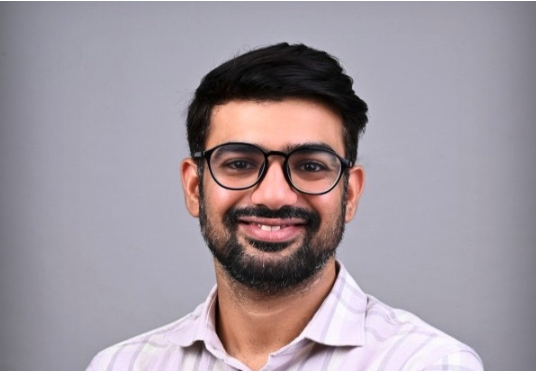
As artificial intelligence (AI) continues to evolve, significant advancements are increasingly being made not in research labs, but in real-time operational settings. Sai Sreenivas Kodur, a seasoned engineer with a decade of experience, exemplifies this trend, having navigated critical moments in high-scale search infrastructure, voice analytics, and AI applications in the food and beverage sector. His expertise highlights the importance of building AI systems that not only function effectively but can also endure under pressure.
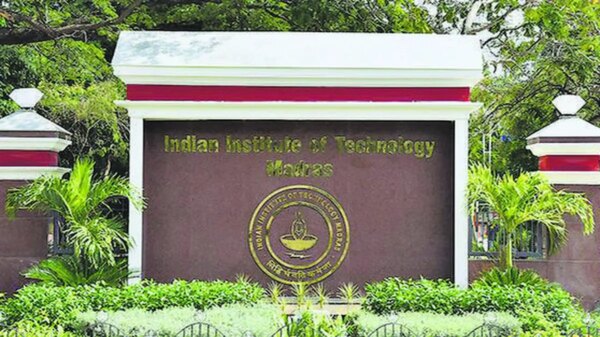
Kodur’s journey began at IIT Madras, where he blended machine learning with compiler optimization algorithms during his graduate research. This experience instilled in him a systems-first mindset, emphasizing that machine learning (ML) is not merely a magic bullet but a component of a larger operational framework. This philosophy has become a hallmark of his career as he transitioned into production roles.
At companies such as Myntra and Zomato, Kodur led teams in developing search and recommendation systems for millions of users. Under his leadership, these systems had to manage real-time catalog updates and handle significant traffic surges. “At that scale, it’s not just about a better prediction; it’s about infrastructure,” he stated, underscoring the critical nature of caching, freshness, and indexing in shaping user experience. A notable incident involved a minor latency issue that caused outdated items to appear in user feeds, a mistake with potentially costly implications in e-commerce.
Following his work in consumer tech, Kodur moved to Observe.AI as the Director of Engineering, where he oversaw platform and product engineering as the company began to attract major enterprise clients. In this context, reliability became a fundamental requirement rather than an optional feature. “Uptime wasn’t a feature; it was a contract,” he explained. His efforts led to the introduction of a data observability layer that significantly reduced operational tickets and facilitated rapid growth, supporting over $15 million in annual recurring revenue from clients like Uber and DoorDash.
Recognizing the limitations of general-purpose AI in specialized domains, Kodur co-founded Spoonshot, an AI venture designed for food innovation. The company’s core engine, Foodbrain, processes over 100TB of diverse data to identify trends, regulatory insights, and consumer preferences. This capability allows clients to detect emerging food trends, such as a spike in ‘umami’ flavors, well before they become mainstream. Major clients, including Coca-Cola and Heinz, rely on Spoonshot’s platform, Genesis, to expedite product development with greater confidence.
Kodur’s contributions extend beyond product development; he has also engaged in practical research to address industry challenges. His forthcoming 2025 paper on Debugmate, an AI agent designed for incident management, addresses a common struggle among engineers: the stress of managing system failures without clear guidance. By correlating various observability signals and historical data, Debugmate has reduced incident workloads by 77%. “We weren’t trying to ‘do research.’ We were solving a problem we lived through,” Kodur remarked.
In a recent three-part blog series, Kodur explored the future of AI in organizations, emphasizing the need to rethink team structures and workflows to fully integrate AI into the software development lifecycle. “Today, assistants like Claude and Devin are not just writing code; they’re taking the role of pilots while human engineers are merely co-pilots,” he noted. However, he also pointed out that current infrastructure isn’t keeping pace with these advancements. To adapt, organizations should consider the concept of an AI-native organization, which includes self-diagnosing platforms and governance that anticipates continuous iterations rather than occasional updates.
Looking ahead, Kodur envisions that platform engineering will define the next decade of AI, evolving from a supportive role into a foundational element of autonomous systems. “We’re not just shipping software anymore. We’re building compounding machines,” he said, stressing that every model deployed trains another and every insight informs the next. His vision includes a landscape where infrastructure is self-managing and AI agents maintain systems with accountability.
For engineering leaders, Kodur’s journey offers more than insights; it presents a blueprint for adapting to an era where AI is not merely a feature but a fundamental participant in system design. As he emphasizes, organizations must build for change and prepare for a reality where AI is an active participant in engineering processes. Welcome to the AI-native era; the question remains: Are your systems prepared?
See also Alphabet Acquires Intersect for $4.75 Billion to Boost AI Infrastructure and Energy Solutions
 Awiros Unveils Video AI Platform Powered by Intel for Enhanced Edge to Core Solutions
 Nvidia to Deliver 40,000 H200 AI Chips to China by February 2026 Amid Export Controls
 Franchise Brands Utilize AI to Boost Marketing Efficiency and Drive Growth
 ASUS Reveals 2025’s Top AI-Driven Laptops and Gaming Devices with Cutting-Edge Performance