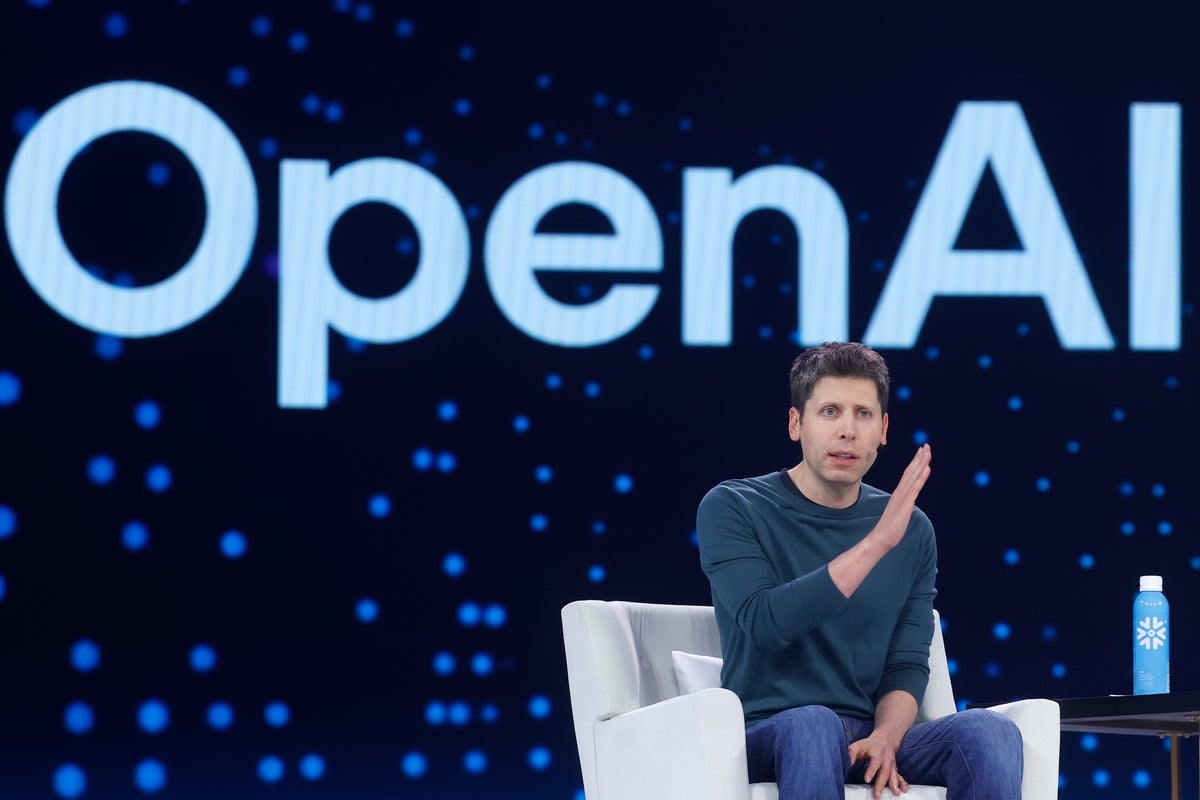
OpenAI’s CEO, Sam Altman, has indicated that the next major advancement toward achieving superhuman artificial intelligence may hinge on the development of AI systems capable of “infinite, perfect memory.” Speaking on the Big Technology Podcast, Altman emphasized that this breakthrough could be realized by 2026, allowing AI to remember “every detail of your entire life.” Currently, he noted, even the most advanced personal assistants lack this capacity, which limits their effectiveness as lifelong companions.
Altman spoke to the evolution of AI, stating, “Even if you have the world’s best personal assistant… they can’t remember every word you’ve ever said in your life.” He elaborated that AI’s current memory capabilities are still “very crude, very early,” suggesting that improvements in memory would significantly enhance AI’s functionality and user experience.
His comments come in the wake of heightened competition in the AI landscape, particularly from Google, which recently launched its Gemini 3 model. Described as a “new era of intelligence,” Gemini 3 has reportedly achieved exceptional scores across various industry benchmarks. In response to this competitive pressure, Altman characterized the situation at OpenAI as a “code red,” underscoring the urgency within his organization to innovate rapidly in response to rival advancements.
Despite the competitive landscape, Altman downplayed immediate concerns regarding Gemini 3’s impact on OpenAI, suggesting that the company has historically adapted to new challenges effectively. “I think that it’s good to be paranoid and act quickly when a potential competitive threat emerges,” he remarked. He acknowledged that the release of Gemini 3 has highlighted weaknesses in OpenAI’s product offerings and strategy, but he assured that the company is addressing these weaknesses swiftly.
In detailing OpenAI’s overarching strategy, Altman stated that the focus remains on “making the best models, building the best product around them, and having enough infrastructure to serve it at scale.” This approach is reflected in the impressive user base for ChatGPT, which currently stands at around 800 million users, representing approximately 71 percent of the AI app market. This marks a decline from 87 percent the previous year, as competition intensifies.
In contrast, Google’s market share has increased from about 5 percent to more than 15 percent, with Gemini surpassing 650 million users. As AI technology continues to evolve, the race for dominance among tech giants remains fierce, with significant implications for future developments in artificial intelligence.
Looking ahead, the potential for AI systems to possess perfect memory could revolutionize personal assistant technology and change the way humans interact with machines. As OpenAI and its competitors accelerate their efforts to enhance AI capabilities, the technological landscape is poised for dramatic shifts that could redefine user experiences across various applications.
See also Microsoft Achieves $3.7 Trillion Valuation as AI Era Reshapes Tech Landscape
 AI Researchers Dalvi and Gawas Unveil Machine Learning Advances for Anemia Detection
 DP Technology Raises $114 Million in Series C to Expand AI Tools for Scientific Research
 AI Integration in Nursing Care: New Study Analyzes Ethical Implications and Patient Outcomes