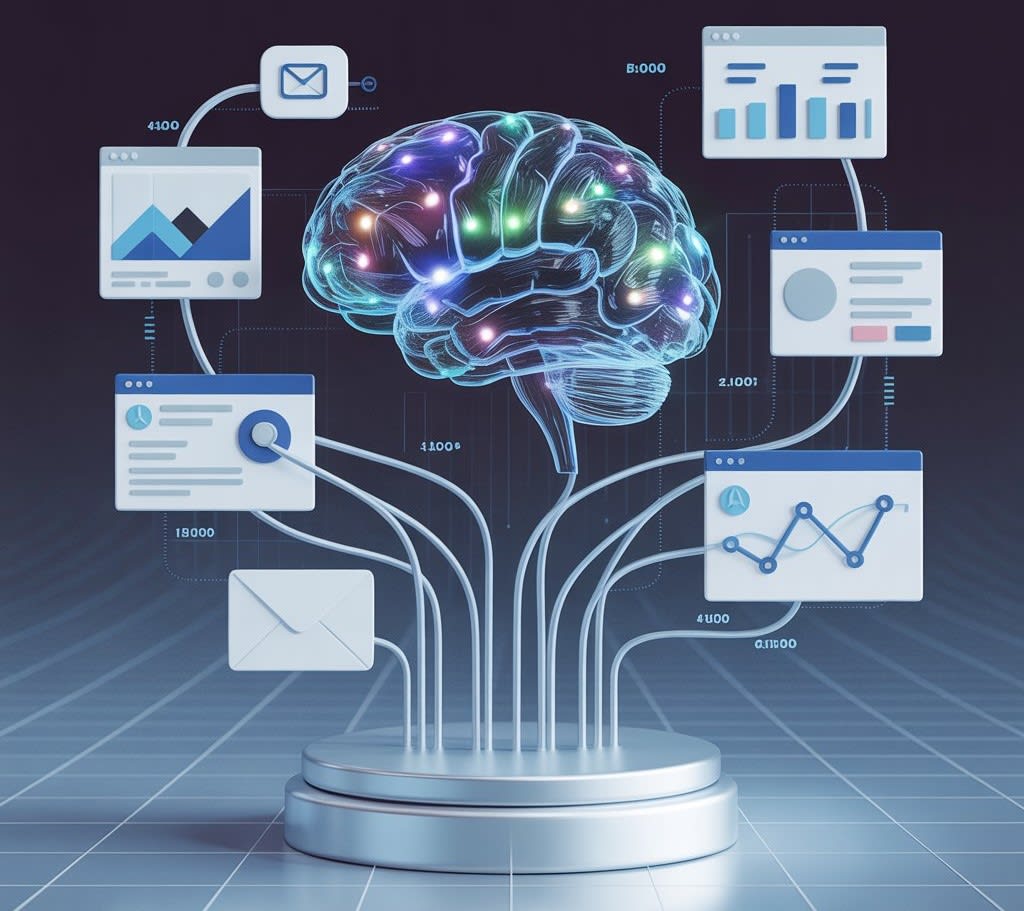
Artificial intelligence is reshaping the digital marketing landscape in 2025, as businesses from startups to large enterprises increasingly adopt AI marketing tools. These innovations allow companies to streamline tasks, enhance customer engagement, and make data-driven decisions at unprecedented speeds. By automating repetitive processes and optimizing campaigns, AI marketing tools are becoming essential components of modern business strategies, enabling marketing teams to focus on creative and strategic aspects rather than manual execution.
AI marketing tools refer to software platforms that utilize machine learning, data analysis, and automation to improve marketing functions. Unlike traditional software, these tools can learn from data, adapt to trends, and optimize campaigns in real time. They encompass various functions, including content creation, audience targeting, advertising optimization, design, video production, and customer relationship management.
The advantages of employing AI in marketing are manifold. Businesses benefit from faster content creation with minimal human input, improved audience targeting through data-driven insights, and enhanced advertising performance via automated optimizations. Furthermore, these tools facilitate personalized customer experiences that drive engagement and allow for smarter, data-informed marketing decisions. Overall, businesses can save time, reduce human error, and rely on data-driven methodologies.
In 2025, several categories of AI marketing tools have gained prominence. AI Content and SEO tools now enable marketers to quickly generate blogs, social media posts, ad copy, and website content. Tools like ChatGPT and Jasper AI efficiently create written content, while Surfer SEO provides keyword insights and SEO optimization to improve search engine rankings. This combination of creativity and analytics allows marketers to produce engaging and search-friendly content.
AI Advertising tools automatically enhance ad performance by analyzing user behavior and optimizing campaigns in real time. Platforms such as AdCreative.ai generate compelling ad visuals and copy, while Google and Meta AI Ads utilize smart bidding and audience targeting to maximize return on investment. These tools not only save time for marketers but also ensure that advertisements reach the most relevant audiences.
In the realm of design, AI platforms allow marketers to create professional-quality visuals without requiring advanced technical skills. Canva AI‘s Magic Design feature, for instance, enables users to produce social media posts, banners, and presentations quickly. AI image generation tools can convert text prompts into creative visuals, making them particularly valuable for small businesses and freelancers who need quality design work expediently.
The emergence of AI Video Marketing tools has made video content production faster and more accessible. Tools like Synthesia offer AI avatars and voiceovers, facilitating the creation of professional videos. Meanwhile, OpusClip allows users to cut full-length videos into shorter, shareable segments, making these tools ideal for social media and brand storytelling campaigns.
Customer management has also improved through AI-powered CRM and automation platforms. HubSpot AI offers lead scoring, email automation, and CRM insights, while AI chatbots provide 24/7 support, answer queries, and capture leads automatically. Such innovations not only enhance customer engagement but also drive sales and improve retention rates.
While the adoption of AI marketing tools is often viewed through the lens of large enterprises, many of these solutions are accessible to startups and small businesses. These tools are designed to be affordable and user-friendly, allowing smaller entities to compete effectively in the market. Importantly, while AI tools assist in streamlining processes and optimizing tasks, they cannot replace the human elements of creativity, strategy, and judgment.
The current trends in AI marketing for 2025 indicate a shift towards automated ad campaign management, real-time content personalization, and predictive analysis of customer behavior. The growing adoption of AI-powered email marketing and CRM systems signifies that these tools have moved from being optional to essential for businesses aiming to remain competitive.
In conclusion, AI marketing tools are revolutionizing the way businesses approach digital marketing, enabling quicker content creation, smarter ad optimization, and enhanced customer engagement. By integrating human creativity with AI capabilities, marketers can achieve efficiency without sacrificing quality. Those who embrace AI tools today will be better positioned to deliver impactful campaigns, improve return on investment, and maintain a competitive edge in an ever-evolving digital landscape. As businesses look to the future, the importance of AI in marketing strategies will only continue to grow.
See also Zendesk Acquires Unleash to Enhance AI-Powered Employee Support and Search Efficiency
 Consult PR Reveals AI PPC Challenges in Niche Keywords, Hybrid Strategy in Use
 Shenzhen’s AI Robotics Festival Unveils 100+ Innovations to Transform Tourism Efficiency
 Cobalt Keys Partners with Clay.com and Instantly.ai to Enhance Email Marketing with AI
 Tech Giants Use Asterisks to Obscure AI Claims, Eroding Consumer Trust and Transparency