






















































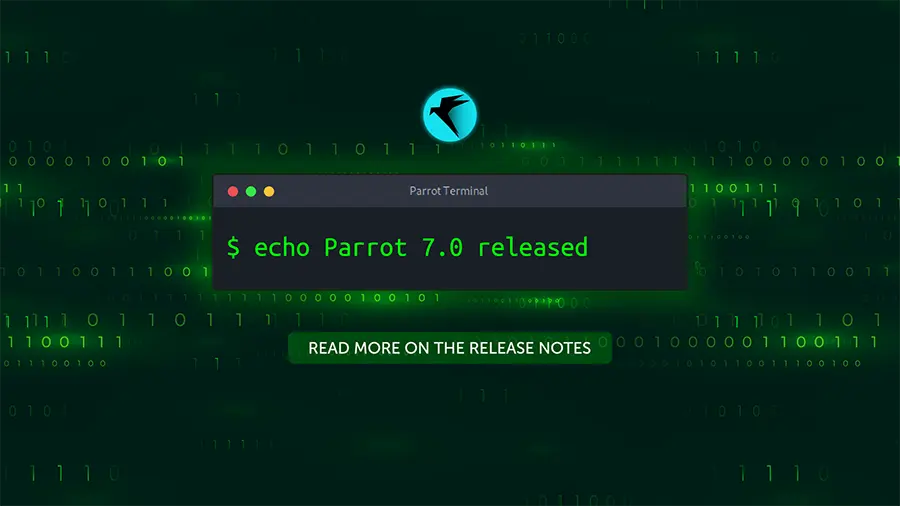
Parrot OS 7.0, codenamed Echo, has been released as a comprehensive system rewrite based on Debian 13. This updated version introduces KDE Plasma 6 and implements Wayland as the default display server, along with a suite of new penetration testing tools that includes a dedicated category for artificial intelligence (AI). The launch marks a significant overhaul aimed at supporting ethical hackers and security professionals.
The release features a modern aesthetic with the Echo theme, inspired by Flat Remix and Sweet Mars. This is packaged within echo-themes for enhanced visual performance. KDE Plasma 6 brings improved animations and optimized resource utilization, making it especially suitable for older hardware or resource-constrained penetration testing setups. Users will also find new wallpapers featuring the Echo Parakeet, accessible through the project’s graphics repository.
Parrot 7.0 employs live-build technology for creating ISOs and utilizes custom scripts for virtual machine formats such as QCOW2 and VMDK. The build process is fully automated through GitLab CI/CD. Key packages include parrot-core (7.0.10) and parrot-menu (7.0.16), both adapted for KDE configurations, while a new launcher-updater written in Go addresses desktop entry issues. Metapackages have been expanded to include a broader array of pre-installed tools across various categories.
This latest release brings numerous advancements in tools for reconnaissance, exploitation, and other essential activities in penetration testing. Notable additions include convoC2, a command-and-control tool for Microsoft Teams, goshs, an HTTPS server in Go, and hexstrike-ai, which focuses on AI-driven penetration testing. Other tools include bloodhound.py for Active Directory mapping and autorecon for network reconnaissance. This release also updates essential tools such as Burp Suite (2025.10.5) and airgeddon (11.60), ensuring that users have access to the latest capabilities.
The parrot-tools metapackage now includes pre-installed tools such as gdb/cgdb for development, peass and autorecon for information gathering, and syft for cloud security, reflecting a holistic approach to cybersecurity challenges. A new AI tools menu has been introduced with hexstrike-ai, which emphasizes securing large language model (LLM) prompts and engineering tests rather than general automation solutions. The developers plan to sponsor tools that enhance AI-driven cybersecurity measures, addressing the evolving threats posed by machine learning technologies.
Significantly, Parrot 7.0 is the first penetration testing distribution to offer official support for RISC-V through a root filesystem tarball and native repositories. The Parrot Updater has been rewritten in Rust, featuring a GTK4 graphical user interface that provides weekly notifications for updates. For users utilizing Docker and Windows Subsystem for Linux (WSL), images are set to update automatically, and the Rocket package has reached version 1.3.0. Raspberry Pi users are now encouraged to perform clean installs with the Core Edition, while upgrades from Parrot 6 are recommended for stability.
As the cybersecurity landscape continues to evolve, Parrot OS 7.0 positions itself as a competitive choice for professionals in the field, especially with its integration of AI tools designed to adapt to future challenges. This release not only enhances existing functionalities but also introduces new features that align with the growing importance of AI in cybersecurity. As ethical hacking and security professions demand increasingly sophisticated tools, Parrot OS aims to remain at the forefront of this dynamic environment.
Follow us on Google News, LinkedIn, and X for daily cybersecurity updates. Contact us to feature your stories.
See also Parrot OS 7.0 Launches with AI Tools and Major System Overhaul Based on Debian 13
 OpenAI Hires Preparedness Chief to Combat Rising Cyberattack Risks Amid AI Advances
 AI-Driven Cyberattacks Surge as Organizations Face Growing Security Challenges
 Ethiopia’s New AI Policies Aim to Mitigate Rising Cybersecurity Threats and Risks
 Hadrian Launches AI Agents to Counter Cyber Attacks Amid Surge in UK Threats








