Researchers at George Washington University have developed a groundbreaking framework, called SENTINEL, aimed at proactively identifying emerging cyber threats. This innovative approach responds to the increasing frequency of cyberattacks targeting critical infrastructure and digital security, shifting the focus from reactive measures to predictive strategies. Led by Mohammad Hammas Saeed and Howie Huang, the team underscores the utility of social media platforms, particularly Telegram, as rich sources of early warning signals. Their findings reveal that discussions on these platforms, where both attackers and cybersecurity professionals exchange information, can provide crucial insights into malicious activities before they escalate.
SENTINEL leverages extensive data analysis from social media and the dark web, utilizing advanced artificial intelligence techniques to predict and comprehend cyberattacks. This marks a significant transition in cybersecurity practices toward anticipatory measures, employing natural language processing (NLP) and machine learning to derive actionable insights from textual data. The researchers highlight platforms such as Twitter, Reddit, and dark web forums as vital for detecting indications of potential attacks. By employing machine learning models, they aim to assess the likelihood of attacks and categorize various threats. The research also acknowledges the dual role of AI, which not only poses risks through AI-driven espionage but can also serve as a defensive tool, facilitating automated threat hunting and analysis.
The SENTINEL framework specifically integrates language analysis with network dynamics, representing a pioneering multi-modal approach. The research team amassed a dataset of 365,000 messages from 16 public Telegram channels dedicated to cybersecurity and open-source intelligence. By processing this extensive dataset, SENTINEL utilizes large language models to comprehend the semantic content of messages, identifying discussions related to cyber threats, vulnerabilities, and attack tools.
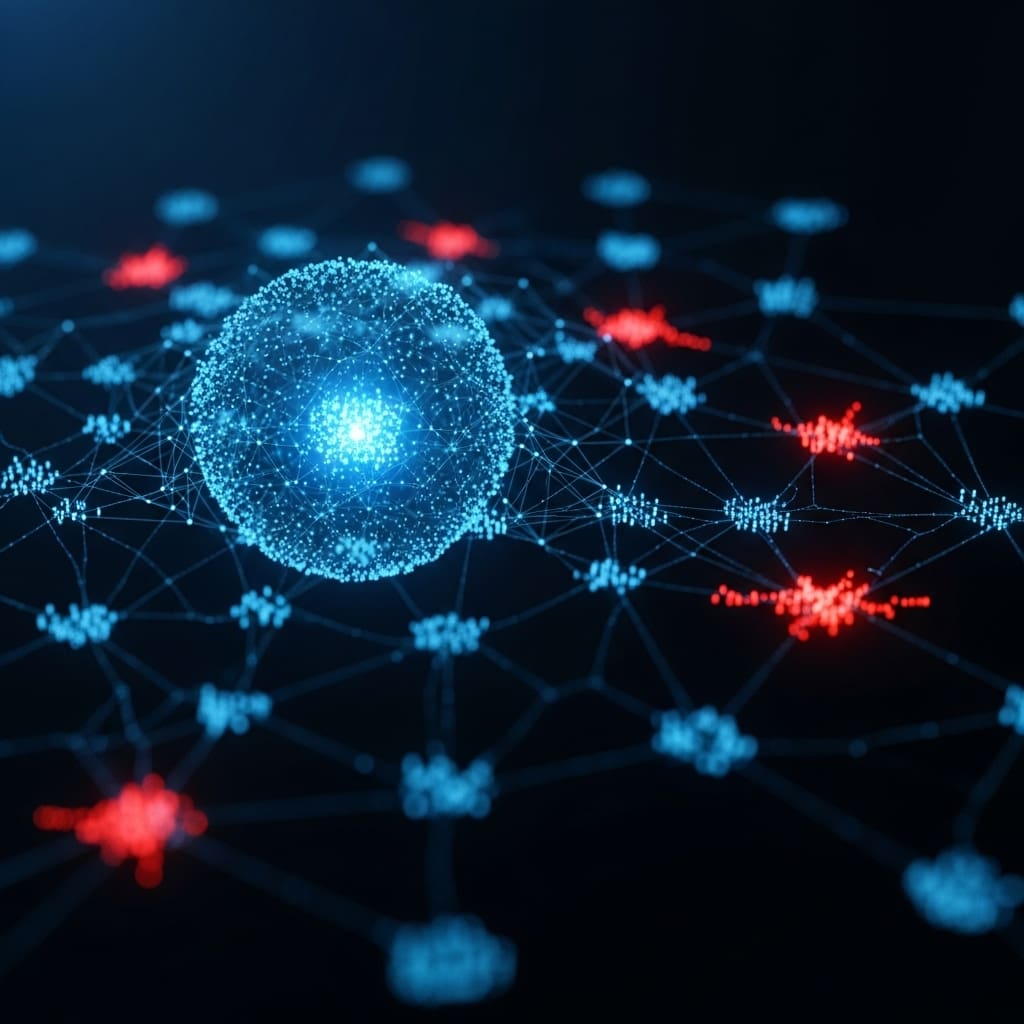
Complementary to the linguistic analysis, graph neural networks are employed to scrutinize coordination markers within these Telegram channels. This network analysis reveals communication patterns among users and tracks the evolution of discussions, which can signal coordinated malicious activity or the emergence of new attack strategies. Experimental results demonstrate SENTINEL’s efficacy, achieving a high F1 score of 0.89 in aligning social media dialogues with real-world cyber incidents, showcasing its potential superiority over traditional detection methods.
The research highlights how daily aggregated online discussions are encoded into semantic embeddings, capturing the nuanced meaning of conversations. Using the GraphSAGE algorithm, the team generates graph embeddings, which when combined with text-based embeddings, feed into a classifier designed to predict cyber events. These findings indicate that SENTINEL’s predictive capabilities could significantly enhance situational awareness in cybersecurity, offering timely warnings about potential threats. The system has already identified numerous relevant discussions involving malware, vulnerabilities, and ransomware, serving as a powerful tool for early intervention.
The results of this research underscore the growing importance of social media analysis in cybersecurity. By examining the interplay of language and network relations, SENTINEL positions itself as a proactive solution to an evolving threat landscape. The team’s work illustrates how integrating linguistic analysis with network dynamics can significantly enhance our ability to predict and understand cyber threats. As they look ahead, the researchers aim to broaden the framework’s capabilities by incorporating diverse data sources and refining its predictive accuracy.
👉 More information
🗞 SENTINEL: A Multi-Modal Early Detection Framework for Emerging Cyber Threats using Telegram
🧠 ArXiv: https://arxiv.org/abs/2512.21380
 Infoblox CEO Scott Harrell Urges Shift to Proactive Defense Against Unique AI Cyberattacks
 AI Security Firms Unveil Real-Time Threat Detection Solutions for Post-Quantum Inference
 90% of Organizations Unprepared for AI-Driven Cyber Threats, Study Reveals
 Asia-Pacific Firms Must Deploy AI for Cyber Defense Amid Rising Threats in 2026
 Top AI Cloud Security Tools for 2026: Enhancing Protection Across AWS, Azure, and Google Cloud