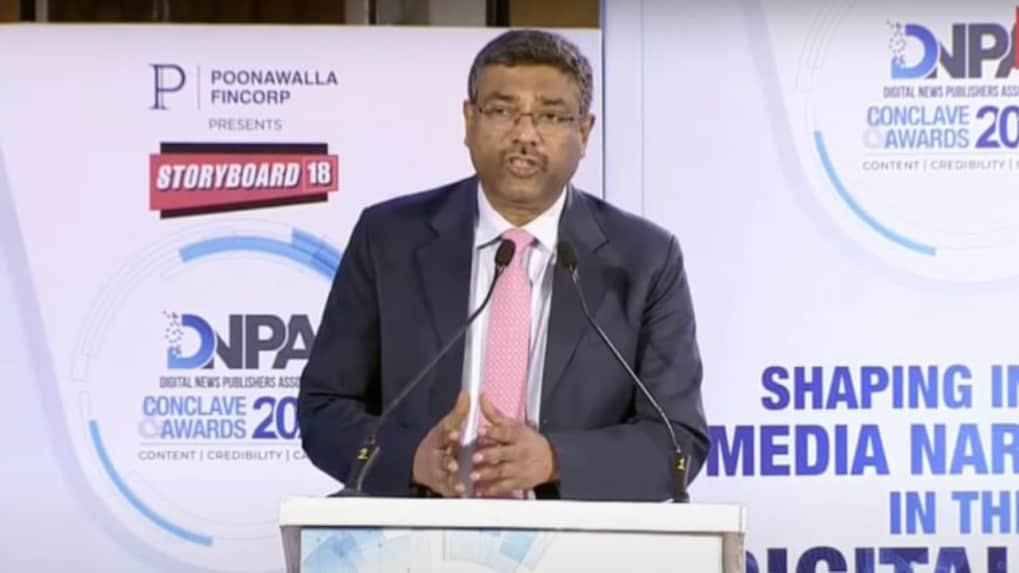
India is positioning itself as a leader in global artificial intelligence policymaking, preparing to host the next international AI Summit in February 2026. The Indian government envisions the summit as a platform to build a unified global approach to AI governance, according to Union electronics and IT secretary S Krishnan. This initiative underscores New Delhi’s ambition to influence the future trajectory of emerging technologies.
In an interview with CNBC-TV18, Krishnan emphasized that the summit is expected to produce tangible outcomes rather than be merely a forum for discussion. He indicated that the conversations are likely to yield a series of knowledge frameworks and documents aimed at helping countries align their perspectives on AI regulation and development. “The broader objective is to move closer to a shared understanding on how governments across the world should navigate the opportunities and risks posed by artificial intelligence,” he stated.
The scale of the summit is anticipated to attract participation from more than 100 countries. Notable global figures from both politics and industry are expected to attend, highlighting the significance of the event. Krishnan confirmed that Bill Gates, co-founder of Microsoft, has already agreed to participate, with chief executives from companies such as Anthropic and Adobe also likely to be present. Several other senior leaders have provided in-principle confirmations, with a clearer picture emerging after the holiday season.
Political engagement is also expected to be robust, with Krishnan noting that the French president is likely to join the attendees. Preparatory efforts for consensus-building are currently underway, with seven dedicated working groups established to engage with partner countries. These groups have already completed two rounds of meetings, and ongoing discussions with international counterparts are progressing. Krishnan expressed optimism that this groundwork would lead to meaningful advancements and positive outcomes by the time the summit convenes early next year.
In November, the Ministry of Electronics and Information Technology, under the IndiaAI Mission, introduced the India AI Governance Guidelines, a national framework designed to facilitate safe, inclusive, transparent, and responsible AI adoption. The guidelines were officially released by Prof Ajay Kumar Sood, Principal Scientific Adviser to the Government of India, along with senior leaders from MeitY, including S Krishnan and Abhishek Singh, Additional Secretary and CEO of the IndiaAI Mission. This launch is regarded as a strategic milestone as India gears up for the AI Impact Summit in 2026 and signifies a decisive shift in the country’s role as a serious global stakeholder in AI safety and accountability.
As the world increasingly grapples with the implications of artificial intelligence, India’s initiative to host the summit reflects a broader recognition of the need for international collaboration and dialogue. By seeking to establish a common framework for AI governance, India is positioning itself at the forefront of a discourse that will shape the development and regulation of this transformative technology in the years to come. The outcomes of the summit could have lasting implications not only for India but for the global AI landscape.
See also DeepSeek’s R1 Model Triggers $600B Loss for NVIDIA, Reshaping AI Valuations Globally
 PM Modi to Launch AI Impact Summit with Global Leaders, 15,500 Registrations from 136 Countries
 Salesforce Reallocates 4,000 Roles to Boost AI-Driven Sales Amid Investor Skepticism
 SpaceX, OpenAI, and Anthropic Rush Toward $1 Trillion Giga-IPO Amid Capital Crunch
 Offensive AI Memes Fuel 98% of New Crypto Rug Pulls Amid Weak Content Moderation