






















































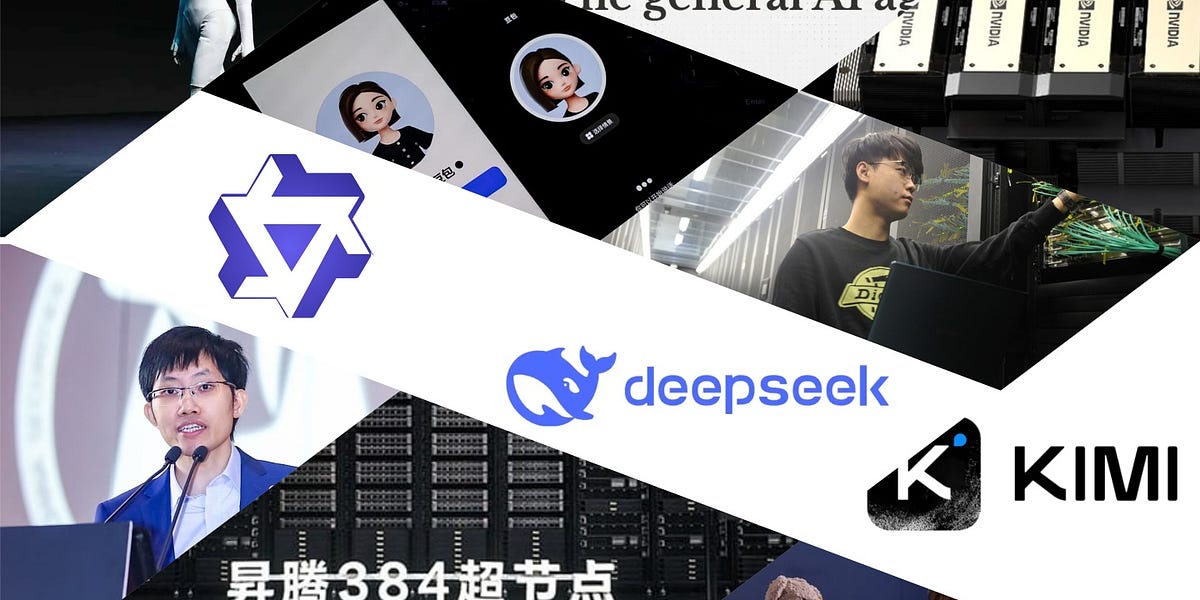
In a year marked by rapid advancements in artificial intelligence, China’s AI landscape has garnered unprecedented attention, particularly with the emergence of powerful large language models (LLMs) from companies like DeepSeek and Alibaba. The release of DeepSeek-R1 on January 20, 2025, positioned the company as a formidable player in the AI space, showcasing capabilities in multi-step reasoning that rivaled global benchmarks set by OpenAI’s models. DeepSeek-R1 demonstrated near-frontier performance in logical reasoning, coding tasks, and mathematical queries, revolutionizing perceptions about the capabilities of Chinese AI.
Operating on a surprisingly modest budget, DeepSeek trained its base model for under $6 million, while the R1 model cost less than $300,000 to develop. By comparison, OpenAI’s models, notably the o1 model, charge exorbitantly higher rates for usage. With inference costs significantly lower than its rivals—at $0.55 per million input tokens and $2.19 per million output tokens—DeepSeek’s approach not only slashed its operational costs but also made advanced AI accessible to a wider audience in China.
Following its release, DeepSeek’s chatbot app quickly ascended to the top of free app charts in both the U.S. and China. This meteoric rise sparked concerns among U.S. investors, leading to a notable downturn in tech stocks as they scrambled to understand how a relatively unknown Chinese startup had achieved such rapid success. In China, various companies and institutions eagerly sought to incorporate DeepSeek-R1 into their applications, marking a significant shift in access to generative AI technology for Chinese users.
Broader Implications and Continued Advancements
The launch of DeepSeek-R1 catalyzed a seismic shift in the AI narrative, challenging the prevailing assumptions that only massive investments could yield competitive models and that Silicon Valley held a monopoly on AI talent. Throughout 2025, DeepSeek continued to innovate, releasing models such as DeepSeek-V3.2-Thinking and DeepSeek-Math-V2, which achieved accolades like winning the International Olympiad in Informatics. However, the anticipated DeepSeek-V4 and DeepSeek-R2 were reportedly struggling to meet expectations, showcasing the unpredictable nature of tech development.
As the landscape evolved, China overtook the U.S. in cumulative open model downloads by July 2025, with companies such as MiniMax and Zhipu AI also contributing significantly to the competitive environment. Alibaba’s Qwen models emerged as leaders, with Qwen3-Max boasting one trillion parameters and outperforming several established models from rivals, solidifying Alibaba’s position as a key player in AI development.
Meanwhile, a new entrant, Manus AI, launched its sophisticated AI agent on March 6, 2025. Designed to autonomously execute complex tasks ranging from generating business reports to coding, Manus quickly gained traction, amassing millions on its waitlist. Following a successful $75 million funding round led by Benchmark Capital, the company relocated its headquarters to Singapore, highlighting a shift in global AI talent dynamics.
2025 also saw advancements in hardware, with Huawei unveiling its CloudMatrix 384 supercluster and announcing plans for a next-generation AI chip supercomputer expected to achieve 524 EFLOPS. This effort spurred other Chinese tech companies to promote their domestic AI hardware aggressively, as they recognized the imperative to reduce reliance on U.S. suppliers amidst ongoing geopolitical tensions.
As the year drew to a close, the landscape shifted once again when the Trump administration permitted sales of Nvidia’s advanced H200 GPUs, creating a dilemma for Beijing. While it remains committed to building a robust domestic AI chip industry, the availability of superior Nvidia technology could complicate efforts to advance homegrown AI capabilities.
Despite the challenges, 2025 showcased a decisive pivot in China’s AI narrative, highlighting the rise of indigenous innovations while navigating complex global dynamics. With plans to integrate AI into critical sectors by 2027 and to establish a fully intelligent economy by 2035, China’s ambition in the AI arena continues to unfold, driven by both necessity and aspiration.
See also 94% of Engineering Leaders Face Agentic AI Skills Gaps as Demand Surges in 2025
 Apple Reaches $4 Trillion with Privacy-First AI, Launches Apple Intelligence Ecosystem
 Swansea Man Paralysed by Wave Walks Again with AI-Enhanced Rehabilitation Technology
 Amazon Enhances AI Workflows with GenAI Learning Systems for Global Enterprises
 ByteDance Plans $14B Nvidia AI Chip Purchase to Boost Computing Power by 2026














