






















































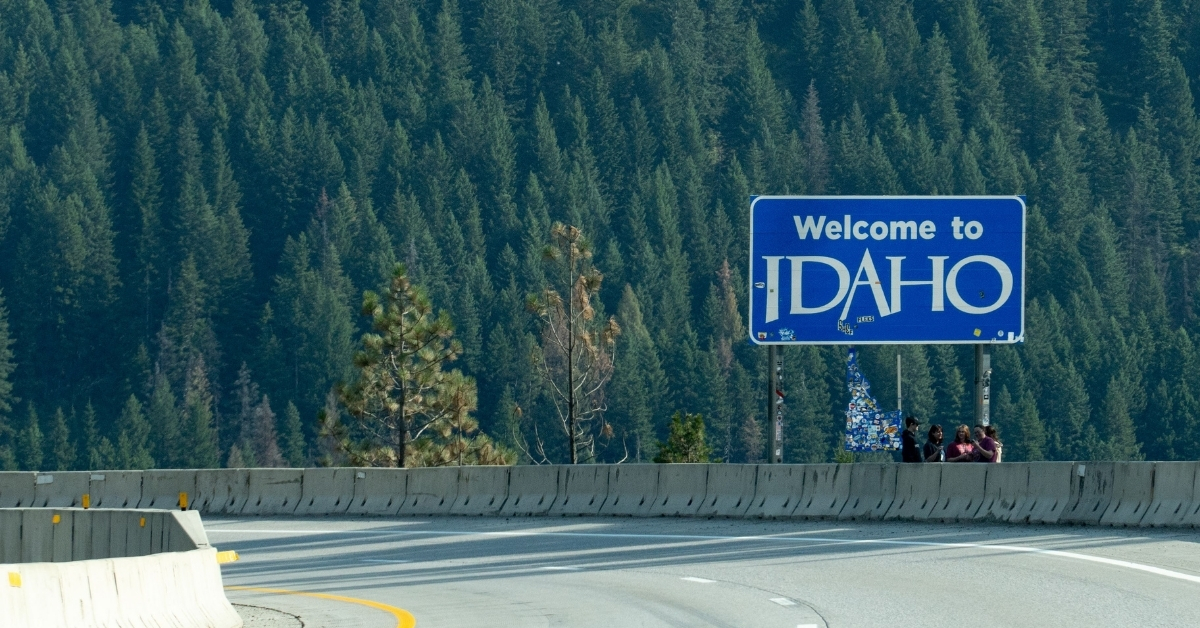
The National Weather Service (NWS) faced scrutiny this weekend after a wind forecast for rural Idaho included fictitious town names generated by artificial intelligence (AI). The unusual map featured whimsical names like “Orangeotild” and “Whata Bod,” which raised concerns among local residents who were puzzled by the apparent absence of these communities. The NWS has since confirmed that the graphic was an AI creation that inadvertently invented these locations, leading to its prompt removal and correction.
This incident highlights a broader experiment within the NWS to incorporate AI tools in various functions, including forecasting models and visual design. Although officials maintain that AI is not commonly utilized for public-facing content, this event underscores the potential pitfalls of relying on such technology for critical public safety communications.
John Sokich, a former longtime employee of the NWS, told The Washington Post that experimental products are usually clearly labeled, yet the agency’s recent foray into AI raises questions about the quality and reliability of the information being disseminated. Over the past year, many Weather Service employees have departed from their positions, either due to layoffs or unwillingness to navigate the complexities associated with AI-generated content.
The creation of fictional towns may seem innocuous, but experts believe it poses a serious risk to trust and confidence in public institutions. Weather forecasts are essential tools for public safety; inaccuracies can have dire consequences. While the incident with the absurd town names did not present an immediate safety threat, the possibility of AI making grave errors in more critical scenarios looms large. Instances of AI missteps in high-stakes environments underscore the need for rigorous oversight and accountability.
In an age where technology rapidly evolves, the implementation of AI raises important questions about its efficacy and the intentions of those deploying it. As seen in this case, if AI cannot accurately reflect even small details, it risks undermining the professionalism and credibility of the institutions that use it. The implications are significant; as AI systems become increasingly integrated into essential services, the concern grows regarding their ability to maintain accuracy and reliability.
Concerns over AI’s role extend beyond mere technical failures; they also touch on the broader societal implications of technology replacing human jobs. The erosion of trust in institutions may have long-lasting effects on public perception and engagement. While AI holds promise for enhancing efficiency and data analysis, its introduction in sensitive areas must be approached with caution. Stakeholders must ensure that the technology is implemented thoughtfully, with the public’s best interests as a guiding principle.
The recent incident at the NWS illustrates the critical importance of maintaining high standards in public safety communications. As AI technologies continue to evolve, the need for vigilance in their application grows ever more urgent. Ensuring that human oversight accompanies AI’s deployment in high-stakes environments will be crucial in preserving the integrity of essential services and maintaining public trust.
See also X Limits Grok Image Generation to Paid Users Amid Government Concerns Over Obscene Content
 Nano Banana Launches Advanced AI Image Generation, Enhancing Creative Workflows Effortlessly
 Grok AI Implements Paywall for Image Generation Amid Deepfake Backlash from Governments
 Researchers Develop Conformable Multimodal Imaging Marker to Enhance Surgical Navigation Accuracy
 ManGO Achieves Superior Offline Optimization Performance with Advanced Diffusion Models















