






















































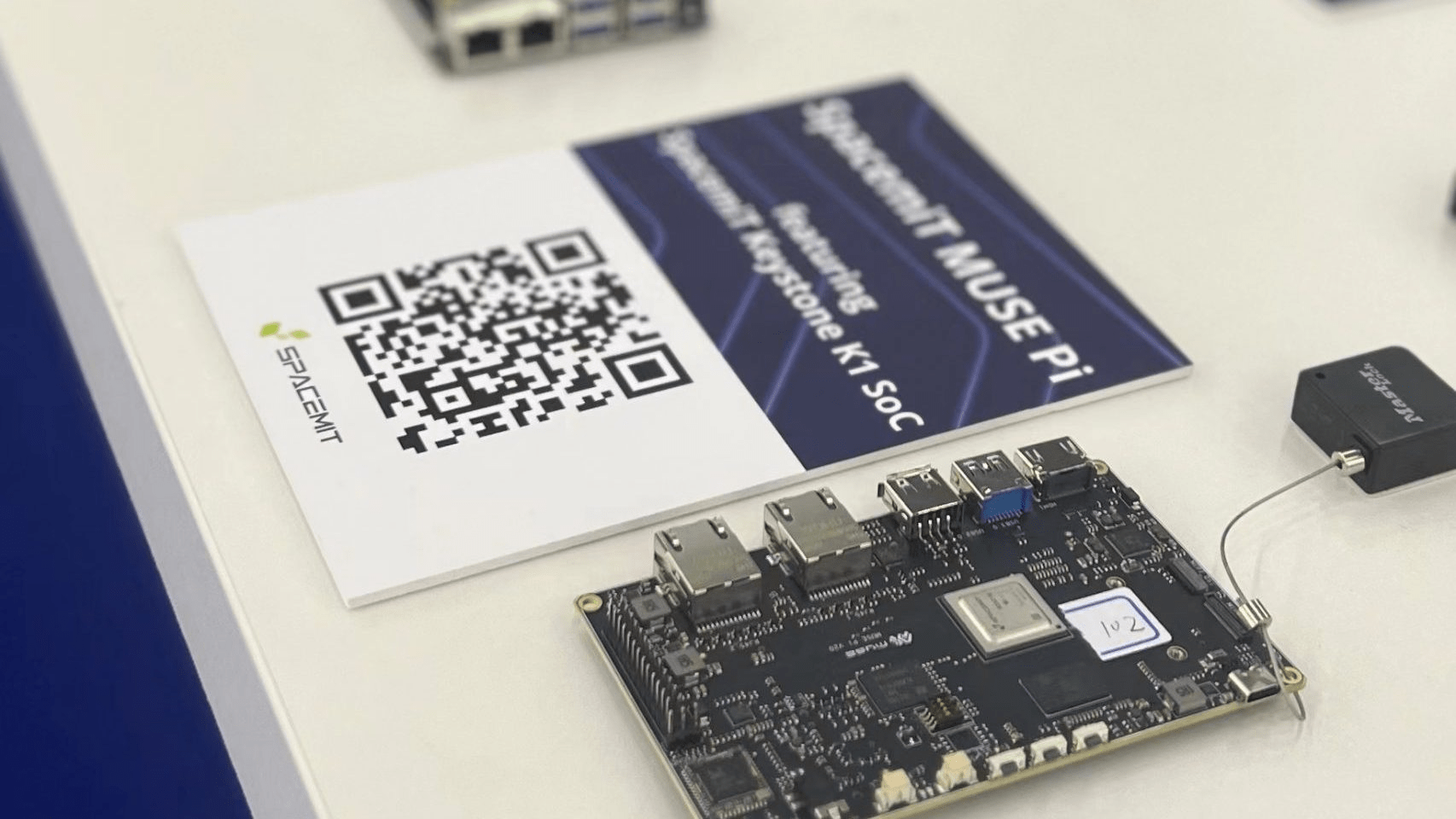
China’s SpacemiT has secured over 600 million yuan (approximately $86.1 million) in a Series B funding round aimed at enhancing its capabilities in the development of computing chips. The Hangzhou-based startup plans to introduce its latest RISC-V K3 chips, which will focus on powering artificial intelligence (AI)-enabled devices and robotics.
The funding was sourced from various state-backed investors, including the China Internet Investment Fund (CIIF), the Beijing Artificial Intelligence Industry Investment Fund, and a venture capital platform under the Beijing State-Owned Capital Operation and Management Company Limited. Other contributors included the asset investment unit of the Agricultural Bank of China, Huaxia Hengtian, private equity firm Forebright Capital, and existing shareholders, according to a statement released by SpacemiT on Thursday, January 15.
This new influx of capital will facilitate SpacemiT’s plans to advance the computing power of its next-generation RISC-V AI chips. The company aims to cater to a range of applications, from AI-enabled computers to robotics, while also strengthening its talent pool to meet the anticipated rise in demand driven by AI technologies.
Founded in November 2021, SpacemiT focuses primarily on developing next-generation RISC-V high-performance central processing units (CPUs) and integrated hardware and software optimization solutions. The startup is positioned to capitalize on the increasing importance of Edge AI, which allows AI processing to occur directly on local devices, enhancing privacy, reducing bandwidth usage, and facilitating real-time analysis and quicker decision-making.
SpacemiT’s chips are specifically designed to support large language models (LLMs) and are based on the RISC-V open-standard Instruction Set Architecture (ISA). This architecture provides a flexible and customizable foundation essential for building efficient processors tailored for Edge AI applications. The growing prominence of Edge AI positions SpacemiT favorably in a market that demands immediate processing capabilities across various devices, from smartphones to industrial sensors.
The company is currently working on its latest RISC-V AI CPU, the K3, which is slated to commence mass production in April this year. This follows the successful tape-out process completed last year, a critical phase where the finalized chip design is sent to a foundry for manufacturing. SpacemiT’s founder and CEO, Chen Zhijian, confirmed these developments in an interview with the South China Morning Post.
Since launching its first octa-core 64-bit RISC-V AI chip, the K1, in 2024, SpacemiT has reportedly shipped over 150,000 units, with applications spanning open-source hardware, AI-enabled devices, and robotics. As such, the company is poised to play a significant role in the burgeoning sector of AI technology, with its advancements not only enhancing computational power but also potentially transforming the landscape of AI applications.
As AI technology continues to evolve, the demand for efficient processing solutions remains high. SpacemiT’s strategic focus on RISC-V architecture and Edge AI could position it as a key player in the rapidly expanding AI market. The company’s efforts to bolster its research and development capabilities through new funding may further enhance its competitive advantage, allowing it to meet the needs of an industry that is increasingly reliant on sophisticated computational power.
See also Lenovo Partners with Borussia Dortmund as AI Innovation Leader, Investing $2 Billion in Tech Upgrade
 Etched Secures $500 Million Funding Round, Reaches $5 Billion Valuation in AI Processor Market
 AI’s Risks in Education Outweigh Benefits, Brookings Study Reveals Global Concerns
 Beijing Limits Nvidia Chip Imports Amid Rising US-China Tech Decoupling
 OpenAI Secures $10B Deal with Cerebras for 750 MW of AI Computing Power















