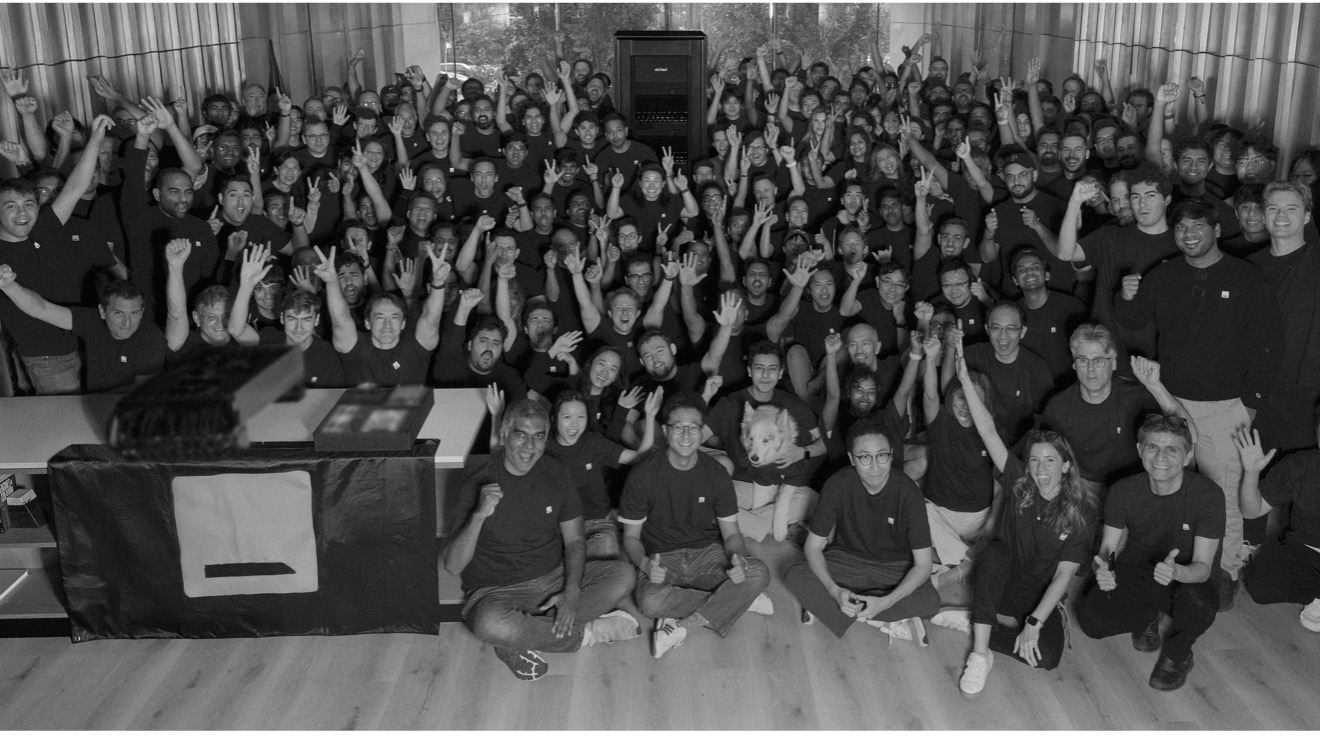
Etched, a California-based start-up founded in 2022, has entered the competitive landscape of AI processors by securing a $500 million funding round led by Stripes and investor Peter Thiel. This investment elevates the company’s total funding to $620 million and bolsters its valuation to a remarkable $5 billion. The firm specializes in the development of Sohu, a proprietary transformer-only ASIC that collaborates with TSMC and is engineered by talent from Broadcom and Cypress. Etched is positioning itself at the forefront of a crucial shift in AI infrastructure, asserting that the limitations of AI scale stem from silicon capabilities rather than software advancements.
The recent funding places Etched in a select group of AI processor start-ups that have accumulated between $500 million and $999 million in investment. In the broader AI processor (AIP) market, which comprises 102 private start-ups, many companies are vying to capture market share from the dominant player, Nvidia. The company’s recent valuation aligns it with the growing trend towards specialized AI hardware, responding to the increasing demand for dedicated infrastructures to handle complex AI workloads.
Etched’s Sohu processor is designed as a high-efficiency transformer engine, emphasizing the necessity for specialized architectures to meet current and future AI demands. The company has made strategic partnerships with TSMC and hired seasoned engineers to facilitate the development of its technology. Etched argues that the existing bottlenecks in AI scalability are fundamentally tied to silicon capacity, a claim that reflects a broader industry consensus on the need for specialized hardware solutions.
While the AIP market has seen significant investments—totaling over $28 billion—Etched’s recent valuation stands out when compared to companies like Groq, which was acquired by Nvidia for $20 billion after having raised $210 million. This suggests that Etched’s $5 billion valuation could be conservative in light of potential future acquisitions.
Potential buyers for Etched could include major tech players such as AWS, Meta, Microsoft, Oracle, and OpenAI, all of whom may be keen to integrate Sohu’s efficient inference capabilities into their offerings. The backing of Peter Thiel, despite his polarizing reputation, could further increase the attractiveness of Etched to these larger firms, emphasizing his knack for identifying promising investment opportunities.
The $500 million investment is expected to enable Etched to expand its operations beyond chip manufacturing into a more comprehensive solutions provider, reflecting a strategic vision that many in the industry support. The Sohu processor utilizes High Bandwidth Memory (HBM3E), positioning it to compete directly with Nvidia for access to memory production. Competing firms like Rubin, which employs HBM4, could complicate supply chain dynamics for Etched, as demand from larger companies could limit its access to necessary resources.
As Etched continues to grow, it will need to navigate the competitive landscape with caution, balancing its ambitions against the realities of a rapidly evolving market. The company’s focus on specialized AI solutions aligns with industry trends that favor tailored approaches over general-purpose architectures, potentially setting the stage for significant advancements in AI-capable hardware. The interest from major technology firms, alongside rising investment in the AIP sector, indicates a vibrant future for Etched as it seeks to solidify its place among the leaders in AI hardware innovation.
See also AI’s Risks in Education Outweigh Benefits, Brookings Study Reveals Global Concerns
 Beijing Limits Nvidia Chip Imports Amid Rising US-China Tech Decoupling
 OpenAI Secures $10B Deal with Cerebras for 750 MW of AI Computing Power
 Nvidia’s H200 Chip Blocked by China Customs, Suppliers Halt Production Amid 1M Orders
 ST Engineering (S63.SI) Surges 2.24% to S$9.60 Amid Strong AI Contract Demand