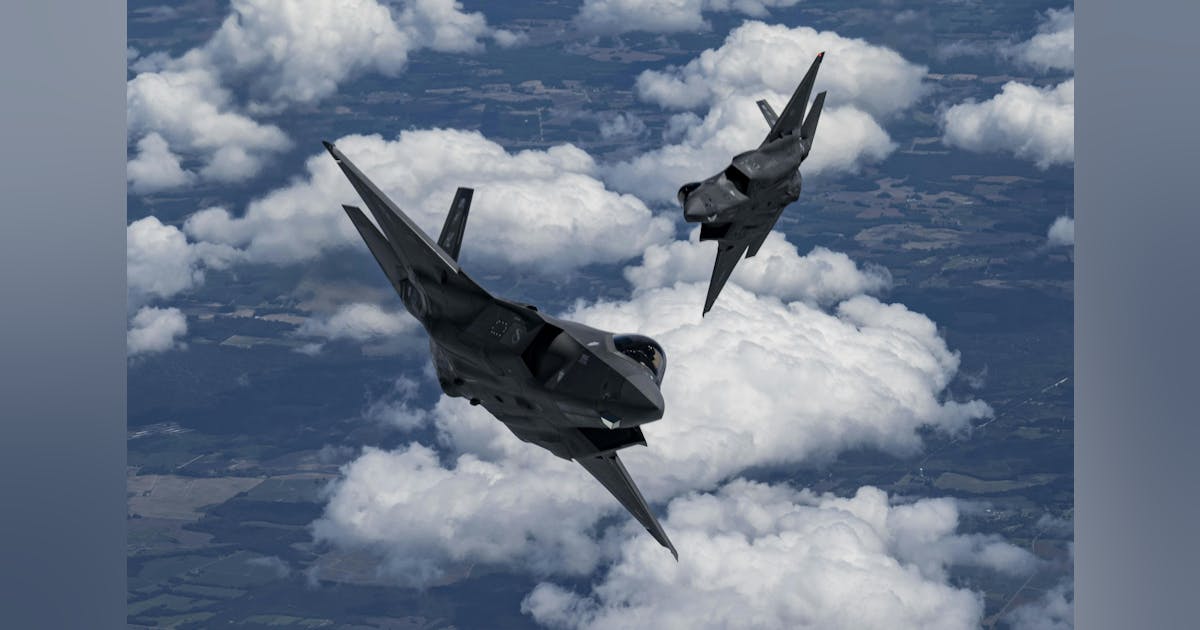
WRIGHT-PATTERSON AFB, Ohio – U.S. Air Force researchers have tapped into innovative solutions for air-to-air and air-to-ground combat identification, awarding a $15 million contract to Matrix Research based in Dayton, Ohio. This collaboration, announced earlier this month by officials from the Sensors Directorate of the Air Force Research Laboratory, centers around the Combat Identification Automated Target Recognition Technology (CATCH) project.
Under the CATCH initiative, Matrix Research will delve into next-generation combat identification software algorithms aimed at enhancing the performance of existing systems used in the F-16 and F-15 combat jets. The project encompasses both single- and multi-platform combat identification research, particularly focusing on air-to-air and air-to-ground scenarios relevant to current fielded systems.
The CATCH project employs advanced sensor technology and artificial intelligence (AI) to rapidly detect, classify, and identify various objects in combat settings. This capability is crucial for supporting real-time decision-making and minimizing operational errors. The initiative is designed to automatically address three significant queries: is the object a tank, truck, drone, human, decoy, or terrain feature; is it friendly, enemy, neutral, or unknown; and is it relevant or threatening?
The technology will integrate data from diverse sensors, including visible-light and infrared cameras, radar, lidar, acoustic sensors, and signals intelligence (SIGINT). Recognizing that no single sensor excels in all environmental conditions—such as fog, smoke, darkness, or electromagnetic interference—CATCH aims to create a more robust identification framework.
Through the use of AI, machine learning, and deep learning techniques, CATCH will analyze extensive labeled datasets to identify patterns in shapes, heat signatures, movements, and behaviors. This analysis will facilitate the swift differentiation between friendly forces, enemy combatants, and civilians.
In addition to identifying threats, the CATCH system will prioritize potential dangers based on their significance and ensure that human operators remain integral to the decision-making process. This human-in-the-loop approach is vital for reducing the risk of fratricide and enhancing trust in automated systems amid complex operational challenges.
The implications of the CATCH project extend beyond immediate air combat scenarios. The enabling technologies being developed could be applicable across various platforms, including crewed and uncrewed aircraft, satellites, ground vehicles, naval vessels, and perimeter-security facilities. Such versatility underscores the potential for enhanced operational effectiveness in a range of military applications.
As technology continues to evolve, the CATCH initiative is set to play a key role in shaping future combat identification strategies, ultimately aiming to bolster the U.S. Air Force’s capabilities while minimizing the risks associated with combat operations. For additional information, Matrix Research can be reached online at www.matrixresearch.com, while the Sensors Directorate of the Air Force Research Laboratory can be found at www.afrl.af.mil/RY.
See also Singapore Unveils Global First Agentic AI Governance Framework; Armor Launches ASEAN Initiative to Ensure Compliance
 China Approves DeepSeek’s Conditional Purchase of Nvidia H200 Chips Amid Geopolitical Tensions
 NVIDIA’s Earth-2 Delivers 15-Day Weather Forecasts in Minutes, Revolutionizing Meteorology
 Google’s Project Genie Reveals AI’s Potential to Revolutionize Game Design and NPC Behavior