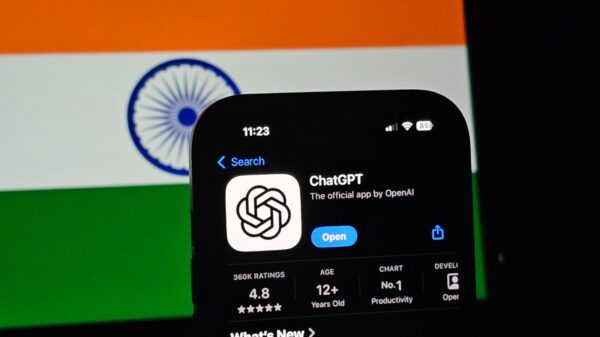
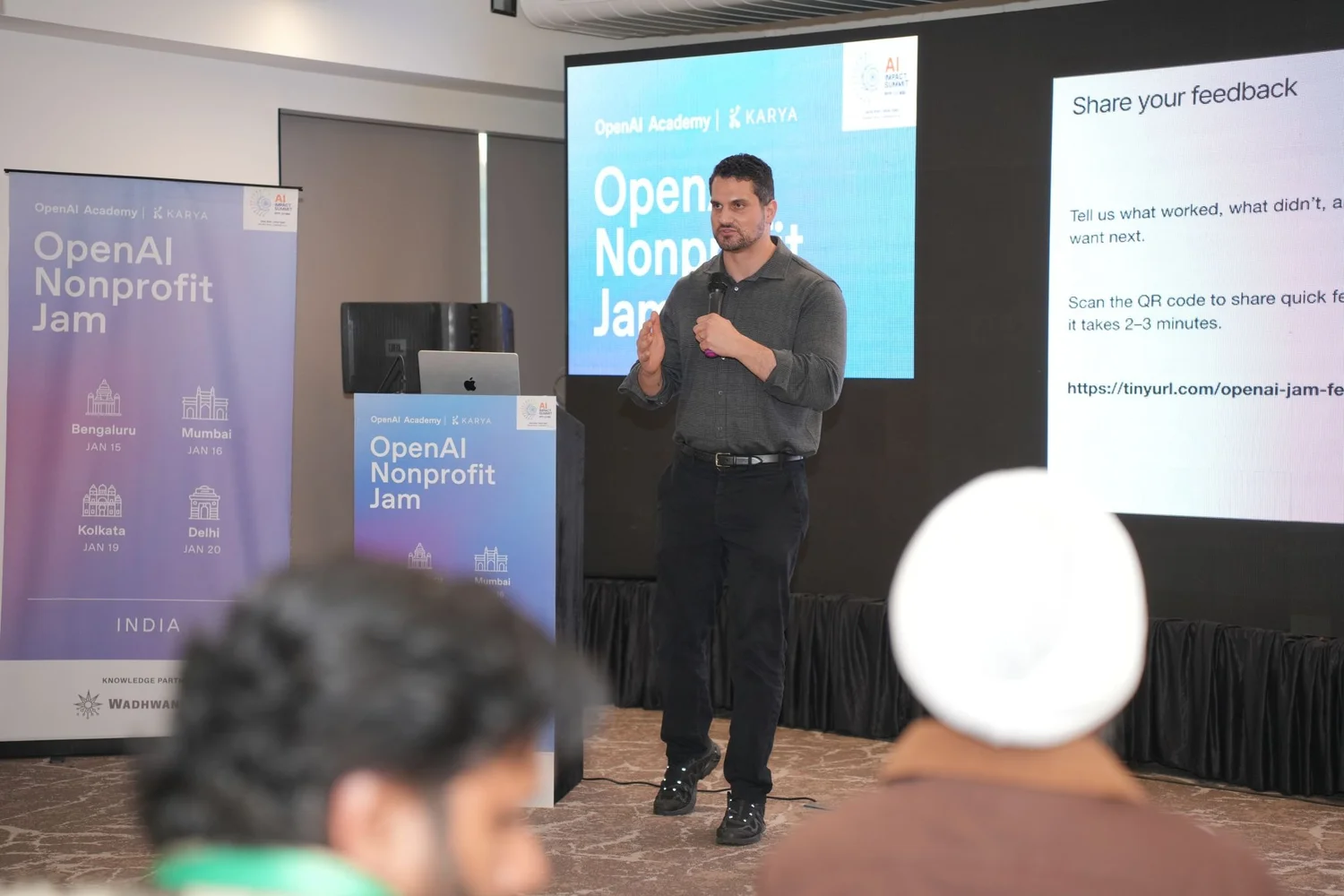
OpenAI has wrapped up a multi-city Nonprofit AI Jam across India, engaging more than 200 nonprofit leaders through hands-on workshops in Bengaluru, Mumbai, Kolkata, and Delhi. The initiative, delivered via OpenAI Academy, prioritized practical AI deployment, enabling participants to create reusable workflows that address real organizational challenges.
This initiative is significant as it signals a shift in the development of AI skills within education-adjacent and social impact sectors. Rather than concentrating on abstract training or pilot projects, OpenAI’s approach emphasizes applied literacy, operational use, and tangible outcomes, which are increasingly critical for workforce readiness and skills-based learning.
Alex Nawar, a member of OpenAI’s Global Affairs team, highlighted the outcomes of the initiative on LinkedIn, noting that the Jam worked closely with over 200 nonprofit leaders nationwide. He stated that approximately 90% of participants left with a reusable AI workflow, underscoring the program’s intent to enhance AI literacy starting with basic prompting advice, and focusing on real nonprofit workflows.
Nawar pointed out the importance of time allocated for participants to build their workflows, stating that the emphasis was on deployment and actual results, as opposed to mere experimentation. He noted a diverse array of prototypes developed during the sessions, with teams producing working examples ranging from children’s book illustrations to internal HR and operations assistants.
Feedback from other OpenAI team members echoed this theme across multiple locations. Rajan Patel, a Solutions Engineer at OpenAI, mentioned that participants were able to “build with ChatGPT and leave with working solutions on the same day,” reflecting on the notable progress achieved given the varied sectors represented. Royston Lobo, involved in Go-to-Market strategies at OpenAI, added that the workshops enhanced AI literacy across nonprofits in areas such as education, healthcare, and career support.
Lobo emphasized how the sessions focused on leveraging AI to increase operational efficiency and expand the reach of nonprofits. Rohan Kochhar, associated with OpenAI and King’s College London, remarked that participants arrived with genuine questions regarding their current programs and how AI could alleviate the strain on their teams.
Pragya Misra, who leads OpenAI’s efforts in India, shared that a consistent message emerged through the Jam: while there is high interest in AI, transitioning from experimentation to real deployment remains a challenge. She noted that the initiative reinforced the idea that “real impact comes from deployment, not pilots,” especially in sectors that operate at scale, emphasizing the need for practical solutions that address immediate concerns.
This engagement with nonprofit leaders reflects a broader trend in the tech landscape, where organizations are increasingly seeking to harness AI not just as a tool for innovation, but as a means to drive social good. As the demand for effective, scalable solutions in the nonprofit sector grows, initiatives like OpenAI’s Nonprofit AI Jam could play a pivotal role in shaping the future of AI literacy and application in this space.
See also Barton Peveril Launches AI Assistants on Google Cloud, Enhancing Student and Staff Experience
 Adobe Partners with UK Government to Launch AI Skills Initiative in Barnsley
 OpenAI Launches Codex Desktop App for Multi-Agent Development on macOS
 myAIcademy Launches Adaptive AI Learning Platform, Targeting $5.5 Trillion Skills Gap