Artificial intelligence (A.I.) has emerged as a transformative force, shaping various aspects of society and industry. Just five years ago, few could have predicted the pervasive impact A.I. would have on daily life and economic structures. Today, large language models have made A.I. a household topic, with advancements across all areas of the technology leading to both excitement and concern. As businesses explore ways to automate tasks and improve productivity, educators grapple with students’ reliance on these tools, while mental health practitioners find new avenues for support through A.I.-driven interactions.
In light of these developments, experts from diverse fields have shared their predictions about the future of A.I. over the next five years. Among them, historian Yuval Noah Harari suggests that A.I. agents may attain legal personhood in some jurisdictions, fundamentally altering the landscape of rights and responsibilities. In contrast, computer scientist Melanie Mitchell warns that despite the rapid advancements, A.I. is unlikely to cure diseases such as cancer or solve complex scientific problems, emphasizing that fluency in conversation does not equate to true intelligence.
Economic implications abound as well. Carl Benedikt Frey, an economist at the University of Oxford, highlights a critical point: A.I. tools may enhance efficiency, but they will not deliver sustained prosperity if they are used merely to automate existing tasks. Instead, significant breakthroughs are expected to arise from entirely new industries. Cognitive scientist Gary Marcus remains skeptical about the timeline for achieving artificial general intelligence (A.G.I.), asserting that it is improbable to arrive by 2027 or even 2032.
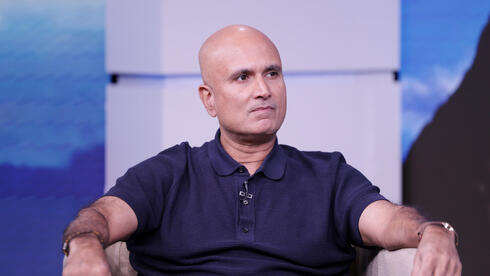
Ajeya Cotra, an A.I. risk researcher, believes that five years from now, A.I. companies may have automated many of their operations, potentially accelerating progress in the field. Meanwhile, Aravind Srinivas, co-founder of Perplexity, envisions a world where personal A.I. assistants empower users, advocating for their private and secure use. These perspectives reflect the multifaceted nature of A.I.’s development and its implications across various sectors.
Impact on Healthcare and Beyond
The influence of A.I. on medicine is a pressing concern among experts. Marcus notes that while proof-of-concept studies exist, tangible applications in healthcare, beyond medical note-taking, remain scarce. Conversely, Frosst believes A.I. will enhance doctors’ effectiveness, reducing workloads by streamlining access to patient histories and identifying issues earlier. Yet, he cautions that the technology is not equipped to autonomously create novel treatments, which may lead to disappointment.
In programming, Harari points out that coding, a domain largely devoid of physical and biological constraints, is particularly amenable to A.I. assistance. Frey cites randomized trials indicating that developers can complete tasks significantly faster when using tools like GitHub Copilot, although many remain wary of the outputs generated by these systems.
Looking at scientific research, Melanie Mitchell expresses skepticism about the rapidity of A.I.’s impact, noting that human oversight remains crucial in formulating questions and planning experiments. Srinivas highlights A.I.’s burgeoning role as a comprehensive repository of knowledge, catering to humanity’s innate curiosity.
In the realm of transportation, Frosst envisions A.I. improving logistics, enhancing safety, and optimizing routes. Toner adds that while self-driving cars could prevent traffic fatalities, the deployment of such technology is progressing slowly, leaving uncertainty about its broader implications.
Education faces a similar crossroads. Frey notes that while A.I. tutors may surpass human educators, they can also encourage shortcuts that undermine genuine learning. Marcus warns that the rise of automated writing tools has led to confusion regarding traditional educational methods. Yet, Toner posits that adapting to A.I. could prompt a necessary and beneficial shift in pedagogical practices.
As mental health emerges as another area of A.I. application, experts express mixed sentiments. Mitchell raises concerns about A.I.-induced psychosis while acknowledging the potential for chatbots to provide therapeutic support. Harari cautions that the rapid evolution of A.I. technology may precipitate a mental health crisis as individuals struggle to adapt to its implications.
In the creative sphere, Mitchell argues that A.I. will reshape art and music, not necessarily because machines are more creative, but due to their cost-effectiveness. Harari predicts that A.I. will excel in creative fields that depend on pattern recognition. Frosst emphasizes that while A.I. can offer inspiration, the human touch will remain invaluable in decision-making.
As the conversation surrounding A.I. continues to evolve, it is essential to dispel misconceptions. Mitchell highlights the fallacy of perceiving A.I. as possessing “magic” abilities. Meanwhile, Harari reminds us that A.I. is not merely a tool; it has the capacity to make independent decisions, complicating our understanding of its role in society.
Looking ahead, experts urge vigilance and preparedness for the challenges and opportunities A.I. presents. As we navigate this transformative era, striking a balance between harnessing A.I.’s potential and preserving the unique qualities of human intelligence will be paramount in shaping a future marked by innovation and ethical considerations.
See also Xero Reports 2M AI Users, Secures Melio Integration, Targets FY28 Profitability
 AI-Optimized Middle-Mile Linehaul Platforms Market to Surge 244% by 2035, Driven by E-Commerce Demand
 Nvidia Establishes $105M Taipei HQ to Secure AI Chip Supply Amid TSMC Demand Surge
 Massimo Group Moves to Acquire FST for $27M–$35M, Advancing AI in Mobility and Health Tech
 Alibaba Allocates $432M for Qwen AI Blitz, Launches Zhenwu 810E Chip Amid Market Rivalry