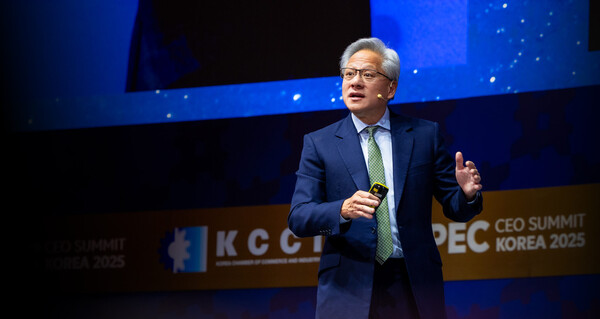
Taiwan has solidified its position as a crucial player in the global AI chip market, serving as a vital manufacturing hub for NVIDIA. The island’s role in semiconductor production remains irreplaceable, despite ongoing geopolitical tensions. NVIDIA CEO Jensen Huang emphasized this reality during a recent visit to Taipei, asserting that the company’s success is deeply intertwined with Taiwan’s semiconductor capabilities, particularly those of Taiwan Semiconductor Manufacturing Company (TSMC), which controls approximately 70% of the world’s advanced chip production.
The company’s upcoming NT$3.3 billion (US$105 million) headquarters in Taipei’s Beitou-Shilin Technology Park is more than a corporate expansion; it represents a strategic response to vulnerabilities in global AI infrastructure. This move underscores the significance of Taiwan in the semiconductor supply chain, especially as TSMC ramps up investments in capacity, projecting capital expenditures of between US$52 billion and US$56 billion by 2026. Huang’s remarks about TSMC potentially doubling its capacity over the next decade serve as a warning of the persistent imbalance between constrained supply and soaring demand.
NVIDIA anticipates fiscal Q4 2025 revenues ranging around US$65 billion, while TSMC expects its Q1 2026 revenues to be between US$34.6 billion and US$35.8 billion, with gross margins between 63% and 65%. Such figures reflect a strong pricing power for TSMC, which remains the sole source for cutting-edge AI chips. Zacks Investment Research forecasts TSMC’s earnings growth at 46.2% for the current quarter and 29.1% year-over-year, revealing the company’s robust position in the market.
The recent easing of US-China trade tensions has renewed investor optimism for NVIDIA‘s potential revenue from China, particularly following approvals for select Chinese firms to purchase NVIDIA‘s H200 chips. This relationship accentuates Taiwan’s strategic importance as a neutral ground for the global tech ecosystem, able to serve various markets while navigating complex geopolitical landscapes. Huang’s visit to mainland China prior to arriving in Taiwan was not mere courtesy; it was a strategic initiative to gauge demand from a diverse array of partners across the region.
However, NVIDIA‘s competitors, including Advanced Micro Devices (AMD) and Intel, face significant challenges. Regardless of their chip designs, they remain dependent on TSMC’s limited manufacturing capacity. Products like Google’s TPUs and Amazon’s Trainium also rely on TSMC’s advanced technology nodes, which adds to the competitive pressure in an already strained supply chain. The establishment of NVIDIA‘s Taipei headquarters will provide it with early insights into TSMC’s capacity plans and enhance its advantage in accessing new manufacturing processes.
The establishment of NVIDIA‘s headquarters in Taipei brings to light three critical realities for the tech sector. First, initiatives like the US CHIPS Act and European semiconductor subsidies are unlikely to diminish Taiwan’s pivotal role in AI infrastructure over the next decade. Projects in Ohio and Texas may not reach TSMC’s current output capabilities until late in the 2020s, if at all. Second, the concentrated risk associated with a single island producing the majority of advanced chips is worsening, not improving; TSMC’s planned expenditures in 2026 alone surpass the annual revenues of many competitors. Third, the appreciation of NVIDIA‘s stock by nearly 60% over the past year signifies investor confidence that the demand for AI chips represents a structural shift rather than a fleeting trend.
Despite Taiwan’s economic signals indicating an overheated market, the global demand for TSMC’s output is prompting policymakers to overlook potential risks. NVIDIA‘s headquarters acts as both a precautionary measure and a strategic essential. The company’s reliance on TSMC’s ability to deliver high-performance chips means that managing this relationship from afar is inadequate. By embedding engineers in Taiwan and fostering relationships with TSMC executives, NVIDIA is positioning itself for a long-term commitment to the region.
As Huang plans to return to Taiwan in June for Computex Taipei, he signals that NVIDIA will make several key announcements. This underscores the intertwined futures of NVIDIA and Taiwan, a region that has become essential to the AI industry’s evolution. The implications are clear: losing access to Taiwan’s manufacturing prowess could mean losing the competitive edge in the AI landscape altogether. Such dependencies raise significant concerns for policymakers, as the tech sector faces an increasingly uncertain future without alternatives to Taiwan’s semiconductor production.
See also Massimo Group Moves to Acquire FST for $27M–$35M, Advancing AI in Mobility and Health Tech
 Alibaba Allocates $432M for Qwen AI Blitz, Launches Zhenwu 810E Chip Amid Market Rivalry
 DeepSeek R1 Matches ChatGPT Performance at 96% Lower Cost, Targets Developers
 EU Leaders Convene in Dubai to Tackle AI, Trade, and Geopolitical Challenges
 Airrived Secures $6.1M to Revolutionize Enterprise AI with Groundbreaking Agentic OS