By Andrew Cohen
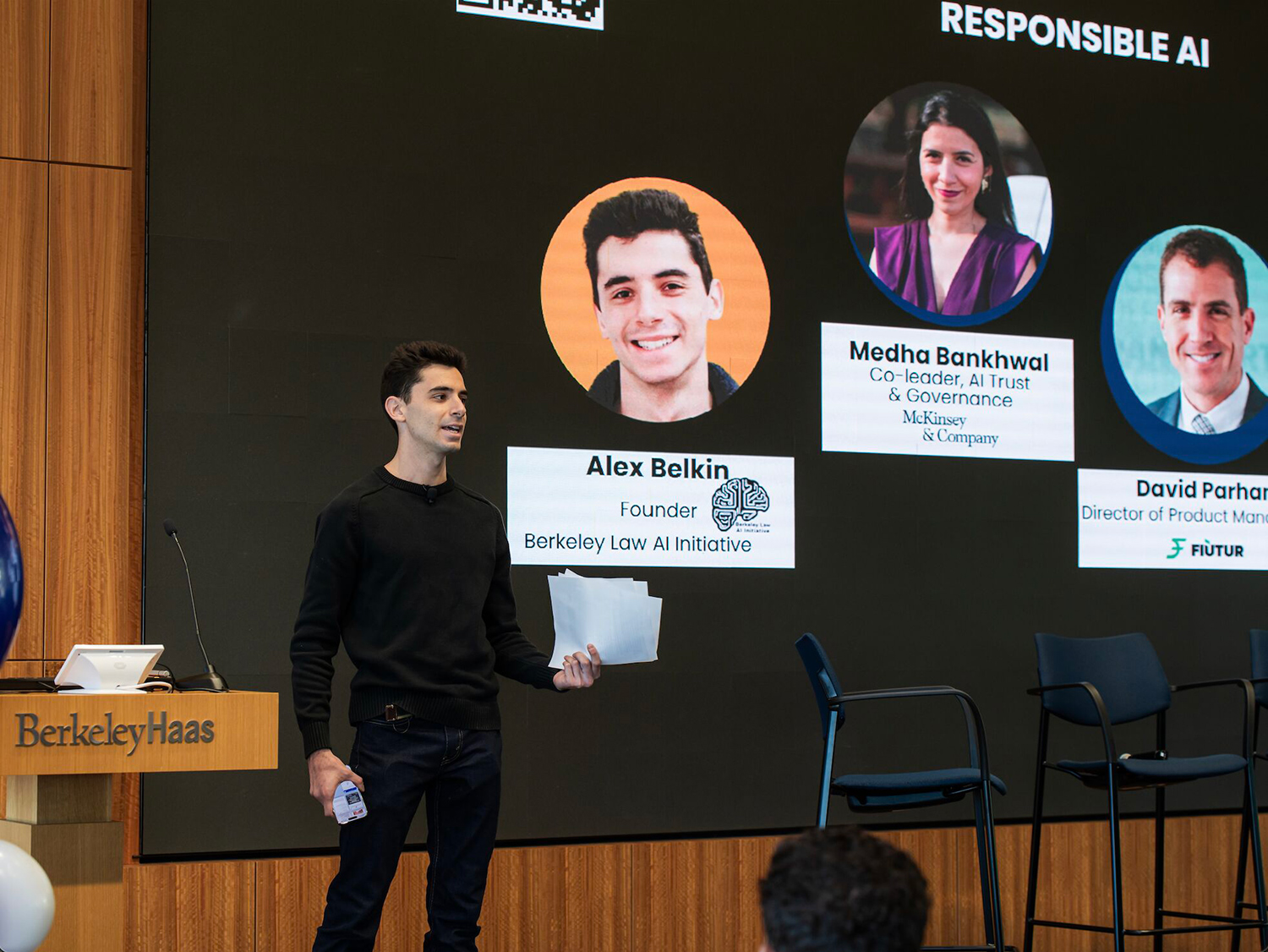
3L Alex Belkin, a law student at the University of California, Berkeley, has combined his passion for entrepreneurship and technology to create significant student-led initiatives. Inspired by the entrepreneurial spirit of his father and grandfather, Belkin has launched two influential groups focused on cutting-edge technology: Blockchain & Law at Berkeley and AI @ Berkeley Law. His ventures aim to bridge the gap between legal practice and rapidly evolving tech fields.
Belkin’s interest in blockchain technology developed while he was working at a blockchain startup shortly after college. He recognized the increasing importance of blockchain in various sectors, such as finance, identity verification, and cybersecurity. “The industry was operating in a legally uncertain environment,” Belkin noted, emphasizing the critical role of legal professionals in shaping this emerging field. His admiration for the impact that the general counsel of his company had on its trajectory further fueled his ambition to explore the intersection of law and technology.
In his first semester at Berkeley Law, Belkin reached out to classmates interested in blockchain, leading to the establishment of Blockchain & Law at Berkeley. The group started small, initially hosting meetings and recruiting members but has since grown into a vibrant community with a series of events and projects both within and outside the law school. “As AI-enabled deep fakes, misinformation, and cybercrimes continue to intensify, blockchain will grow in value and adoption,” he said, highlighting its potential to provide secure transactions and identity verification in an increasingly digital world.
Belkin’s commitment to the field of artificial intelligence is equally robust, having founded AI @ Berkeley Law to raise awareness and educate others about AI-related legal, policy, and regulatory issues. The group features a variety of programming, including lunch talks that resemble fireside chats and panel discussions, often co-hosted with other student organizations such as the Berkeley Business Law Journal and Women in Tech Law. Notable speakers have included senior lawyers from leading AI companies and policy experts in the field.
As a leader, Belkin emphasizes a culture of distributed ownership and accountability. During the inaugural meeting of AI @ Berkeley Law, he encouraged board members to view their roles as “a startup within a startup,” fostering an environment where creativity and initiative are paramount. “I strongly believe in empowering board members,” he said, “which allows us to move fast and execute at a high level without bottlenecks.” This approach aligns with his previous experiences at Columbia, where he founded a peer-to-peer college consulting company that expanded to five universities.
Collin Woodward, general counsel at a tech startup where Belkin interned, remarked on his unique blend of business and legal acumen. “It’s rare to encounter young professionals with both a business and legal mindset, and rarer still to see that in someone who hadn’t yet entered law school,” Woodward said, praising Belkin’s ability to address legal issues through a business-first lens.
Belkin chose Berkeley Law for its renowned technology and business law programs and its proximity to Silicon Valley. He aims to work in-house for an innovative tech startup after graduation. However, managing two student organizations has posed challenges, particularly in coordinating schedules among students. Still, he values the eagerness of Berkeley Law students to collaborate once engaged.
Belkin also expressed concern about widespread misconceptions surrounding generative AI, warning against viewing it merely as another software technology. He describes the development of generative AI models as “more akin to growing an intelligent alien species than writing code.” This perspective underscores his belief that current legal frameworks may not adequately address the unique challenges posed by AI technologies. “While most lawyers know that IP and copyright are currently under siege, few grasp the fundamental difference in how this technology operates compared to any previous software products,” he stated.
As the legal AI landscape rapidly evolves, Belkin feels poised to play a pivotal role in shaping its future. “This is a uniquely rare moment in time when I can directly participate in bringing about a new era for the legal industry,” he concluded, underscoring the importance of integrating legal expertise with technological advancements.
For more information on blockchain technology, visit IBM Blockchain. To learn more about the implications of artificial intelligence in legal contexts, explore resources from OpenAI.
See also Invest $1,000 in These 3 AI Stocks: Palantir, Nvidia, and Alphabet for Explosive Growth
 OpenAI Wins Legal Battle, Keeps Confidential Attorney Messages Private in Copyright Case
 AI Fuels Samsung and Micron’s Surge as They Eye Trillion-Dollar Valuations
 AI-Driven Revenue Deflation in Indian IT Stocks Likely Exceeds 3%, Warns Bhavin Shah
 Macron Announces 2026 Ban on Social Media for Under-15s Amid AI Mental Health Concerns