






















































The Super Bowl LX showcased a significant shift in advertising dynamics, as **Svedka** unveiled what it claims to be the first primarily **AI-generated national Super Bowl commercial**. This groundbreaking approach has ignited discussions regarding the potential for artificial intelligence to replace creative jobs in the industry. The **30-second commercial** features Svedka’s robot mascot, **Fembot**, alongside a new character, **Brobot**, both engaging in a dance at a human party. **Sazerac**, the parent company, confirmed that the creative process took approximately four months, during which AI systems were trained to replicate facial expressions and body movements, as reported by **The Wall Street Journal**.
However, Svedka’s collaboration with **Silverside AI**, the same firm behind the controversial **AI-generated Coca-Cola commercials**, has raised eyebrows. While human creatives developed the storyline, the extent of AI involvement in the production has fueled heated debates about the future of creativity in advertising. The decision to leverage AI technology for such a high-profile event is seen as a bold risk, particularly in an arena traditionally dominated by star-studded, high-production ads.
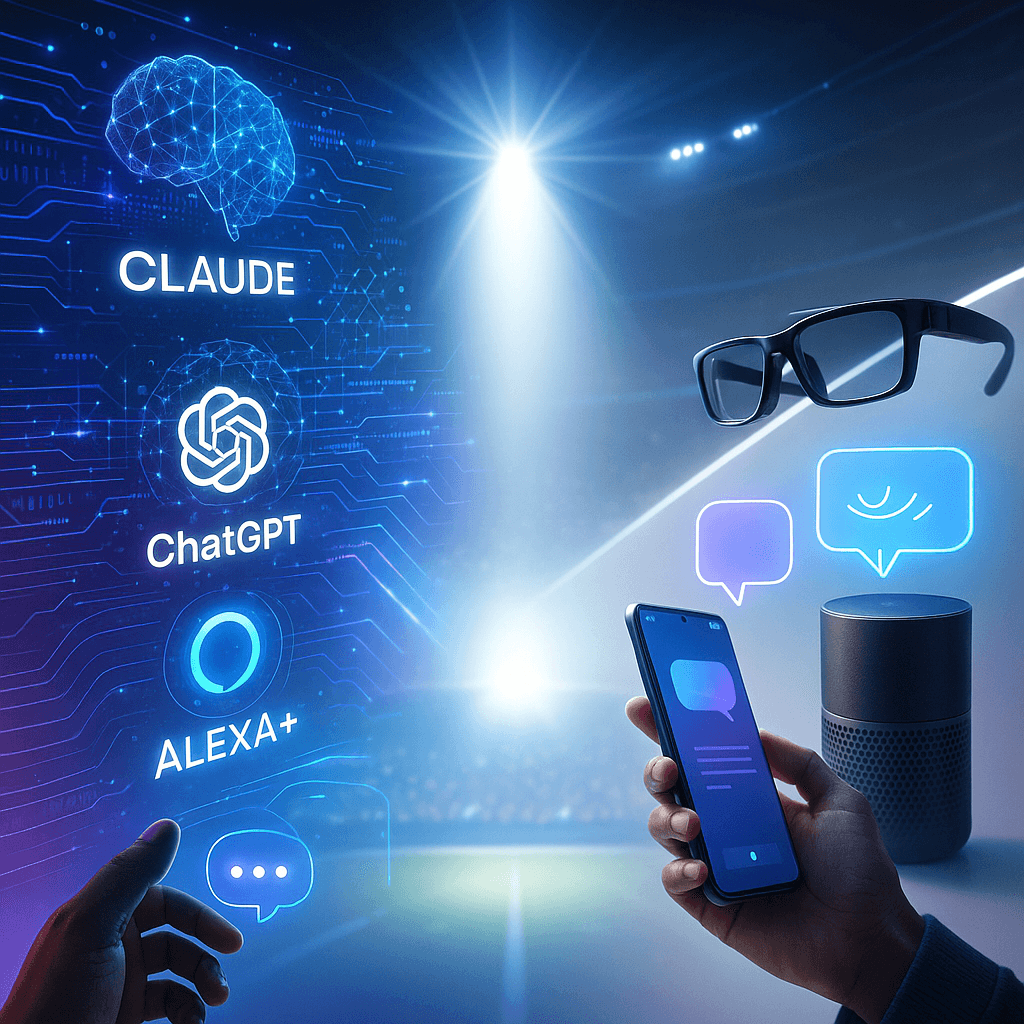
In contrast, the AI startup **Anthropic** opted for a more combative strategy, using its multimillion-dollar advertising slot to take aim at **OpenAI**. Its commercial, promoting the **Claude** chatbot, featured the tagline, “Ads are coming to AI. But not to Claude,” directly mocking OpenAI’s recent announcement regarding the introduction of targeted advertisements in **ChatGPT**. The satire highlighted the absurdity of AI assistants promoting products during conversations, illustrating the growing competitive tension in the sector.
The integration of AI into advertising at this year’s Super Bowl is indicative of a broader trend within the tech industry, where companies like **Meta**, **Amazon**, **Google**, and **Ring** showcased AI-powered innovations. From **smart glasses** to advanced pet-finding features, the focus on AI reflects a significant shift toward automation and enhanced consumer experiences. Additionally, several **B2B companies**, including **Ramp**, **Rippling**, and **Wix**, have also invested heavily in Super Bowl ad spots to promote their AI automation tools, showcasing the increasing relevance of AI in both consumer and business markets.
AI’s prominent presence in the Super Bowl raises questions about the balance between technology and creativity. As brands experiment with AI-generated content, the implications for creative professionals become increasingly complex. While some view AI as a tool that can augment human creativity, others fear it may threaten jobs traditionally filled by creative individuals. The discussions sparked by Svedka’s and Anthropic’s contrasting strategies illustrate the tension between innovation and the preservation of human jobs in the creative sector.
As the advertising landscape evolves, the role of AI is likely to grow, shaping not only marketing strategies but also the nature of creative work itself. The Super Bowl LX marked a pivotal moment where AI transitioned from a mere marketing buzzword to a central player in the advertising game, prompting industry stakeholders to reconsider the implications of this technological evolution. With the boundaries between human creativity and algorithmic generation blurring, the future of advertising could see a fundamental redefinition of roles and responsibilities within the creative sphere.
See also New York Proposes AI News Labeling Bill to Enhance Media Transparency and Trust
 AI-Driven Bioengineering Market Surges with $2.5B in Global Government Funding
 Intuit Accelerates AI Features Amid Anthropic’s Disruptive Launch, Stock Dips 31%
 Anthropic Launches Claude Opus 4.6, Triggering $10B Selloff in SaaS Stocks
 BHASHINI Migrates to Yotta’s Indian Cloud, Enhancing AI Services for 1.4B People















