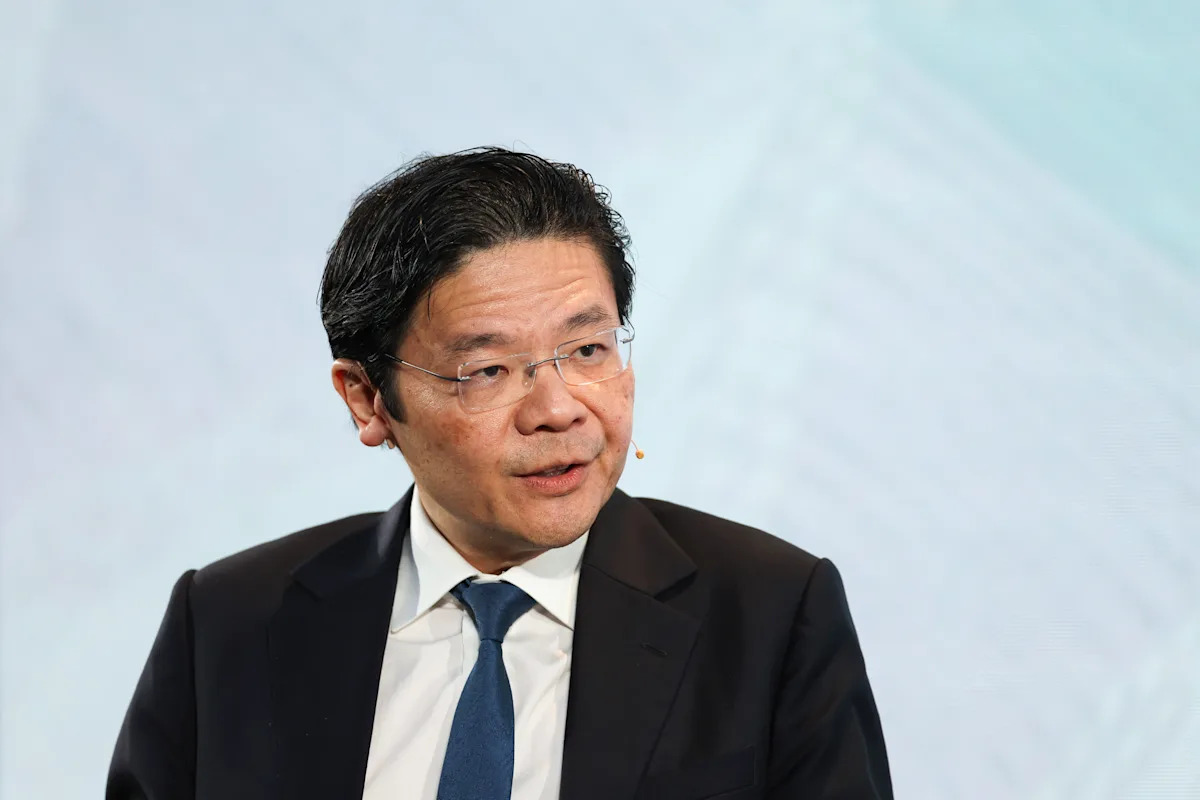
(Bloomberg) — Singapore Prime Minister Lawrence Wong is set to frame the nation as a burgeoning hub for artificial intelligence during his budget speech on Thursday, a pivotal move in his administration’s strategy to diversify growth engines amidst shifting global trade dynamics.
Wong, who also serves as the finance minister, is expected to elaborate on spending plans and strategies related to AI, aiming to assure citizens and small businesses that they will not be overlooked in this technological transition. The impending budget will likely also address retraining initiatives and rising living costs for the country’s rapidly aging population.
This annual budget announcement, a significant political event in Singapore, is anticipated to feature fewer handouts compared to 2025, a year characterized by election preparations and the celebration of the nation’s 60th anniversary. Wong’s People’s Action Party, which has governed since independence, secured a larger share of the vote during the last election cycle.
Wong is also expected to provide insights into the Economic Strategy Review, initiated last year, to reassess the key industries the country will prioritize moving forward. According to a Bloomberg survey, the government is projected to achieve a budget surplus of 0.6% of gross domestic product for the 2026 fiscal year, which commences in April. This will be the first budget under the new five-year parliamentary term, during which the government is mandated to balance its budget.
Analysts from Maybank Securities Pte Ltd. noted that the government typically adopts a cautious approach in the early stages of a new term, conserving resources for potential future economic shocks. The total budget for fiscal 2025 was approximately S$147 billion (about $116 billion), which included around S$23 billion designated for Special Transfers—financial support mechanisms for individuals and businesses.
The surplus from the previous budget was estimated at 1.1% of GDP, surpassing initial forecasts due to stronger-than-expected economic growth, which bolstered tax and duty revenues. This week, authorities indicated that the economy is likely to expand by 2%-4% this year, a more optimistic outlook than earlier predictions but still slower than the growth seen in 2025.
Despite a favorable growth trajectory, the trade-dependent nation faces challenges, particularly from the lowest tariff of 10% imposed by the US. Analysts like Yun Liu from HSBC Holdings Plc caution that potential levies on semiconductors and pharmaceuticals could cloud the economic horizon. “Despite decent growth, challenges are present,” she noted, adding that rising inflation could renew cost-of-living pressures, necessitating additional support.
The upcoming budget speech is poised to address several key areas:
AI Readiness
The budget might introduce measures to facilitate AI adoption among businesses, including grants for digital transformation and training programs focused on governance and data sharing. “This would make businesses in Singapore as a whole more resilient and in turn equip all of us for the Intelligent Age,” stated Paul Kent, a partner at KPMG LLP in Singapore. The government is likely to increase funding for AI research and development while continuing efforts to attract private sector investments. Notably, Micron Technology Inc. recently announced a $24 billion investment in Singapore driven by AI-related demand.
In a significant move, Singapore has pledged over S$1 billion for public AI research over the next five years and plans to establish a National Space Agency starting April 1. Analysts from Maybank expect the budget to focus on enhancing national technological capabilities amid geopolitical competition and increasing demands for foreign direct investment in the region.
Jobs and Learning
Recognizing the potential downsides of AI, the budget may support workers at risk of displacement due to automation. This could involve expanding internship opportunities for new graduates or reskilling initiatives for employees in vulnerable sectors, such as call centers. “Concerns are mounting over a K-shaped growth path—where wealth gains from a buoyant, tech-led market rally may not be broadly shared,” asserted Jester Koh, an associate economist at United Overseas Bank Ltd..
Business leaders have advocated for increased access to foreign labor in response to rising costs and supply challenges stemming from hiring restrictions. A survey conducted by the Singapore Business Federation found that nearly half of the businesses reported these constraints impacting their operations.
Social Safety Nets
With inflation expected to rise this year, cost-of-living concerns are likely to resurface. Cash transfers and rebates will probably be more targeted toward lower-income households, especially following the extensive measures offered in the 2025 budget. As Singapore approaches “super-aged” status in 2026, with over 20% of its population projected to be aged 65 and above, there may be a push for enhanced funding related to senior employment, age-friendly infrastructure, and retirement security, according to Maybank.
Healthcare expenditures are also anticipated to increase sharply, as the aging population and declining fertility rates shift the responsibility of caregiving to the public healthcare system. The implications of these budgetary decisions will resonate through Singapore’s economy and society, potentially shaping the nation’s landscape for years to come.
More stories like this are available on bloomberg.com.
See also OpenAI Fires Product Policy VP Ryan Beiermeister After Discrimination Allegation
 Tencent Accelerates AI Investments, Targeting $1 Billion Boost Amid Market Dynamics
 Goldman Sachs: SaaS Sector Faces Rebound Despite $800B AI Disruption Risks
 Delhi Prepares for AI Impact Summit 2026: 10,000 Global Delegates, Tight Security, and High Stakes