
Parents of students in Bend-La Pine Schools have raised concerns regarding the district’s reliance on educational technology, or “ed-tech,” particularly in light of the ongoing integration of generative AI tools. Supported by the local advocacy group Well Wired, over 1,100 parents presented a statement at a school board meeting on February 10, calling for a reduction in screen time and a reevaluation of the district’s dependency on technology platforms, including iPads and AI applications.
The letter, which represents the voices of more than 1,500 students, highlights several concerns regarding the impact of ed-tech on educational outcomes. Citing research from the Brookings Institute and neuroscientist Dr. Jared Cooney Horvath, the parents argue that unrestricted use of educational technology can negatively affect learning quality and student well-being. Issues such as device misuse and potential violations of data privacy were also mentioned.
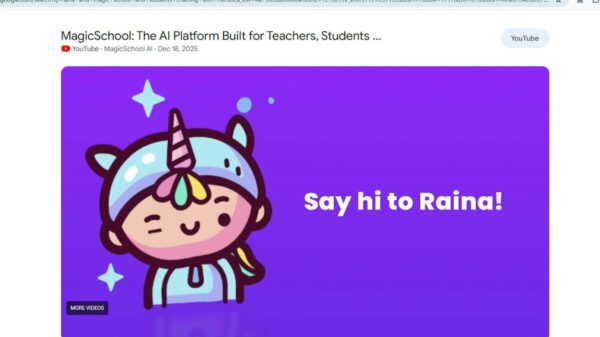
Among the technologies under scrutiny is MagicSchool AI, a proprietary platform developed by MagicSchool Inc., a Colorado-based company founded in 2023. This platform has attracted significant investment from Atreides Management, a billion-dollar hedge fund, and is marketed as a tool to enhance educators’ effectiveness and help students harness advanced technology. Critics, however, worry that the reliance on such platforms may lead to cognitive detriment and diminish long-term learning.
Despite blocking external generative AI software like ChatGPT, Bend-La Pine Schools has opted to provide MagicSchool to teachers. Karen Rush, the district’s ed-tech executive director, stated that the platform is designed to familiarize students with AI while allowing teachers to control access. “No students in grades K–2 have accessed the tools to date, and approximately 20% of students overall have generated AI responses within MagicSchool rooms,” Rush noted.
However, parents like Natalie Houston express concerns that the platform is “gimmicky” and offers instant gratification rather than promoting long-term learning. Houston, a mental health clinician, argues that such technologies can undermine attention spans when misused by educators. Well Wired co-founder Brooke Mues echoed these sentiments, suggesting that teachers may not receive adequate training on the responsible use of generative AI in classrooms.
District resources indicate that “Artificial Intelligence in BLS Classrooms” is a 90-minute mandatory training program for educators, aimed at integrating AI into the curriculum. Nonetheless, Houston and Mues assert that the rapid rollout of ed-tech during the COVID-19 pandemic did not allow for thorough evaluations of its impact. Since 2020, the district has issued iPads to students across all grades, creating a dependency on this technology as a core instructional method.
In June 2024, a letter signed by over 135 pediatricians and mental health professionals recommended that the district tighten its ed-tech policies. They suggested issuing iPads only to older students, imposing limits on screen time, and ensuring that technology is utilized only when it enhances the learning experience directly. “Since then, to my knowledge, the district has failed to take any of these recommendations,” Mues said, highlighting an increasing reliance on iPads instead.
In response, Rush stated that the district is committed to using educational technology, including AI, purposefully and responsibly. “We have a clear duty to our students to teach both digital literacy and digital responsibility,” she said, emphasizing that technology should support instruction designed by qualified teachers. The importance of the teacher-student relationship, she noted, cannot be overstated.
Houston has called for the formation of an advisory committee composed of community professionals to guide district policies on technology use. She advocates for the removal of all generative AI products from student devices until an independent study assessing the associated risks and benefits is conducted.
Though Governor Tina Kotek’s Executive Order 25-09 aims to restrict the use of personal electronic devices during school hours, educational technology products continue to proliferate in Oregon schools. Other districts, such as Eugene School District 4J and Salem-Keizer Public Schools, also utilize iPads and Chromebooks, respectively, reflecting a broader trend in the state’s educational landscape.
See also Dharmendra Pradhan Chairs Edtech AI Roundtable at IIT Delhi to Boost National Education Goals
 200 Students Reach Consensus on AI in Schools: Emphasize Critical Thinking Over Tools
 AI Revolutionizes Learning Space Design: Join Experts on March 11 for Insights
 ASU FOLC Fest Reveals AI Innovations Enhancing Lifelong Learning and Accessibility
 AI Transforms Learning Space Design: Join Experts on March 11 for Insights and Innovations