The quantum computing sector, still in its infancy, presents a unique set of challenges and opportunities for investors. With advancements in hardware, software, and manufacturing, stakeholders are urged to exercise patience. While the potential for quantum computers to solve complex problems beyond the reach of traditional computing is significant, the technology is not yet mature enough for immediate, large-scale commercial application. This has led investors to approach pure-play quantum computing firms with caution, though some, like IonQ (NYSE: IONQ), are starting to gain traction in the market.
IonQ, a notable player in quantum technology, has garnered interest due to its efforts in advancing quantum hardware while strategically acquiring SkyWater Technology (NASDAQ: SKYT). This move is seen as a way to enhance its manufacturing capabilities, facilitating a faster iteration and scaling process for its hardware. The company is eyeing the ambitious goal of developing systems with over 1 million qubits, a significant leap from the hundreds currently available. Such advancements could grant IonQ a competitive edge in an emerging field where the first to reach this milestone could redefine market dynamics.
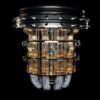
In a broader context, Alphabet (NASDAQ: GOOG)(NASDAQ: GOOGL) remains a vital player in the quantum arena. With a robust revenue stream exceeding $400 billion over the past year, the tech giant has the financial resources to invest heavily in quantum research and development. Having worked on this technology for over a decade, Alphabet is not reliant on quantum for survival. Its new Willow chip, designed to improve error correction as systems scale, positions the company favorably as it navigates the complexities of quantum computing.
Errors are indeed a significant hurdle in the quantum computing landscape. Qubits, while powerful, are notoriously difficult to manage due to their instability and potential for error. As a result, companies like IBM (NYSE: IBM) are not only focused on hardware improvements but are also heavily investing in error-correcting software. IBM’s quantum computing software development kit (SDK) has become particularly popular, accumulating over 13 million downloads, which may secure its position as a leading provider of quantum software, even if other firms excel in hardware development.
In summary, IonQ, Alphabet, and IBM each present distinct investment opportunities in the evolving quantum computing landscape. IonQ is making strides in hardware and manufacturing, while Alphabet benefits from extensive resources and ongoing research. IBM is carving out a niche in quantum software, which remains critical to the overall success of quantum computing technologies. Despite the promise these companies hold, potential investors should approach with tempered expectations, as the industry is still in developmental stages and may require time to mature into a commercially viable sector.
As investors weigh options in the quantum realm, decisions should be made with a clear understanding of the inherent risks and long-term growth potential. The Motley Fool’s Stock Advisor recently highlighted ten stocks deemed more favorable than IonQ, suggesting a cautious approach is warranted. Historical data show that early investments, such as those in companies like Netflix or Nvidia, can yield significant returns, yet timing and market conditions remain crucial factors in investment success. As the quantum computing landscape evolves, those interested should keep abreast of technological advancements and market shifts that could reshape the sector.
See also Applied Materials Surges 20% Post-Earnings as AI Chip Demand Drives Growth
 Global X Cloud Computing ETF Poised for Growth Amid AI-Driven IT Overhaul
 Nvidia Achieves 10x Cost Savings in AI Inference with Open-Source Models on Blackwell
 George Soros Invests $69M in AI Stocks Broadcom and Tesla Amid Market Declines
 Nvidia CEO Jensen Huang Cancels India Summit Visit Amid Global AI Competition