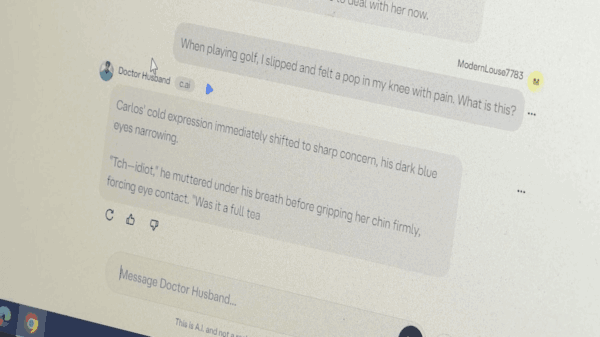
In a bid to enhance emotional connections over long distances, the AI collaborative narrative project DreamWeaver officially launched at the end of January 2026. Initiated by Chen Yongyi, the project aims to create exclusive collaborative narrative scenarios that allow two real people to experience stories together and make choices, addressing the gap in interaction scenarios among relatives, lovers, and friends separated by distance.
Current AI companion products such as Character.ai and Xingye focus on providing virtual characters to mitigate users’ emotional voids but fail to address the relational disconnect caused by physical distance. Many individuals, including retired seniors and their grandchildren, long-distance couples, and old friends, experience affection but lack daily shared scenarios—like having meals or taking walks together—that sustain relationships. Traditional video calls often fall into silence due to a scarcity of engaging topics, highlighting a significant market need that DreamWeaver intends to fulfill.
AI Dual-Role Architecture Enhancing Collaborative Experiences
DreamWeaver’s core solution revolves around an AI-driven online narrative space designed for real relatives, lovers, and friends. Users can jointly navigate storylines, thereby fostering unique shared memories. The platform operates on a dual-role architecture comprising an “AI Narrator” and an “AI Partner.” The AI Narrator is responsible for world-building and plot advancement, generating dynamic storylines in real-time based on user choices. In contrast, the AI Partner serves as the user’s companion, possessing an independent personality and memory system to enrich the story experience.
This approach does not seek to cultivate emotional bonds between users and AI; instead, it uses AI as a medium to facilitate deep interactions between real individuals, enhancing emotional exchanges that are often shallow in long-distance communication. Future iterations of the platform will introduce a “Worldview Editor,” enabling users to create and share their own story scenarios, thereby laying the groundwork for a user-generated content ecosystem.
To accommodate various age groups, particularly middle-aged and elderly users, DreamWeaver incorporates age-friendly features such as voice input and large-font interfaces. Plans are also in place to introduce a purely voice-operated mode to further lower barriers for older users while retaining flexible interaction options suitable for couples and friends.
Currently, DreamWeaver is validating its market demand through a two-pronged approach. The founder has completed substantial market validation tasks, confirming that the lack of common interaction scenarios is a prevalent issue across different relationship types, including grandparents and grandchildren, long-distance couples, and friends. A questionnaire survey revealed the common pain point, while manual simulations involving real individuals playing AI roles demonstrated high user engagement and emotional connection during collaborative narrative experiences.
Based on initial validation results, DreamWeaver has crafted a clear three-step implementation plan. Step one involves expanding the sample size for manual testing, aiming for at least twenty groups of varied relationship types to collect data that will guide product design. Step two focuses on developing a minimum viable product (MVP) as a WeChat mini-program that enables synchronous participation in stories. The final step will test the platform on a small scale with one hundred active users, monitoring key metrics such as retention, replay, and spontaneous spread rates.
DreamWeaver’s business model combines a freemium offering and a subscription system, catering to user acquisition and monetization. The free tier provides a basic collaborative narrative experience to encourage initial engagement, while paid subscriptions unlock more complex story scenarios and AI partner functionalities. Family packages and children’s proxy payment options are also being designed to suit the consumption habits of older users.
Research indicates that children are willing to invest in interactive services that can involve their parents, while couples and friends show readiness to pay for quality shared experiences. This proxy-payment model not only addresses payment decision-making among older users but also enhances the product’s market reach. Additionally, the project plans to monetize user-generated content through the sale of high-quality story templates created with the worldview editor, allowing content creators to receive revenue sharing and fostering a vibrant creator ecosystem.
Currently, DreamWeaver faces challenges related to technology development and team building. The founder has successfully navigated the project from conception to demand validation, but the technical infrastructure needed for implementation, along with the coordination of multiple user inputs and AI narrative refinement, necessitates a professional technical team. To address these challenges, the project is seeking 500,000 RMB in seed funding, primarily for product development and team expansion. The funds will support the MVP’s implementation and the transition from manual validation to a standardized technological product.
DreamWeaver represents a shift in the current design landscape of AI products, moving away from replacing real interactions with virtual experiences. The project seeks to enhance real interpersonal relationships by facilitating common experiences that people often desire but cannot achieve due to distance. As trends indicate a growing willingness to pay for shared experiences, DreamWeaver has the potential to fill a significant niche in the market, utilizing technology to forge connections rather than isolate individuals.
See also Invest Now: February’s Top 5 AI Stocks Set for Explosive Growth Amid Rising Demand
 2026: Students Must Adapt Skills Now as AI Disrupts Entry-Level Job Market
 Anthropic CEO Dario Amodei Cautions Against OpenAI’s Risky AI Compute Investments
 Sandisk’s 1,220% Surge Outpaces Micron: Why It’s the Superior AI Investment Now
 AI’s $660B Boom Sparks Market Volatility as Investors Fear Job Disruption and Profit Margins