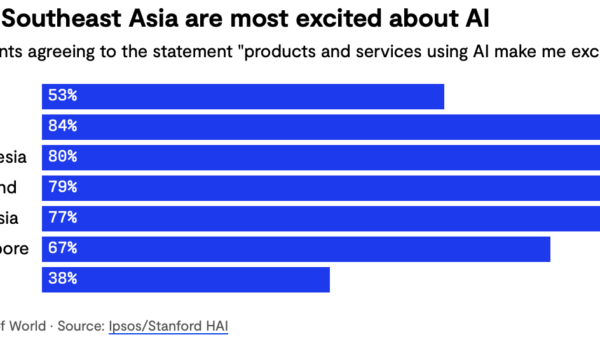
JAKARTA – The ASEAN Foundation, in partnership with Google.org, has unveiled the AI Ready ASEAN research, a comprehensive study examining the level of AI preparedness across ten ASEAN member nations, with a particular focus on the education sector. The findings highlight a significant disparity between the high levels of AI usage and the actual readiness of institutions, particularly in terms of AI literacy, ethical understanding, and institutional support.
The research indicates that while students in Indonesia are quick to adopt AI technologies, with 95.25 percent of respondents reporting the use of generative AI models, educators and parents face numerous hurdles. These include a lack of confidence, insufficient guidance, and limited access to structured training programs. “This study shifts the focus of discussion from simply whether AI has been used, to whether institutions, educators, and the public are really ready,” stated ASEAN Foundation Executive Director Piti Srisangnam.
Despite the high usage rates among students, the adoption of AI remains notably lower among educators and parents, with only 46.20 percent of educators and 62.19 percent of parents indicating they have utilized AI technologies. This generational gap is further underscored by the slower adoption rates among educators for various AI tools, with just 27.29 percent engaging with these technologies compared to 53.25 percent of students.
Moreover, the research reveals that less than half of educators across the ASEAN region believe their institutions provide adequate policy guidance on AI, as well as support for cybersecurity and training initiatives. This situation suggests that while the integration of AI and digital technologies is advancing rapidly, the readiness of educational institutions and the public to embrace these changes lags behind. The study’s findings illustrate that students are the most active users of AI tools, while their educators and parents report lower levels of confidence and understanding.
“This finding underscores the importance of investing in AI literacy, especially for educators and communities, so that technological advances can truly be translated into inclusive opportunities for all,” remarked Google.org’s Head of Asia Pacific, Marija Ralic. The implications of this research point towards a pressing need for comprehensive training and policy frameworks that can enhance AI literacy and ethical awareness among educators and the broader community.
As AI technologies continue to evolve and permeate various aspects of life and education, the findings from the AI Ready ASEAN research serve as a critical reminder of the importance of equipping educators and parents with the necessary tools and knowledge to keep pace. Without such preparations, the potential benefits of AI integration in education might remain out of reach for many, perpetuating inequalities in access to technology and knowledge.
See also AI Models Revolutionize Data Analysis in Neuroscience and Materials Science
 US Department of Energy Launches Genesis Mission to Accelerate Scientific Discovery with AI
 AI’s Rapid Evolution: OpenAI and Anthropic Launch Major Models, Reshape Workforce Dynamics
 Siemens Launches AI Lab to Empower Strategic Partnerships and Innovation in Munich
 AI Simplifies Medical Scan Reports by 50%, Enhancing Patient Understanding, Says Study