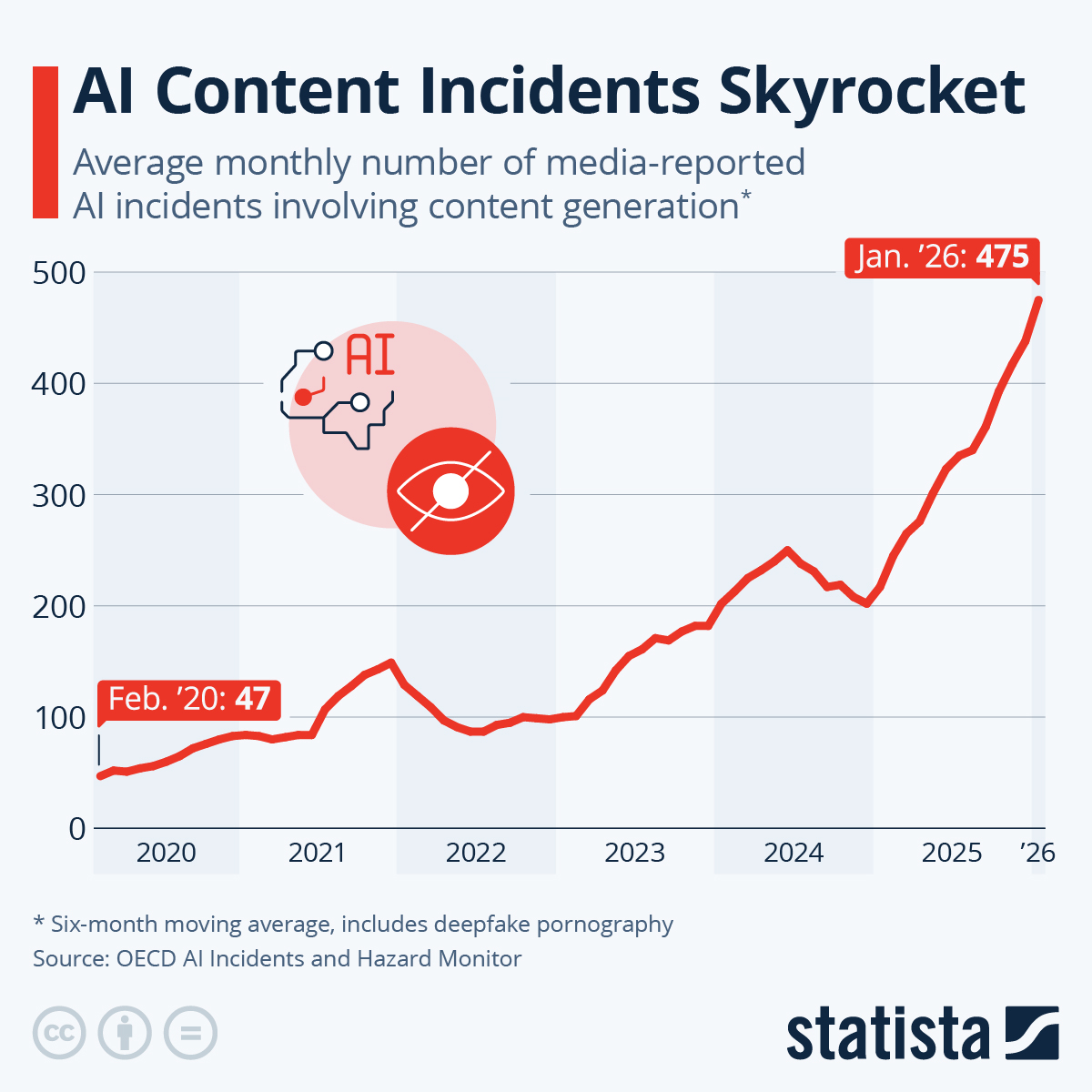
The latest data from the OECD’s AI Incidents and Hazard Monitor indicates a dramatic surge in media-reported incidents related to artificial intelligence. The number of such incidents has soared from approximately 50 in early 2020 to over 200 by early 2024, and projections suggest it could reach nearly 500 by January 2026. This tenfold increase highlights the rapid proliferation of AI-generated content globally, particularly across popular platforms like TikTok, X, Instagram, and YouTube. The past year has seen the most significant growth, with reported incidents doubling within just twelve months.
Significantly, the impact of this rise is felt predominantly among younger users. A 2025 Pew Research Center survey found that two-thirds of U.S. teens utilize AI chatbots, with nearly 30 percent interacting with these tools daily. A growing concern is the emergence of deepfake content aimed at this demographic. A 2026 report by Education Week revealed that 1 in 17 teens aged 13 to 17 have already encountered non-consensual deepfake imagery, with over 80 percent of those surveyed recognizing the potential harm of such manipulations.
As the youth engage with these technologies, adults appear to struggle to keep pace with the rapid developments in AI. Research indicates a varied accuracy rate in detecting AI-generated voices and videos, ranging from 60 percent to 90 percent according to a study published by PMC in January 2026. Such discrepancies leave many individuals vulnerable to misinformation as the sophistication and accessibility of AI tools continue to expand.
This escalating trend underscores urgent concerns regarding the spread of misinformation and the potential ramifications of deepfake technology. As AI-generated content becomes more prevalent, the challenges of distinguishing between real and synthetic media grow increasingly complex. The findings from the OECD highlight a critical need for awareness and education surrounding the capabilities and limitations of AI technologies.
Looking ahead, the growing reliance on AI in various aspects of daily life, especially among younger users, raises significant questions about digital literacy and safety. As societal norms shift to accommodate these technologies, the imperative to develop robust frameworks for managing and mitigating risks associated with AI-generated content becomes ever more pressing. The evolution of AI continues to reshape communication and information consumption, necessitating ongoing vigilance and adaptation from both individuals and policymakers alike.
See also Kling AI Launches 3.0 Suite with Enhanced Video and Image Generation Capabilities
 ByteDance Vows to Curb AI Video Generator Seedance Amid Hollywood’s Copyright Concerns
 AI Use Among Youth Reveals Mental Health Impact Linked to Offline Support Systems
 5 AI Tools Transforming Reading Habits for Enhanced Knowledge Retention and Understanding
 Chinese Tech Giants Launch Viral AI Tools, Featuring Realistic Brad Pitt, Tom Cruise Clips