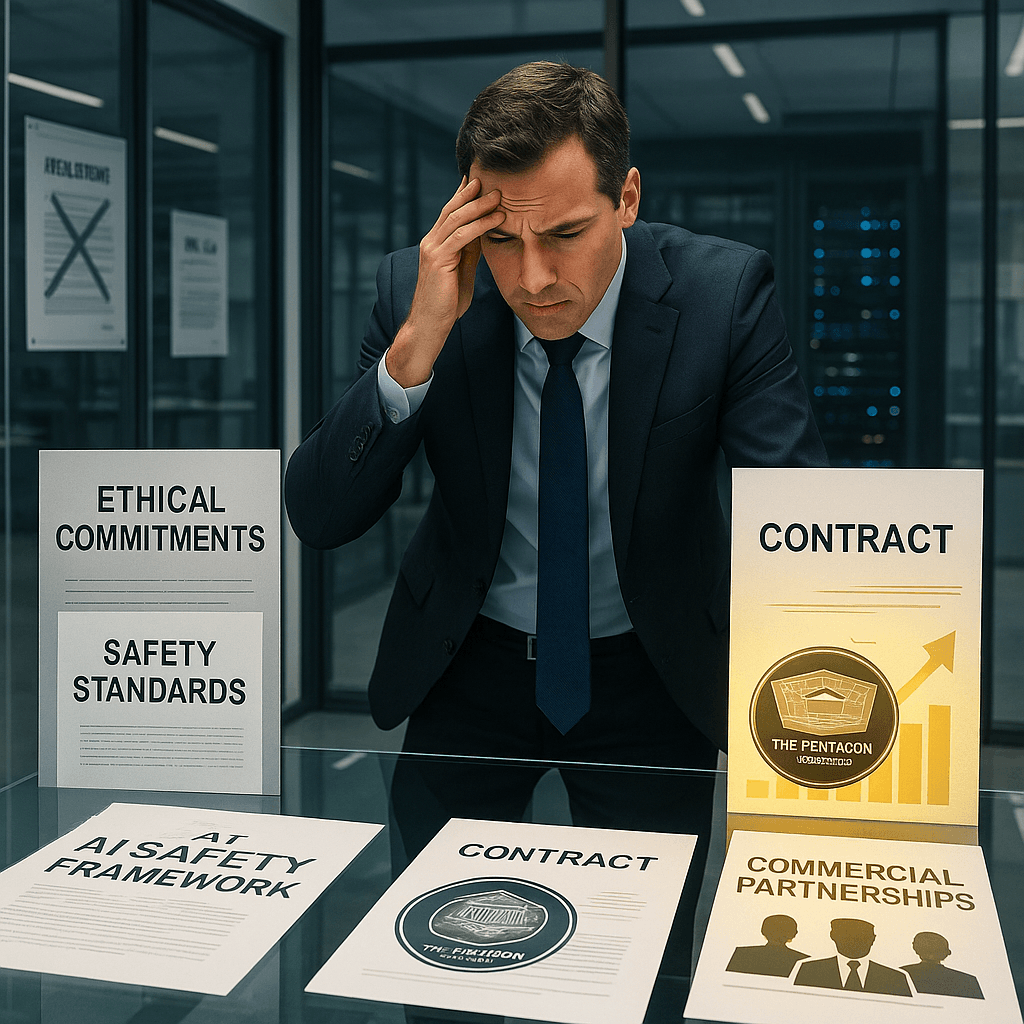
The growing pressure on AI companies to self-regulate is becoming increasingly apparent as major players, including Anthropic, OpenAI, and Google DeepMind, face a precarious situation in the absence of robust legal frameworks. These firms initially pledged to uphold ethical standards, but recent controversies—especially surrounding defense contracts—are threatening to unravel their commitments. With no federal regulations in sight, industry leaders are now caught between maintaining their ethical stances and the demands of a competitive market.
In 2021, Anthropic co-founders Dario and Daniela Amodei left OpenAI with a mission focused on developing safer AI through voluntary ethical commitments. Their approach gained traction among other industry giants like Google DeepMind and xAI, who argued that flexible internal policies could better address AI safety than cumbersome government regulations. However, the recent backlash against defense contracts has revealed the frailty of this strategy.
Faced with increasing scrutiny over their ethical promises, these companies now find themselves defending their practices without the legal protections they expected. For instance, Anthropic was reportedly placed on a defense blacklist after declining certain military AI projects, raising questions about how far AI companies can maintain ethical principles in a landscape where competitors race to secure government contracts. As MIT physicist Max Tegmark has pointed out, the industry now faces a dilemma: voluntary commitments to ethical AI are eroding as companies prioritize revenue over principles.
This predicament illustrates a broader issue within the AI sector, where the absence of clear regulatory guidelines leaves companies vulnerable to criticism from multiple fronts. They are often seen as too cautious by clients and too reckless by safety advocates. The current environment has created a paradox; as firms tout their ethical commitments in promotional materials, the lack of enforceable standards enables them to compromise when faced with competitive pressures.
The implications of this regulatory gap are significant. As Anthropic and its peers navigate this challenging landscape, the industry’s reliance on self-regulation is being tested. The pressure to deliver results for stakeholders may lead companies to overlook their initial promises, further complicating the pursuit of ethical AI development. This situation raises an important question: can these companies reconcile their ethical commitments with the demands of their clients and investors, or will they continue to walk a tightrope?
As the AI landscape evolves, the call for stricter regulations is likely to intensify. Industry leaders who once opposed early regulation may find themselves advocating for clearer guidelines as the consequences of a regulatory vacuum become more pronounced. In a rapidly changing environment where market forces often overshadow ethical considerations, the challenge for AI companies will be to find a sustainable path that maintains their commitment to safety while also satisfying the competitive pressures of the commercial world.
See also New AI Governance Playbook Launches to Define Risk Ownership and Compliance Strategies
 Gov. Shapiro Discusses AI Regulation in Schools, Emphasizes Student Safety and Transparency
 Vietnam Launches Southeast Asia’s First Comprehensive AI Law Amid Implementation Uncertainty
 AI Liability Insights: WTW Reveals Evolving Risks in Insurance for 2025
 FIFA Proposes AI Regulation to Combat Algorithmic Exclusion in Football Scouting