
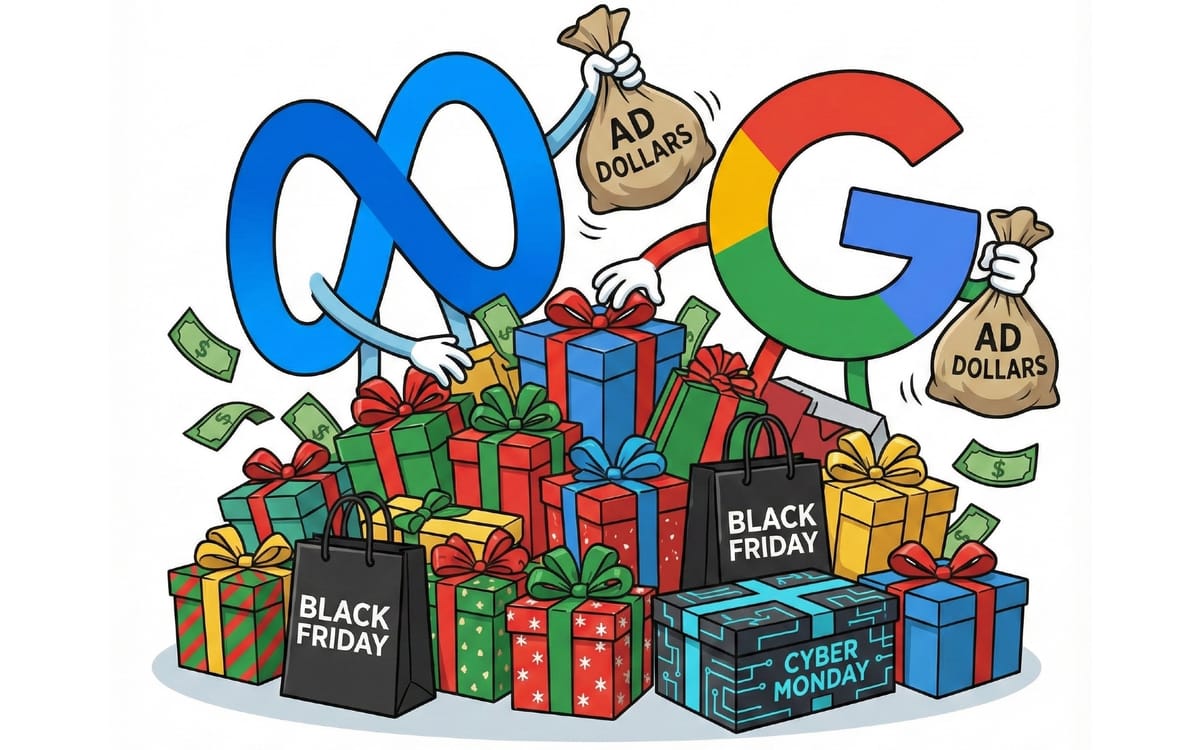
The advertising landscape has become a theater of stark contrasts lately. While major platforms like Google and Meta roll out advanced AI tools promising to revolutionize campaign management and shopping experiences, many publishers are grappling with the harsh economic realities of AI integration. A striking example reveals that one media company earned a mere $174 from AI crawlers that scraped millions of its pages, highlighting a growing divide between the lofty ambitions of tech giants and the financial struggles of content creators.
New AI Tools for Holiday Campaigns
On November 17, 2025, Google announced four new features aimed at enhancing its Demand Gen capabilities, specifically targeting advertisers as they prepare for the bustling holiday season of 2025. Among the updates is an expansion of brand suitability controls on platforms like YouTube, designed to help advertisers navigate the complexities of content adjacency. Advertisers can now choose from three inventory modes—Standard, Expanded, and Limited—each tailored to adjust exposure based on sensitivity to topics like profanity and violence.
Moreover, Google emphasized the importance of asset-level experimentation, noting that organizations that conduct monthly optimization tests see an impressive 3.1x improvement in return on investment over two years. Enhanced video creative and AI-driven image automation are also part of this update, capitalizing on evidence that Demand Gen advertisers experienced a 20% uptick in conversions during the first half of 2025.
Meanwhile, on November 16, 2025, Meta released guidelines for the upcoming festive season, promoting its Advantage+ automation, which boasts an average return on ad spend improvement of 22% throughout 2025. The strategy comprises two phases: planning in Q3 and execution in Q4 and Q5, showcasing a structured approach to maximizing holiday advertising effectiveness.
Autonomous Shopping and AI Integration
Google also unveiled a suite of autonomous shopping capabilities on November 13, 2025, introducing features like agentic checkout, which allows AI to autonomously complete purchases once prices drop. This innovation is part of a significant enhancement to Google’s Shopping Graph, which now encompasses over 50 billion product listings. The company also confirmed initial partnerships with retailers like Wayfair and Chewy for the agentic checkout feature, although specifics on merchant eligibility remain unclear.
On November 11, Google announced substantial enhancements to its incrementality testing capabilities, lowering the minimum experiment budget from nearly $100,000 to just $5,000. This change aims to democratize access to valuable data-driven insights, enabling more advertisers to validate their marketing strategies effectively.
Publishing Industry Struggles with AI Economics
Despite these promising advancements, the publishing industry faces dire economic challenges related to AI. The aforementioned case of a media company earning only $174 from AI crawlers starkly illustrates this imbalance. As AI technologies scrape vast amounts of content for training, publishers are left with minimal compensation, straining their operational viability. Many are resorting to measures such as blocking AI crawlers or pursuing legal avenues for fair compensation, underscoring an urgent need for sustainable revenue-sharing models.
The economic implications are significant: while AI crawlers create substantial strain on publisher infrastructure—resulting in increased server loads and bandwidth consumption—revenue barely covers these costs. The dismal earnings amidst rising operational expenses signal a critical industry dilemma that must be addressed to ensure the survival of quality journalism in an AI-dominated landscape.
Future of Advertising and Regulation
As brands are projected to cut open web display spending by 30% in response to the rise of zero-click searches, many are reallocating budgets towards channels like connected TV and paid social, which offer better measurement capabilities. This shift poses questions about the future of digital advertising and the balance of power between platforms and publishers.
The recent lawsuits filed by Google, YouTube, and Meta against California’s Senate Bill 976 reflect ongoing tensions in the regulatory landscape, particularly concerning personalized content feeds for minors. As these platforms challenge the constraints on their content curation, the outcomes could have far-reaching implications for the broader advertising ecosystem.
In summary, while AI technologies promise to enhance advertising efficacy and operational efficiency, the existing economic frameworks fail to support the content creators who are essential to this ecosystem. The gap between the technological advancements and the financial realities for publishers presents an urgent call for dialogue and reform in the advertising industry.
 Microsoft and Meta Platforms Position Themselves as Top AI Stocks for the Next Decade
 Heidi Launches Singapore Hub, Investing $8M to Transform Healthcare AI in Southeast Asia
 India’s Startup Funding Steady: Pidge Raises ₹120 Crore; Yubi Secures ₹411 Crore
 SAP Unveils 400 New AI Use Cases by 2025, Including Game-Changing Joule Agents
 AI Transforms Healthcare Accessibility with Predictive Analytics and Telemedicine Solutions