






















































Cybersecurity firm Fortinet has issued a stark warning regarding the trajectory of cyberattacks, predicting that they will become faster, more organized, and increasingly influenced by artificial intelligence (AI) by 2026. This forecast comes from its latest Cyberthreat Predictions Report, published by FortiGuard Labs.
The report suggests that in the coming year, cybercrime will evolve from isolated malicious acts into a more structured global industry. The analysis indicates that criminal organizations will begin to function similarly to legitimate businesses, employing automation, AI-driven specialization, and predictable workflows to enhance their operations.
One of the most pressing concerns identified in the report is the anticipated reduction in the time frame for attacks to inflict damage. With the advent of automation and AI tools, the time from initial breach to exploitation may diminish sharply—from days to mere minutes—leaving organizations with scant time to react.
According to the report, attackers are expected to prioritize the optimization of existing techniques over the development of new ones, focusing on speed rather than innovation. Additionally, the introduction of specialized AI agents that assist in stealing credentials, analyzing stolen data, and generating targeted ransom demands could significantly bolster attack efficiency, although full autonomy for these agents is not anticipated just yet.
The report projects that the underground market for cybercrime will also mature, providing structured services like tailored botnets and credential rentals. These offerings will likely be supported by customer service models and reputation systems designed specifically for cybercriminals, further indicating the professionalization of cybercrime.
This evolving landscape necessitates a fundamental shift in cybersecurity practices, according to Fortinet’s findings. Defense systems must operate at “machine speed,” drastically reducing detection and response times from hours to mere minutes. Identity verification is expected to become increasingly critical, not only for individuals but also for machine-to-machine interactions, in an effort to prevent the misuse of automated agents.
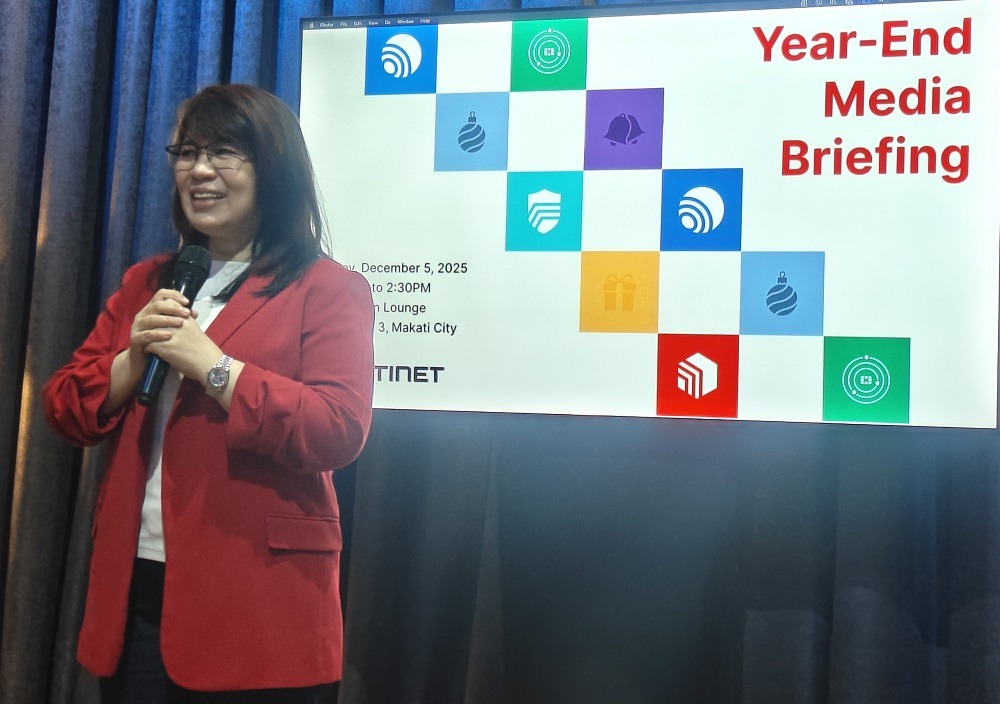
During a media briefing on December 5, Fortinet Philippines country manager Bambi Escalante emphasized that organizations can no longer rely on static defenses in the face of evolving threats. “Static configurations and periodic assessments can’t keep pace with an environment where attackers automate reconnaissance, privilege escalation, and extortion in minutes,” she said.
She also underscored the need for a unified, adaptive security posture that integrates threat intelligence, exposure management, and incident response into a continuous, AI-enabled workflow. This approach is essential for organizations aiming to defend against increasingly sophisticated cyber threats.
In its report, Fortinet advocates for expanded cooperation among governments, industry alliances, and law enforcement agencies to tackle the rising tide of cybercrime. Initiatives like Interpol’s Operation Serengeti 2.0 and partnerships with organizations such as Crime Stoppers International are crucial in this regard.
Furthermore, the company stresses the importance of educational efforts aimed at young or at-risk individuals to deter their participation in cybercrime. As the landscape of cyber threats continues to evolve, a collaborative and proactive approach becomes imperative for organizations and societies alike.
As cybercriminals increasingly adopt business-like strategies, the stakes for organizations are set to rise dramatically. The need for rapid, adaptive responses in cybersecurity practices is no longer optional; it is a necessity for survival in an increasingly hostile digital environment.
See also AWS CISO Amy Herzog Reports 500% Efficiency Boost in Cybersecurity with AI Agents
 Liberty Defense Joins NVIDIA Connect Program to Enhance AI Threat Detection Speed and Accuracy
 Resemble AI Secures $13M to Launch 98% Accurate Deepfake Detection Model Amid Rising Threats
 Check Point Launches Quantum Firewall R82.10 to Secure AI Adoption in Enterprises
 Experts Warn Ignoring AI Threats Could Cost Companies Millions in Cybersecurity Failures















