






















































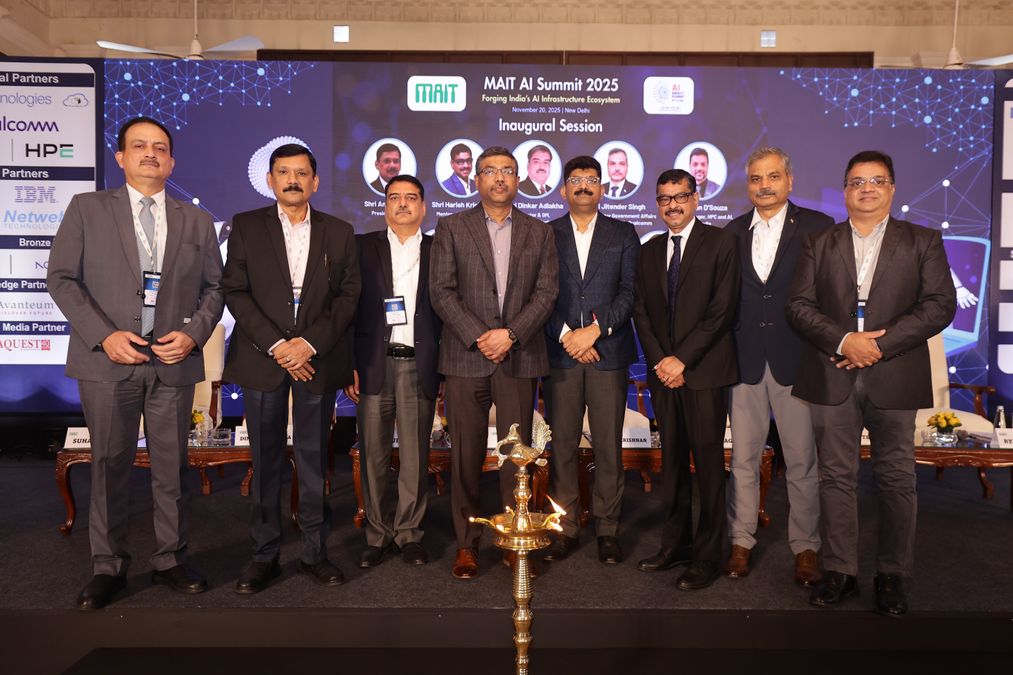
The MAIT AI Summit 2025 served as a significant precursor to the India AI Impact Summit 2026, uniting government leaders, industry veterans, and thought leaders to deliberate on the transformative potential of artificial intelligence for India’s economy and society. The event emphasized the themes of inclusive AI, secure adoption, and the role of emerging technologies in maintaining national competitiveness, showcasing a day filled with insights, case studies, and forward-looking discussions.
Opening with an inspirational inaugural address, the summit set a proactive tone focused on responsible AI deployment across various sectors. Speakers emphasized India’s potential in the AI landscape, cautioning against the hype cycles that often accompany technological advancements. They noted that while market excitement around AI is palpable, its long-term strategic value remains clear. The discussions reinforced the notion of AI as an enabler of competitiveness and efficiency, advocating for its inclusive deployment within secure infrastructures and robust policy frameworks.
Key policymakers and industry experts gathered to discuss the foundations of responsible AI in India. The session underscored the necessity of regulatory clarity, ethical guidelines, and frameworks for accountability. Notable panelists included Anil Nair, Vice President of Engineering at Cisco; Ranganath Sadasiva, CTO of HPE India; and Sanjay Krishen, Regional Director IT at Intel. They collectively highlighted that AI should augment human capabilities rather than replace them, with ultimate responsibility lying with human oversight. “AI is here to enhance human capabilities. Responsibility will always remain with us, irrespective of the tools we use,” one speaker asserted. This dialogue pointed to the need for structured reskilling initiatives to prepare the workforce for the evolving technological landscape, particularly in generative, physical, and agentic AI.
In a compelling keynote address, Narendra Nath Gangavarapu, Joint Secretary at the National Security Council Secretariat, articulated AI’s transformative role both within India and globally. He stressed the importance of distinguishing between the short-term market hype surrounding AI and its long-term strategic value. Gangavarapu asserted that AI must be accessible, affordable, and capable of addressing inequalities, warning against the risks of a widening AI divide. He also addressed national security concerns, stating that AI constitutes critical infrastructure, and emphasized the necessity of sovereign access to computing facilities, datasets, and models to safeguard national interests.
The discussions on safe AI deployment encapsulated risk-based frameworks and the establishment of unified national standards as essential for building trust and resilience. Gangavarapu noted that AI is already being utilized at scale for cybersecurity but highlighted the need for advancements in federated and privacy-preserving approaches. He warned of emerging threats, including disinformation and deepfakes, underscoring that proactive safeguards and strong partnerships are vital for responsible AI adoption.
Shifting focus to enterprise adoption, the second session examined the AI readiness landscape across India. The panel, featuring industry leaders such as Ryan D’Souza, Country Manager for HPC and AI at HPE India; Sahil Arora, AI Lead at Qualcomm India; and Namit Sood, Government & Enterprise Head at Dell, emphasized that while India is leading global averages in AI readiness, significant gaps persist between ambition and execution. Enterprises are transitioning from isolated pilot projects to structured, ROI-driven AI initiatives, particularly within sectors like healthcare, defense, manufacturing, agriculture, and retail. However, scaling beyond initial pilots remains a significant hurdle. “India’s AI opportunity is massive, but true impact will come from secure, scalable, and execution-driven adoption,” the panelists remarked.
They highlighted the necessity of secure data architectures, MLOps, and enhanced inter-departmental data sharing to bolster the AI ecosystem. Workforce readiness and continuous reskilling initiatives were flagged as critical success factors in leveraging next-generation AI technologies. The emphasis remained on the immense potential India holds for AI, contingent on robust, secure, and execution-led strategies.
The final session centered on responsible and inclusive AI, discussing practical applications and societal implications. Panelists, including Sunil Kumar Meena from the Ministry of Panchayat Raj and Ramesh Karwani from IBM-India/SA, explored how AI can enhance public governance and agricultural productivity, especially when integrated with hybrid cloud solutions. Audience questions raised concerns about data ownership, accountability, and the rapid pace of technological advancements. Panelists reiterated that AI is meant to augment human intelligence and that governance and human oversight are imperative. They showcased successful initiatives like the Gram Manchit application, which leverages IMD weather forecasts for local governance, and pilot projects using geospatial models inspired by ISRO and NASA to predict natural disasters.
Discussions on AI adoption among micro, small, and medium enterprises (MSMEs) highlighted initiatives aimed at making off-the-shelf and SaaS AI solutions more accessible. The panelists also stressed the significance of digital literacy and awareness campaigns to ensure that technology reaches underserved populations. One panelist noted, “AI will actually make life easier to bridge the digital divide. It will start detecting challenges and prompting solutions that are understandable to all users.” Inclusivity for differently-abled communities was another focal point, with examples cited on how AI-driven solutions can significantly enhance accessibility and improve quality of life.
The summit concluded with remarks from Col Suhail Zaidi, who praised the discussions as a blueprint for India’s AI ecosystem. The event clarified the role of AI in enhancing national security, societal benefits, and competitive edge. Participants left with a deeper understanding of the importance of secure, inclusive, and strategic AI adoption, underpinned by collaborative efforts between government and industry.
See also Trump to Sign Executive Order for Federal AI Regulation Amid Rising Legal Battles
 IndiaAI Mission Directs LLM Developers to Mitigate AI Bias with Stress Testing
 Govt AI Panel Proposes Mandatory Licensing Framework for GenAI Copyright Royalties
 Congress Introduces AI Talent Act to Enhance Federal Workforce with Specialized Teams
 Learning Tree Launches AI Workforce Solutions with Tiered Maturity Framework for Organizations















