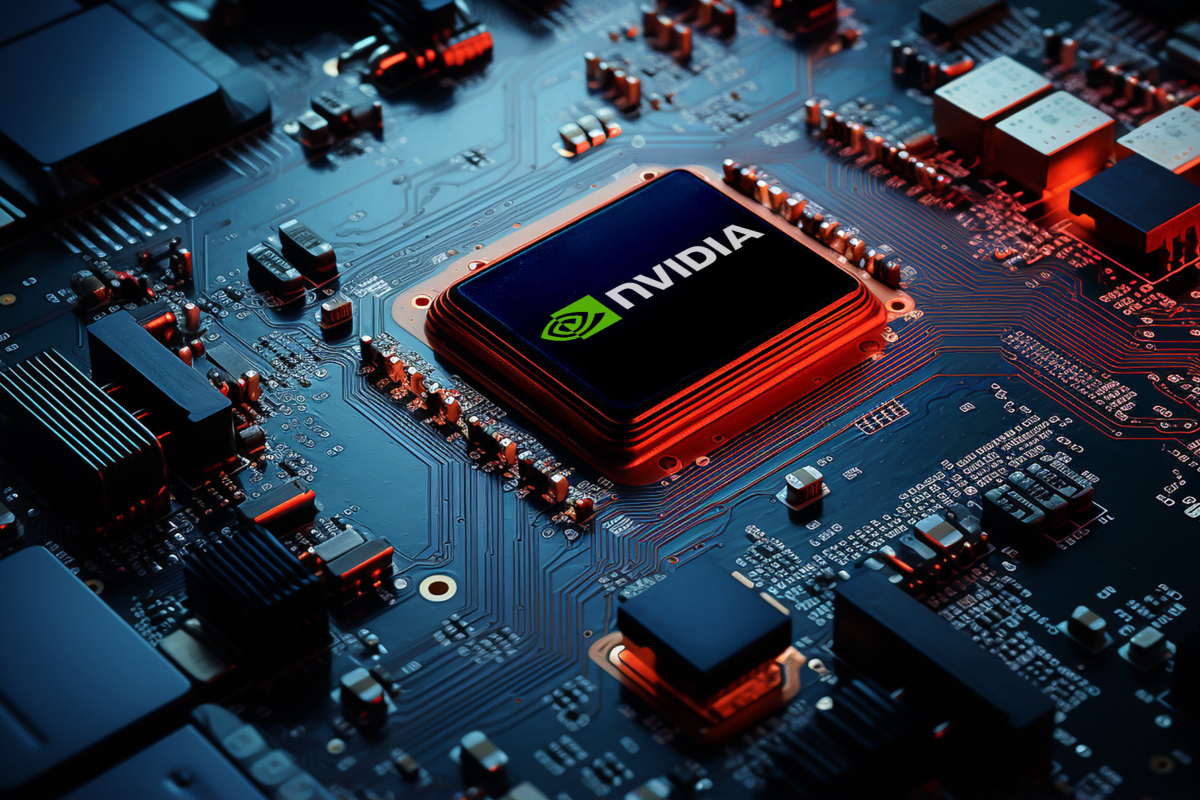
Former President Donald Trump has signaled a potential shift in U.S. export policy that could allow Nvidia to resume sales of high-end AI chips to China, a reversal of previous national-security restrictions. This development represents a significant victory for Nvidia and its CEO, Jensen Huang, who has been active in lobbying the administration for these changes.
As of Monday, Nvidia had been prohibited from selling its most advanced processors to China due to national-security concerns. Trump announced via Truth Social that the U.S. would permit Nvidia to ship its H200 chips to “approved customers” in China, along with other markets, under conditions aimed at safeguarding “strong National Security.” He also stated that Chinese President Xi Jinping had “responded positively” to the decision.
Trump indicated that the Department of Commerce is finalizing the specifics of this arrangement and suggested similar permissions may be extended to other major chipmakers, including AMD and Intel. The H200 chip, Nvidia’s second-most powerful offering, has far greater capabilities than the H20, a less advanced model that was already banned in April.
In a controversial twist, Trump stated that the U.S. government would receive 25% of the proceeds from these sales, an increase from the previously discussed 15%. This arrangement has raised questions among lawmakers regarding its legality, given the direct financial stake the administration would hold in private commercial deals.
Opposition has emerged in Congress, with Senators Elizabeth Warren and Andy Kim urging Commerce Secretary Howard Lutnick to block the sale of advanced chips to China. They warned that these chips could potentially bolster Beijing’s surveillance, censorship, and military capabilities. Warren has also called for Huang to testify before Congress under oath regarding these matters.
Huang has enjoyed close ties with Trump since the latter’s inauguration, having met him multiple times and participated in administration-led AI summits. Nvidia has committed to a substantial $500 billion investment in U.S. AI infrastructure over the next four years. Concurrently, Huang has frequently traveled to China for discussions with officials and tech leaders amid fluctuating export restrictions.
Before the imposition of U.S. export controls, Nvidia held a commanding 95% of China’s AI-chip market. However, restrictions effectively decimated its revenue in the country, a shift Huang termed a “strategic mistake.” For Nvidia, which is currently valued at $4.5 trillion, renewed access to China—one of the world’s largest economies—could translate into billions in additional revenue.
In a statement, Nvidia expressed its support for Trump’s decision, describing the approval process—where customers are vetted by the Department of Commerce—as a “thoughtful balance” that ultimately benefits the United States.
Trump criticized the previous Biden administration’s export rules, declaring, “That Era is OVER! My Administration will always put America FIRST.” As of now, China has not officially responded to these developments. Analysts in Chinese state media have characterized the U.S. export restrictions as having accelerated the country’s own chip-development initiatives, providing domestic firms a rare opportunity to bridge the technology gap.
See also Agentic AI Revolutionizes Decision-Making in 2025 with $7.28B Market Growth
 Taiwo Feyijimi Introduces AI-Driven Frameworks to Enhance Engineering Education Quality
 US Grants Nvidia 25% Fee Export Approval for H200 Chips to China Amid Tech Tensions
 CyberAI Group Files Three Patents for AI-Driven Cyber Defense Solutions
 Singulr AI Appoints Bask Iyer as Strategic Advisor to Enhance AI Governance Strategies