DENVER — Colorado’s landmark law regulating artificial intelligence, enacted in May 2024, has faced ongoing debate and delays regarding its implementation. Initially set to take effect in February 2026, lawmakers recently decided to postpone the rollout to June 2026 during a special legislative session in August aimed at addressing the state’s budget shortfall. This extension aims to provide additional time for discussions surrounding the legislation and for the industry to prepare.
Senate Bill 24-205, signed by Governor Jared Polis, is designed to protect individuals from bias when AI systems make significant decisions related to employment, lending, and housing. The law also mandates that companies disclose when and how consumers interact with AI technologies. However, its provisions have sparked concerns that they may impose overly burdensome requirements on businesses utilizing these tools.
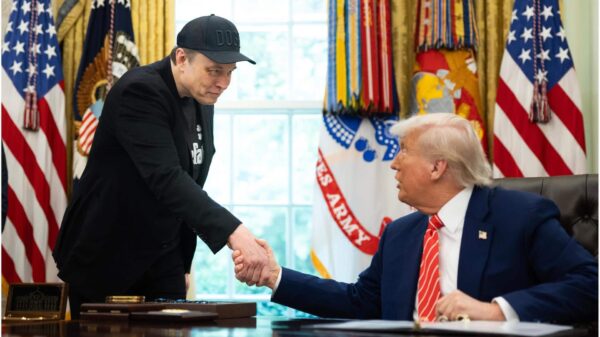
As discussions continue, President Donald Trump announced plans for an executive order intended to prevent states from enacting their own AI regulations. “There must be only One Rulebook if we are going to continue to lead in AI,” Trump stated in a social media post. He emphasized that a single national standard would facilitate operations, contrasting it with a fragmented landscape of state laws, which he argued could hinder innovation.
The concept of a unified regulatory framework has garnered support from various stakeholders, including tech companies and state officials. In a joint statement following the signing of SB 24-205, Gov. Polis, Attorney General Phil Weiser, and Colorado Senate Majority Leader Robert Rodriguez expressed their agreement with Trump’s notion, suggesting that a coherent national policy would benefit the industry. State Rep. Brianna Titone, a Democrat and sponsor of the bill, acknowledged the potential merits but expressed skepticism about the federal government’s ability to adequately protect people in this domain.
The president’s proposed executive order follows a significant U.S. Senate vote in July, which overwhelmingly rejected a provision aimed at preventing states from passing their own AI regulations. In the absence of comprehensive federal oversight, states like Colorado are moving forward with their own legislative measures. “If we wait for the federal government to do it, we could be waiting a very long time,” Titone remarked, underscoring a sense of urgency to enact protective measures amid rapid technological advancements.
As the legislative landscape evolves, Titone anticipates changes to Colorado’s law before its scheduled implementation in 2026. A central point of contention has arisen around the responsibilities of organizations deploying AI products. “We want the people who are deploying these products to be able to say, ‘I’ve been using this exactly the way that they told me to use it, and it created this result,'” Titone explained. “That’s the fair thing to do, but nobody wants to be blamed, and nobody wants to have responsibility, because that costs money.”
The upcoming legislative session, set to commence next month, is expected to be contentious, with multiple bills on AI poised for introduction. “I know there’s going to be several different bills on AI in different areas,” Titone stated, indicating potential complexities as different proposals vie for attention. Denver attorney Tyler Thompson, who provides counsel on technology and AI laws, noted that while regulatory measures can be challenging for businesses, uncertainty can also pose significant difficulties.
Thompson and Titone concur that the White House may face legal challenges regarding the executive order, with bipartisan skepticism evident among various political leaders. “We could see this get contentious very quickly,” Thompson predicted, citing pushback from figures like Florida Governor Ron DeSantis, who view the order as an infringement on state rights. “There’s folks on both sides of the aisle that are skeptical of AI, or maybe just want more information about AI, want themselves protected from this uncertain future of AI.”
As the debate intensifies, the implications for both state and federal AI regulations remain significant, with stakeholders seeking a balance between innovation and consumer protection in an ever-evolving technological landscape.
See also South Korea Mandates AI-Generated Ad Labeling to Combat Deceptive Promotions
 Trump Proposes National AI Standards, Threatening State Laws in Michigan and 35 Others
 HHS Reveals 21-Page AI Strategy to Transform Healthcare with Five Core Pillars
 Trump Aims for Federal Control of AI to Prevent State-Level Regulations and Job Losses
 Congress Proposes Regulatory Sandboxes to Enhance AI Innovation Amid State Law Conflicts