South Korea is set to implement a new regulation that will require advertisers to label ads created using artificial intelligence technologies starting next year. This initiative aims to combat a rise in deceptive promotions that feature fabricated experts or deep-faked celebrities endorsing food and pharmaceutical products, which have proliferated on social media platforms.
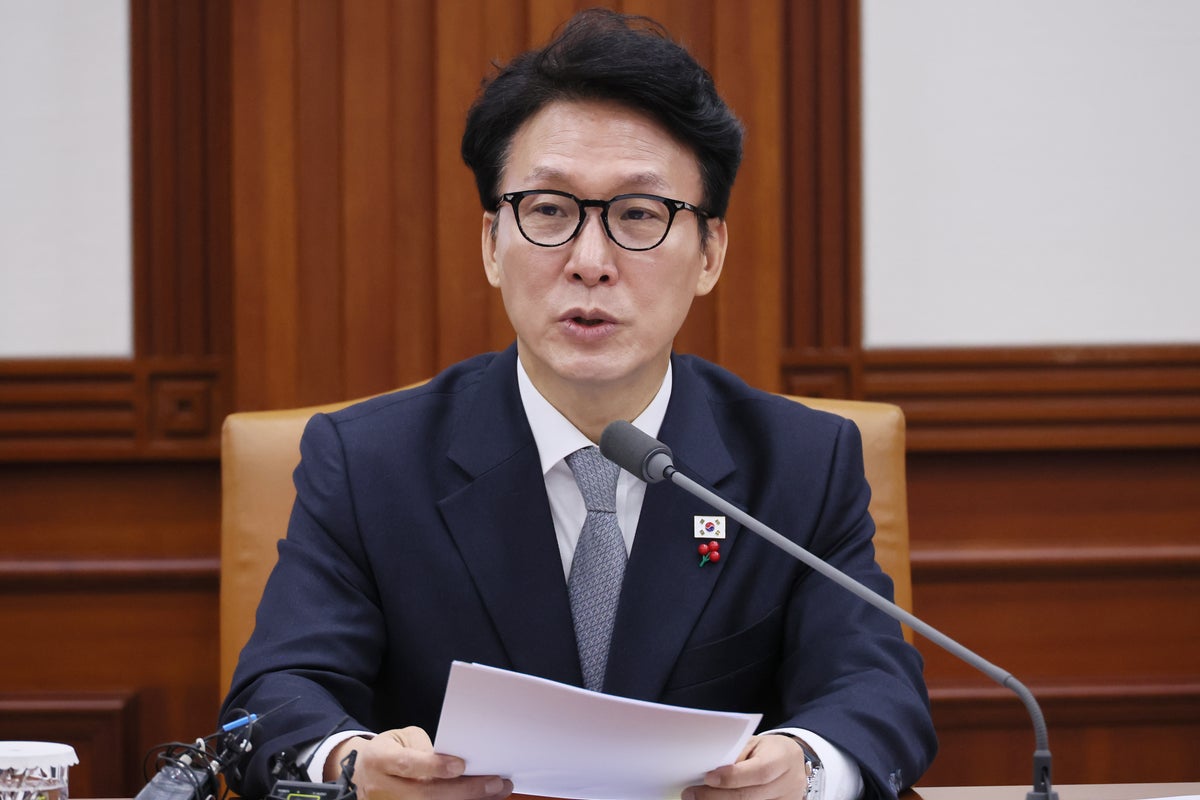
The announcement came after a policy meeting chaired by Prime Minister Kim Min-seok on Wednesday. Officials indicated a commitment to enhancing the screening and removal of problematic AI-generated advertisements, in addition to imposing punitive fines for violations. This measure seeks to address the growing risks to consumers, particularly older individuals who may find it challenging to discern AI-generated content.
Lee Dong-hoon, director of economic and financial policy at the Office for Government Policy Coordination, emphasized the urgency of the situation, stating that such ads are “disrupting the market order,” and asserting that “swift action is now essential.” He explained that anyone involved in creating, editing, or posting AI-generated content will be mandated to label it as AI-made, with platform users prohibited from altering or removing these labels.
AI-generated ads employing digitally fabricated experts or deepfake videos and audios of celebrities have become commonplace across South Korean social media venues like YouTube and Facebook. These advertisements often promote a range of products, from weight-loss pills and cosmetics to illegal gambling sites, raising significant concern among regulators.
The government intends to revise the telecommunications act and related laws to enforce the AI-labeling requirement, along with bolstered monitoring and stricter punitive measures, by early 2026. Companies that operate these platforms will also bear the responsibility of ensuring compliance with the labeling rules, according to Lee.
The issue of false advertising has escalated, with South Korea’s Food and Drug Safety Ministry reporting over 97,600 illegal online ads related to food and pharmaceuticals in 2024, and 68,950 identified through September of this year, marking an increase from approximately 59,000 in 2023. The concern extends to sectors such as private education, cosmetics, and illegal gambling, challenging the Korea Consumer Agency and other watchdogs to keep up with the rapid proliferation of misleading ads.
In response to these challenges, officials plan to augment fines and introduce punitive penalties next year to deter the distribution of AI-generated content that is knowingly false or fabricated. Those found guilty of spreading such misinformation could face liability for damages amounting to five times the losses incurred.
The government also seeks to enhance monitoring capabilities and expedite takedown procedures for harmful ads, including enabling reviews within 24 hours and implementing emergency measures to block misleading advertisements even before formal deliberation. The Food and Drug Safety Ministry and the Korea Consumer Agency will be empowered to utilize AI technologies for these enhanced monitoring efforts.
Despite the risks associated with AI, South Korea’s enthusiasm for the technology continues to grow. During the policy meeting, Prime Minister Kim highlighted the importance of “minimizing the side effects of new technologies” as the country embraces the “AI era.” This commitment to responsible AI usage comes amid a broader governmental push to elevate South Korea’s standing in the global AI landscape.
In a separate meeting with business leaders, Prime Minister Kim reiterated the government’s ambitions for AI, pledging efforts to bolster the nation’s capabilities in advanced computer chips that power the burgeoning AI industry. Plans include increasing research and development funding for AI-specific chips and expanding semiconductor manufacturing hubs beyond the metropolitan areas surrounding Seoul to the southern regions. In 2022, South Korean chipmakers, including Samsung Electronics and SK Hynix, accounted for over 65% of the global memory chip market.
On the telecommunications front, the science and telecommunications ministry announced that the country’s wireless carriers will be required to transition to 5G standalone networks. This shift is deemed essential for advanced AI applications due to the networks’ higher bandwidth and lower latency, and it will be a condition for renewing existing 3G and LTE licenses.
See also Trump Proposes National AI Standards, Threatening State Laws in Michigan and 35 Others
 HHS Reveals 21-Page AI Strategy to Transform Healthcare with Five Core Pillars
 Trump Aims for Federal Control of AI to Prevent State-Level Regulations and Job Losses
 Congress Proposes Regulatory Sandboxes to Enhance AI Innovation Amid State Law Conflicts
 China Proposes World AI Cooperation Organisation to Set Global Safety Standards