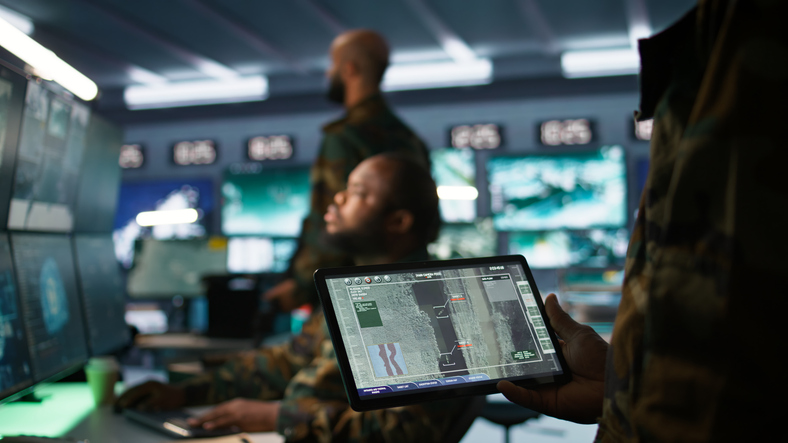
John Garrity, founder of Tagup Inc., emphasized the critical role of artificial intelligence (AI) in enhancing the resilience of military supply chains, which many defense leaders still deem fragile despite recent modernization efforts. In a discussion with Terry Gerton, Garrity highlighted the inherent complexity of supply chains, which involves coordinating vast amounts of information across various levels—from end users at supply points to manufacturers receiving commands from higher authorities. He noted that AI can effectively optimize decisions regarding purchasing, stocking, and logistics operations, marking a significant shift in supply chain management.
As part of this modernization effort, the Defense Logistics Agency has begun implementing numerous AI models designed to monitor supplier risk and forecast disruptions. Garrity described traditional machine learning applications focused on demand forecasting and pattern identification, while also acknowledging the limitations of general models, such as large language models. He stressed that while these models can answer broad questions, they lack the specificity required for supply chain reasoning. To address this challenge, Tagup is developing a “world model,” which structures data relationships, enabling effective reasoning over large-scale systems and identifying vulnerabilities before they escalate into significant issues.
The conversation further delved into AI’s application in predictive maintenance, a growing focus for the Air Force and Army aiming to enhance equipment readiness. Garrity explained that while predicting specific component failures is challenging due to the intricacy of military assets, aggregating data over fleets can yield actionable insights. For example, understanding the overall likelihood of needing replacement parts can inform supply chain decisions, making predictive maintenance a valuable input into the broader optimization of logistics.
When discussing the varied military assets—ranging from water filtration units to F-35 aircraft—Garrity acknowledged the complexity of scaling AI models across such a diverse inventory. However, he pointed out the commonalities among these assets, such as shared parts and maintenance needs, which can be encoded within the world model. This structural approach allows for the effective utilization of existing data from service requests and parts requisition, offering significant opportunities to enhance predictive maintenance capabilities and overall supply chain efficiency.
With initiatives like right-to-repair provisions pushing for self-sufficiency in military maintenance, Garrity highlighted the potential for AI to optimize the deployment of 3D printing resources. By analyzing data on required parts, AI can guide decision-making on the strategic placement of 3D printers, ensuring that necessary tools are readily available near the points of use. This optimization aims to reduce downtime caused by supply chain issues, thereby improving mission readiness.
Turning to manufacturing capacity, Garrity noted that AI and advanced manufacturing techniques can significantly compress production timelines and reduce parts counts. He emphasized the importance of having visibility upstream, allowing manufacturers to anticipate and respond to military demands. By tracking part usage in real-time, manufacturers can align their production capabilities with future needs, ultimately enhancing the industrial base’s surge capacity.
In discussing the overarching impact of these technologies, Garrity underscored the importance of systematically identifying the most critical links in supply chains that pose risks to military readiness. This approach enables the establishment of redundancy and reliability in supply, ensuring that operational requirements are met. The integration of AI into military logistics, he argued, could streamline inefficiencies, ultimately driving higher quality service to end users.
However, Garrity also expressed concerns about the cultural and training challenges associated with adopting these advanced AI systems. The transition from traditional enterprise resource planning (ERP) systems to AI-driven user experiences may pose a learning curve. While the interface of AI technologies could be more intuitive, ensuring that these systems are grounded in reality remains a priority to prevent misinformation or incorrect recommendations.
As military logistics evolve with the integration of AI, the potential for real-time decision-making presents a transformative opportunity. By fostering a more agile and responsive logistics framework, defense operations can enhance their resilience and readiness in an increasingly complex operational landscape. The future of military supply chains appears poised for significant advancements, driven by the capabilities that AI can uniquely offer.
See also Google’s Gemini 2.5 TTS Revolutionizes AI Voices with Human-Like Emotion and Precision
 Anthropic Plans IPO Amid $183 Billion Valuation and Strong Market Sentiment
 Nvidia’s H100 Chip Powers First Space AI Training, Aiming for 5GW Data Center by 2026
 Azio AI Fuels Philippines’ Sovereign Investment Fund Revamp with Advanced AI Infrastructure Strategy
 OpenAI Launches GPT-5.2 with 40.3% Math Problem Accuracy and New Discovery