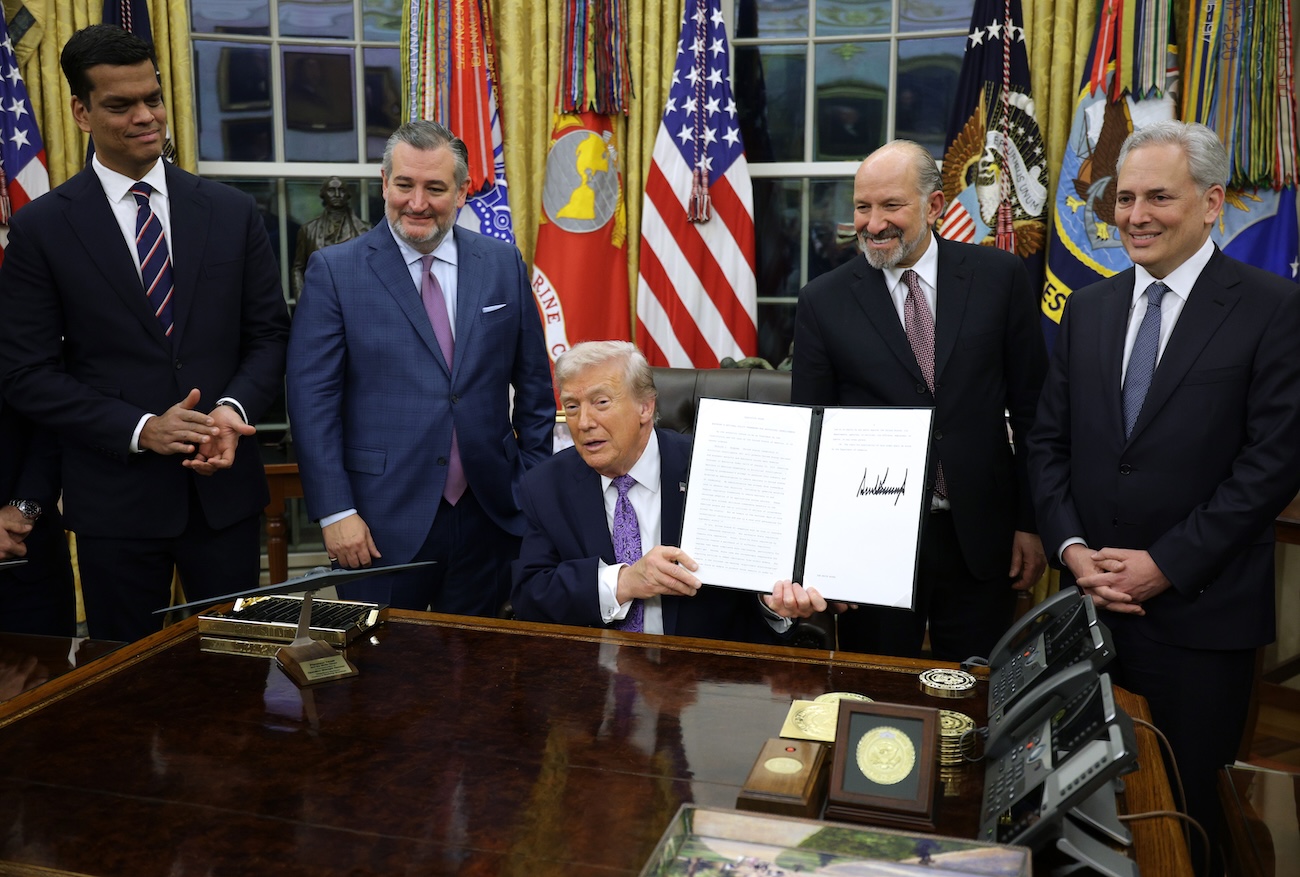
President Donald Trump signed an executive order on Thursday that prohibits states from enforcing their own laws regulating artificial intelligence (AI), a move that follows months of protests from state lawmakers, attorneys general, and civil rights organizations. The order, titled “Eliminating State Law Obstruction of National Artificial Intelligence Policy,” aims to establish a cohesive federal framework amid concerns over “excessive state regulation” that could hinder U.S. efforts to maintain its “global AI dominance.”
This executive action comes after previous legislative attempts to address AI regulation faltered, including the recent exclusion of AI measures from the National Defense Authorization Act of 2026. Trump initially announced his intent to revive this measure on Truth Social earlier this week, citing the need for a streamlined approach to AI governance that avoids the complications of a fractured regulatory landscape.
Advocates for the order argue that state-by-state regulations create a patchwork of laws that complicate compliance, particularly for startups. Trump’s order specifically criticizes laws from states like Colorado and California, which impose restrictions on high-risk AI applications in sectors such as hiring, lending, and housing. The order highlights concerns that state laws may inadvertently encourage ideological bias and impede interstate commerce.
Jake Parker, senior director of government relations at the Security Industry Association, welcomed the executive order, claiming that it fosters innovation by reducing regulatory burdens. However, this perspective is not universally shared. Many state officials and advocacy groups contend that without a robust federal framework, the absence of state laws will leave communities vulnerable to potential harms associated with AI, such as bias and discrimination.
According to a report from the Council of State Governments, states have been proactive in legislating AI protections due to federal inaction, proposing over 250 pieces of AI-related legislation in 2025 alone. Opponents of the new order argue that it undermines critical state-level efforts to ensure the safe and ethical deployment of AI technologies.
The National Association of State Chief Information Officers has expressed concerns that the executive order could jeopardize the progress states have made in regulating AI. In May, the group criticized the proposal, noting that it would impede local initiatives aimed at safeguarding residents against AI-related risks. Similarly, a coalition of state attorneys general labeled the order “irresponsible,” highlighting the historical context of federal inaction that has led states to take the lead in AI governance.
As part of the executive order, Trump also indicated that states could lose funding from the Broadband Equity, Access and Deployment (BEAD) program if they continue to enforce their AI regulations. The order directs the Commerce Department to withhold “nondeployment funds” based on states’ compliance with the new federal directive, which could significantly affect broadband funding that supports essential public services.
In response to these developments, over 160 state legislators sent a bipartisan letter urging the Commerce Department to release the full BEAD allotments to states, including those funds tied to broadband access and development. This move may set the stage for potential legal challenges as states respond to changes in funding and regulatory authority.
The executive order has drawn sharp criticism from various advocacy groups. Michael Kleinman of the Future of Life Institute referred to the measure as “a gift for Silicon Valley oligarchs,” arguing that it shields tech companies from accountability. Randi Weingarten, president of the American Federation of Teachers, labeled the directive “outrageous,” while Cody Venzke from the American Civil Liberties Union called it “dangerous” and “unconstitutional,” asserting that it violates agreements established between the federal government and states regarding appropriated funds.
As the debate continues, the order raises questions about the balance of power between state and federal authorities in regulating emerging technologies. The pushback from state officials and advocacy groups indicates a significant divide, not only over the specifics of AI regulation but also regarding the broader implications for democratic governance and community safety.
Senator Alex Padilla of California has criticized the executive order for infringing on states’ rights, emphasizing the importance of local leadership in fostering innovation while ensuring consumer protections. As the situation unfolds, the ramifications of this order will likely reverberate through both state and federal policy discussions regarding the future of AI in the United States.
See also Elon Musk’s xAI Launches Grok in El Salvador for 1M Students Amid Controversy
 Governments’ Lack of Transparency on Data Centers Sparks Environmental Concerns
 Gene Simmons Calls for Federal AI Regulation to Protect Music Industry and IP Rights
 AI Safety Cameras Generate $13 Million in Fines for 31,000 Driving Offences in WA