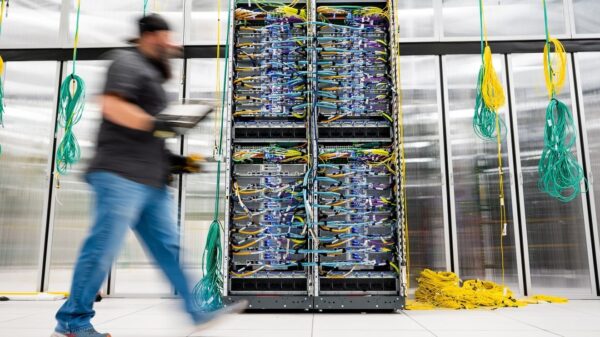
NEW YORK, Dec 11: As the tech industry invests approximately $400 billion in specialized chips and data centers this year, a growing chorus of concerns questions the sustainability of such unprecedented expenditures. Central to these doubts are overly optimistic projections regarding the longevity of these specialized chips in an AI landscape that is evolving rapidly.
With fears of an AI bubble intensifying and a significant portion of the U.S. economy increasingly dependent on artificial intelligence advancements, analysts caution that the repercussions could be severe. Investor Michael Burry, known for his pivotal role in “The Big Short,” recently labeled the current situation a “fraud” on social media platform X, reflecting widespread skepticism about the viability of these investments.
Historically, cloud computing giants assumed that their chips and servers would maintain utility for about six years. However, Mihir Kshirsagar from Princeton University’s Center for Information Technology Policy suggests that this timeframe may no longer be realistic due to a combination of technological obsolescence and physical wear and tear. “The combination of wear and tear along with technological obsolescence makes the six-year assumption hard to sustain,” he stated.
A significant factor driving this rapid obsolescence is the faster pace at which chip manufacturers, led by Nvidia, are releasing new processors. Just months after launching its flagship Blackwell chip, Nvidia announced the upcoming Rubin chip, expected to offer performance improvements of 7.5 times by 2026. According to analyst Gil Luria from D.A. Davidson, this rapid innovation cycle could lead to chips depreciating by 85 to 90 percent within three to four years.
Nvidia CEO Jensen Huang also acknowledged this trend, noting that once Blackwell was introduced, demand for previous generations of chips plummeted. “There are circumstances where Hopper is fine. Not many,” he added, highlighting the diminishing appeal of older models. Compounding the issue, AI processors are experiencing higher failure rates than before, with Luria noting that they often run excessively hot, leading to equipment burnout. A recent Meta evaluation of its Llama AI model even cited an annual failure rate of 9 percent.
Both Kshirsagar and Burry concur that the actual lifespan of these AI chips may be limited to just two or three years. In a rare move, Nvidia defended the industry’s four-to-six-year estimate in a statement last month, asserting that it is based on real-world usage trends. However, Kshirsagar remains skeptical, arguing that the AI boom is predicated on “artificially low” cost assumptions, suggesting that negative consequences are inevitable.
If companies are compelled to shorten their depreciation timelines, it could significantly impact their profit margins. Jon Peddie of Jon Peddie Research warned, “It would immediately impact the bottom line and slash profits.” This financial strain may have broader implications for an economy that is increasingly leaning on AI technologies.
While Luria does not express concern for large tech players like Amazon, Google, or Microsoft—who have diversified revenue streams—he is wary of AI-centric companies such as Oracle and CoreWeave. These firms are already burdened by substantial debt as they race to acquire more chips to secure cloud customers. As Luria points out, constructing data centers necessitates significant capital, and if companies appear less profitable due to more frequent equipment replacements, it could complicate their ability to raise funds.
The precariousness of this situation is underscored by the fact that some loans utilize the chips themselves as collateral. In an effort to mitigate potential losses, companies may seek to resell older chips or repurpose them for less demanding applications. Peddie noted, “A chip from 2023, if economically viable, can be used for second-tier problems and as a backup.”
As the tech industry grapples with these challenges, the trajectory of AI investments will be closely monitored, with the potential for significant repercussions across the market and broader economy. The race for advanced AI capabilities could very well dictate the financial landscape of the tech sector for years to come.
See also FunkyMEDIA Launches AI-Driven SEO Suite to Enhance Brand Visibility and Performance
 Fed Cuts Rates to 3.50%, Verizon Launches Price War Amid Telecom Turmoil
 AI Chatbots Achieve Varied Success on Civil Engineering Exams, Study Reveals Key Insights
 Nvidia Reveals GPS Technology to Track AI Chip Locations, Enhancing Export Compliance
 Vietnam Passes Landmark AI Law, Establishes National AI Development Fund and Supercomputing Center