






























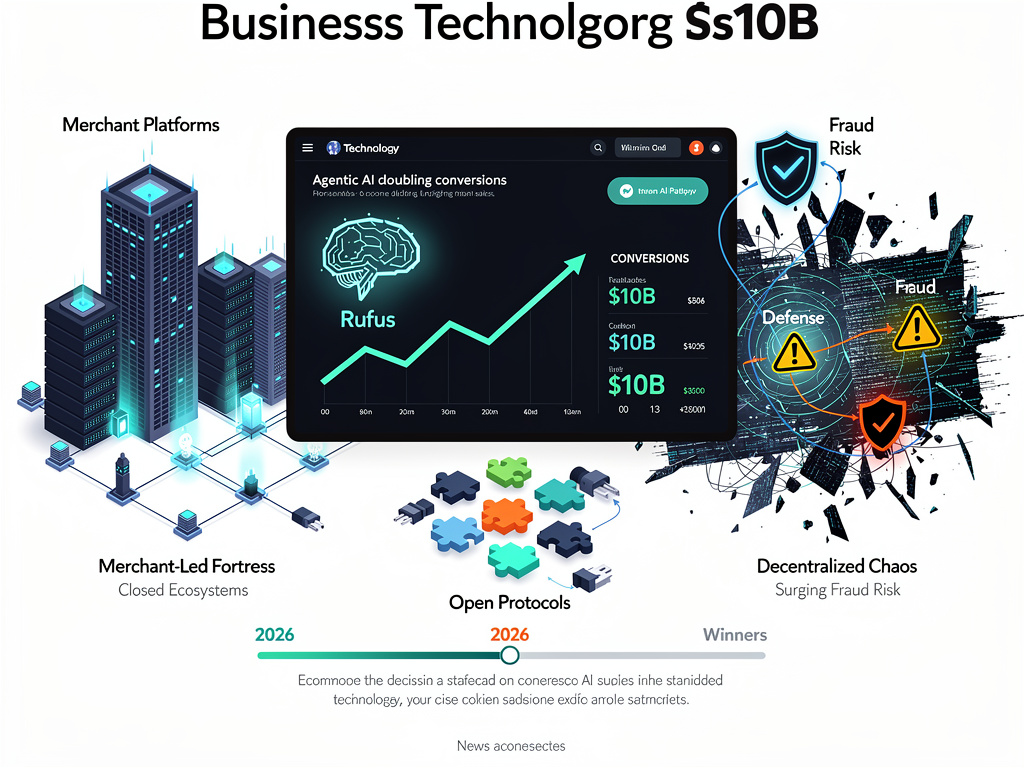
In a transformative moment for e-commerce, Amazon’s Rufus AI shopping assistant significantly enhanced consumer purchasing behavior during the Black Friday 2025 shopping frenzy. According to data from Adweek, sessions leading to purchases doubled for users engaging with Rufus, compared to a 20% increase among non-users. This performance highlights a growing trend, as 73% of consumers now turn to AI assistants for shopping assistance, with 58% relying on them for holiday gift purchases, and 70% expressing comfort with AI managing transactions altogether, based on an October survey by Riskified involving 5,400 respondents.
Amazon CEO Andy Jassy emphasized the momentum of Rufus in November, projecting it could drive an additional $10 billion in sales this year. With 250 million users interacting with the assistant and a 60% higher purchase completion rate for these users, Rufus indicates a pivotal shift in the retail landscape. Yet, it represents only the beginning of what is termed agentic commerce, where autonomous AI agents perform research, comparisons, negotiation, and purchasing on behalf of consumers, potentially challenging traditional retailer control.
As detailed by GeekWire, these AI agents are actively exploring multiple online stores for deals, raising questions about who sets the terms in this evolving ecosystem. Retailers now face three distinct strategies: maintaining proprietary platforms, engaging in open collaborations, or risking a chaotic free-for-all as AI continues to integrate into the shopping funnel.
Amazon’s strategy exemplifies a merchant-led model, embedding Rufus deeply within its platform to protect pricing integrity, customer information, and fraud defenses. By keeping AI technology exclusive to its ecosystem, Amazon can monitor critical behavioral signals that aid in detecting fraudulent activities, even as it invests substantially in developing generative models designed to assist with shopping inquiries such as comparing headphones or tracking orders.
This approach has yielded measurable benefits. During Cyber Week, AI interventions influenced 17% of U.S. orders, amounting to $13.5 billion, with a significant portion attributed to integrated tools like Rufus rather than external large language models, as noted in posts on X. Recent upgrades to Rufus, including features like 30-90 day price histories, have bolstered consumer trust and conversion rates.
However, reliance on proprietary systems necessitates continuous innovation. A McKinsey analysis warns that while retailers can maintain control, they must compete with the AI capabilities of big tech firms or risk losing customers to more flexible generalist tools, such as ChatGPT, which 45% of shoppers use compared to Rufus’s 11%, according to recent surveys shared on X.
Collaborative Protocols Gain Traction
The future of commerce may hinge on collaborative protocols, such as Google’s AP2, introduced in September 2025 with the support of Mastercard, American Express, and PayPal. This new standard facilitates verified AI interactions across various platforms, sharing crucial fraud intelligence while allowing retailers to retain control over branding and pricing. Visa anticipates that millions will adopt agentic commerce by late 2026, propelled by tools like its VIC protocol. Recent partnerships between Akamai and Visa focus on identity verification in agentic transactions, addressing growing security threats, as reported by Digital Commerce 360. These frameworks are designed to credential AIs, ensure behavioral transparency, and clarify liability, enabling merchants to leverage AI traffic without losing their intermediary role.
Retail Brew labeled 2025 as the year agentic commerce emerged, predicting even greater disruption in 2026 as these protocols mature. Meanwhile, AWS blogs stress the need for retailers to adapt to multi-marketplace navigation by AI agents, balancing new opportunities with necessary oversight.
Amid these developments, concerns about fraud loom large. A decentralized shopping environment, where third-party AIs may dominate, carries substantial risks. Retailers could find themselves reduced to mere inventory providers, susceptible to price wars and threats from “Compromised AI-as-a-Service,” where hacked accounts facilitate cross-site fraud rapidly, as cautioned by Adweek. Traditional indicators of trust may diminish as agents obscure human behavior, complicating the differentiation between reliable and malicious entities.
Amazon’s legal action against Perplexity in November 2025, alleging unauthorized account access through its Comet tool, underscores escalating tensions in the sector, as reported by Reuters. Concurrently, PYMNTS highlighted Visa’s endeavors to introduce AI commerce tools shortly. However, the automation of fraud through tactics like credential stuffing and phishing necessitates proactive security measures.
In response to these challenges, retailers are fortifying their defenses. Strategies include credentialing AIs, demanding device data from platforms, and engaging in intelligence-sharing networks. Participation in initiatives like ACP and AP2 is crucial for merchants to maintain influence over liability and verification rules.
The State of Fashion 2026 report from BoF-McKinsey emphasizes the need for brands to prepare for AI-driven discovery, as an increasing number of consumers are bypassing traditional search engines. A 2025 survey by Talkdesk found that 75% of shoppers are using AI to find deals, while 67% seek gift ideas through these technologies, indicating an irreversible trend.
Although early adopters like Walmart’s Sparky and Target’s assistant trail behind Rufus, their presence signals a broader move towards embedding AI capabilities within retail. As Visa advances its agentic tools, retailers that prioritize shared standards stand to enhance efficiency while mitigating their exposure to risks.
Looking ahead to 2026, the trajectory of agentic commerce seems to favor collaboration, buoyed by major industry players. However, the specter of decentralization looms should standards falter. Amazon’s Rufus may thrive within a controlled environment, yet open ecosystems promise more extensive reach. Retailers that ignore these shifts risk commoditization, as McKinsey forecasts the emergence of hyperpersonalized, autonomous transactions that could redefine the retail landscape. As the recent $13.5 billion in AI-influenced sales during Black Friday serves as a prologue, 2026 will challenge the industry’s preparedness against escalating fraud and consumer acceptance of AI-driven commerce.
See also India’s Startup Ecosystem Surges with $1.4B in Funding, Multiple IPO Filings
 AI Ownership Surges as NJ Ayuk and Dr Brook Taye Make New African’s Most Influential List
 AI-Powered Customer Communications: Can It Achieve 95% Trust Among Users?
 Korea Targets 50 Unicorns, 10K AI Startups with $27B Annual Venture Fund by 2030