

















































Australia’s artificial intelligence sector recorded a historic funding total of $839 million in 2025, according to an analysis by Tracxn. This surge marks the most lucrative year for Australian AI start-ups, yet the story reveals a more intricate landscape characterized by significant capital concentration and strategic investor preferences.
While the overall funding figure is impressive, it is noteworthy that just four companies attracted over $1 billion in cumulative funding. This trend underscores a structural shift in the market, where investors increasingly favor established, scale-stage companies with sovereign relevance rather than early-stage ventures. The analysis highlights that all financing rounds exceeding $100 million occurred at late stages, indicating a preference for proven operators and a cautious approach toward early-stage underwriting.
The dominance of late-stage funding is reflected in the median round size, which remained stable at $4 million. This figure suggests that outside of notable late-stage rounds, the ecosystem continues to exercise valuation discipline. The disparity between mega-rounds and typical funding levels illustrates an uneven capital formation within the sector.
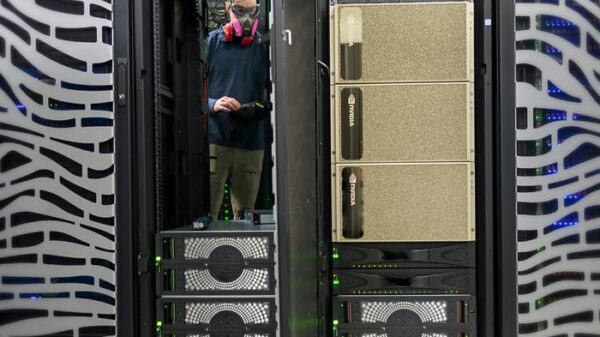
A significant portion of the funding, totaling $547 million, was directed toward AI infrastructure, which has become the primary focus for capital deployment post-2023. This trend aligns with investor interests in sovereign compute capabilities, energy-linked AI assets, and long-duration infrastructure platforms. Within the application layer, vertical AI solutions garnered $981 million in all-time funding, with healthcare and life sciences applications leading due to their regulatory defensibility and critical adoption rates.
Firmus, an infrastructure-focused AI company, stood out by securing $327 million in its Series E round and an additional $220 million in Series D funding. Co-CEO Oliver Curtis emphasized the company’s mission to manufacture a new class of AI infrastructure designed specifically for scale, performance, and sustainability on Australian soil. Another key player, Harrison AI, raised $112 million in its Series C round, further contributing to the funding concentration.
Sydney emerged as the dominant hub for AI funding, with local companies accounting for $1.4 billion in cumulative investments, driven by a concentration of late-stage infrastructure and deep-tech firms. Melbourne followed with $241 million, while other cities contributed marginally. This geographic concentration reflects a clear preference among investors for established tech hubs, favoring access to late-stage capital and infrastructure ecosystems over regional diversification.
As the Australian AI sector matures, exit dynamics are also evolving. The country recorded 25 all-time AI exits, with a noticeable shift towards acquisitions. The report indicates that seven companies were acquired compared to just two initial public offerings (IPOs) in recent years, signaling a consolidation-driven liquidity environment. This transition points to an increasing preference for strategic buyers over public markets, reflecting a maturation in the commercial landscape.
While 2025 marked a high point for overall funding in Australia’s AI ecosystem, the concentration of capital around a few execution-ready and infrastructure-focused firms suggests a deliberate choice by investors regarding where to allocate resources. This selective underwriting approach, combined with geographic dominance and a shift towards acquisitions as the primary exit route, delineates the current state of Australia’s AI investment landscape.
As Australia continues to navigate its position within the global AI market, these funding patterns and strategic realignments are likely to persist into 2026. The emphasis on infrastructure requirements and sovereign compute considerations will continue to shape investor decisions and influence the future trajectory of the sector.
See also Government Launches $765,000 AI Pilot, Offers Small Businesses Up to $15,000 in Funding
 SaaS AI Accelerators vs. Enterprise AI: Key Insights for Cybersecurity Leaders
 Digital Health Funding Surges to $14.2B in 2025, Driven by AI Startups’ 54% Share
 Archer Aviation Partners with Nvidia to Enhance eVTOL Safety and Autonomy at CES 2026
 Brook.ai Achieves 2025 Best in Business Award for 90% Reduction in CHF Readmissions