


















































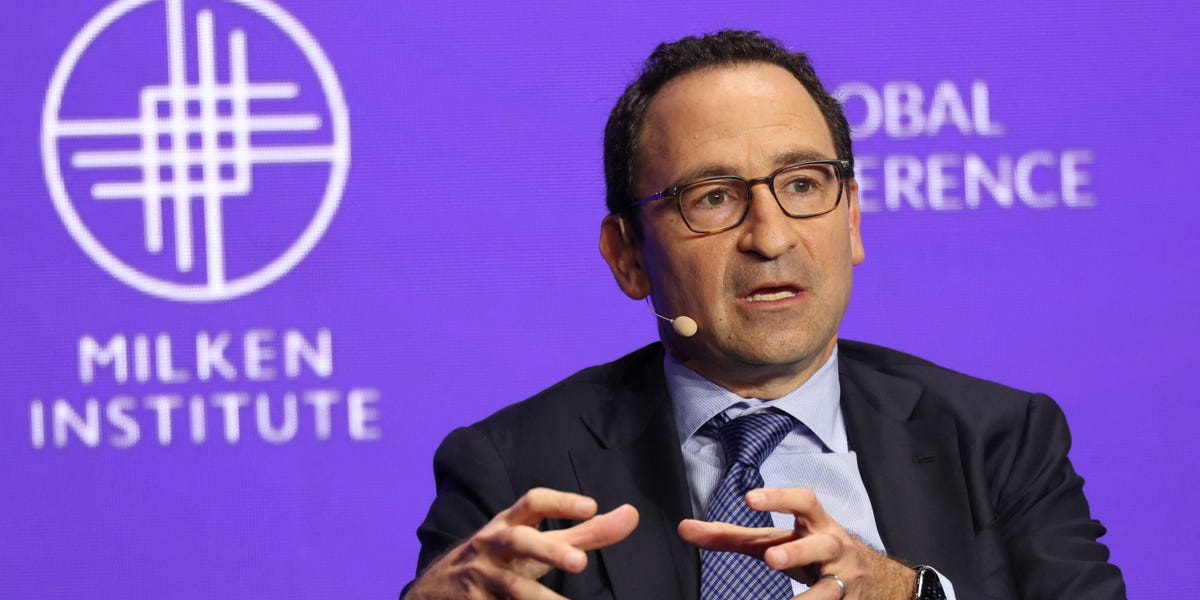
Jon Gray, president and COO of Blackstone, has remarked that the current atmosphere of market caution may enhance investors’ performance. Speaking on Morgan Stanley’s “Hard Lessons” podcast, Gray noted that the pervasive discourse surrounding market bubbles—including private credit, artificial intelligence (AI), and stock markets—could serve as a deterrent against excessive risk-taking. “One of the good things, I think, about the current environment, is that there’s so much negativity,” he stated, suggesting that this negativity can help prevent investment excesses.
Tech giants are committing substantial resources to AI, raising concerns that these investments may not yield the anticipated returns. The private credit market has expanded significantly in recent years, but several high-profile defaults, such as those involving auto parts supplier First Brands, have raised alarms about potential hidden risks. Gray, however, differentiates the current AI landscape from the dot-com bubble, noting that while Cisco’s valuation during that era soared to over 100 times its earnings, Nvidia is currently trading at about 43 times its earnings, reflecting a more cautious investor sentiment.
“Now if this runs for five more years and people think trees grow to the skies, that’s always a risk,” Gray warned regarding the ongoing hype surrounding AI. Having joined Blackstone in 1992, Gray has been instrumental in transforming the firm into a leading player in the private markets, managing $1.3 trillion in assets. His early experiences in the 1990s taught him valuable lessons about investment caution. One such lesson came when he bought a California property that ultimately lost value, a setback he attributed to being blinded by past successes and the prevailing “mania of crowds.”
This experience reshaped Gray’s investment philosophy. He emphasized the importance of not merely doubling down on previously successful strategies without critical analysis. His perspective shifted markedly after Blackstone’s acquisition of Hilton Hotels in 2007, which became one of private equity’s most lucrative real estate transactions despite initially incurring a write-down of over 70% during the financial crisis. “When you buy everything, and it goes up, it doesn’t really train you to be a great investor,” he explained.
Gray learned to concentrate on the overall “neighborhood” of his investments, considering factors beyond mere dollar figures. This approach encompasses assessing underlying market conditions, the business’s quality, and the management team. “If you can get those things right, even if you made a really poorly timed investment and paid a big premium, it can still turn out OK,” he stated, highlighting the necessity of a comprehensive evaluation in investment decision-making.
As investment landscapes continue to evolve, Gray’s insights reflect a broader awareness within the financial community about the need for vigilance amid market enthusiasm, particularly in sectors as volatile as AI and private credit. While the allure of rapid returns can be tempting, his experiences underscore the importance of a disciplined approach to investing that considers both current market dynamics and long-term fundamentals.
See also Kilkenny’s Tech Thursday Reveals AI’s Impact on Business Structures and Markets
 Korea’s Venture Market Shifts Focus: ₩28.5 Billion Funded to 10 Startups in February
 Target Improves In-Stock Performance by 150 Bps with AI-Driven Inventory Planning
 Octobotics Secures $1.1M Seed Funding to Advance AI-Enabled NDT Robotics Solutions
 UBS Downgrades China’s Software Sector as AI Disrupts SaaS Profitability Model