

















































McKinsey & Company has rapidly expanded its workforce with the addition of approximately 25,000 artificial intelligence (AI) agents, bringing its total employee count to about 65,000. CEO Bob Sternfels recently indicated that he envisions each human employee working alongside an AI agent, reflecting a significant shift in the consulting industry toward the integration of generative AI across various operations.
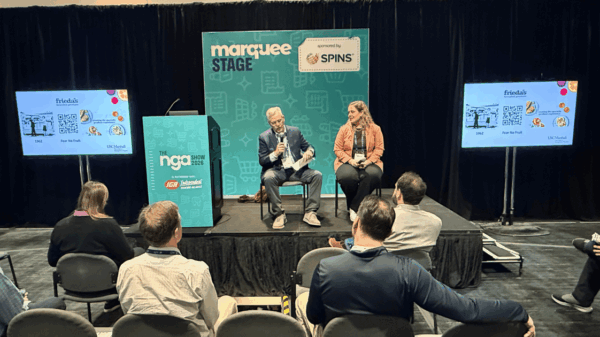
During a recent appearance on Harvard Business Review’s IdeaCast, Sternfels initially stated that the firm’s workforce comprised 40,000 human employees and 20,000 AI agents. However, he later clarified at the Consumer Electronics Show in Las Vegas that the number of AI agents is closer to 25,000. A spokesperson confirmed that nearly 40% of McKinsey’s total workforce are now AI agents, highlighting a major trend within the consulting sector.
These AI agents are defined by Sternfels as virtual assistants capable of operating autonomously. They are designed to analyze problems, formulate plans, and execute actions without the need for direct input from human employees. This deployment at McKinsey not only demonstrates the firm’s commitment to enhancing operational efficiency but also indicates a larger industry-wide movement toward leveraging generative AI to transform routine consulting tasks.
Leading these AI initiatives is QuantumBlack, a specialized team of 1,700 professionals within McKinsey. Their work now represents around 40% of the firm’s overall operations. Alex Singla, a senior partner at McKinsey and co-leader of QuantumBlack, noted that they are seeking candidates who can seamlessly navigate between traditional consulting practices and an engineering mindset, working collaboratively with AI technologies.
McKinsey’s shift from traditional advisory roles to more comprehensive, AI-driven transformation projects is emblematic of a broader trend affecting the consulting landscape. Firms such as Boston Consulting Group and PwC are following suit, adopting new technologies to enhance efficiency as they integrate AI into various consulting functions.
The integration of AI is also prompting a fundamental change in McKinsey’s business model. Sternfels pointed out that the firm is moving away from conventional advisory services and fee-for-service structures. Instead, it is pivoting toward a model that focuses on collaborating with clients to identify joint business cases, ultimately helping clients underwrite the outcomes of these cases. This evolution signifies a notable departure from traditional consulting practices, fostering more collaborative, outcome-based partnerships.
As the consulting industry continues to embrace AI, the implications for workforce dynamics and client engagements become increasingly significant. McKinsey’s strategic initiatives to blend human expertise with AI capabilities may set a precedent for how other firms operate in an increasingly digital future, emphasizing the need for adaptability in a rapidly changing business environment.
See also Australia’s AI Funding Reaches $839M in 2025, Concentrated in Four Major Companies
 Government Launches $765,000 AI Pilot, Offers Small Businesses Up to $15,000 in Funding
 SaaS AI Accelerators vs. Enterprise AI: Key Insights for Cybersecurity Leaders
 Digital Health Funding Surges to $14.2B in 2025, Driven by AI Startups’ 54% Share
 Archer Aviation Partners with Nvidia to Enhance eVTOL Safety and Autonomy at CES 2026