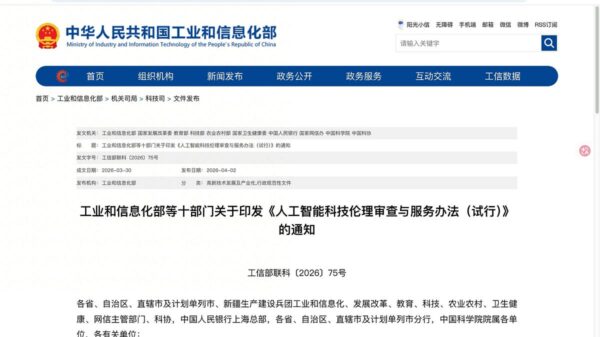












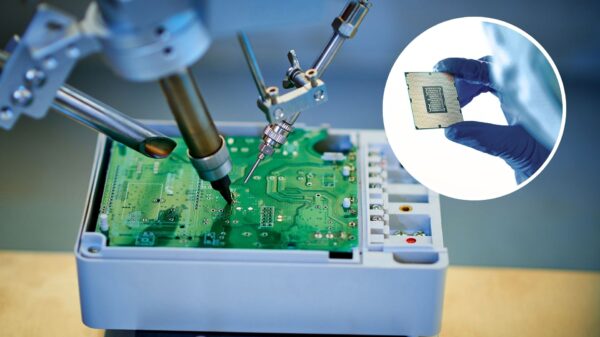



































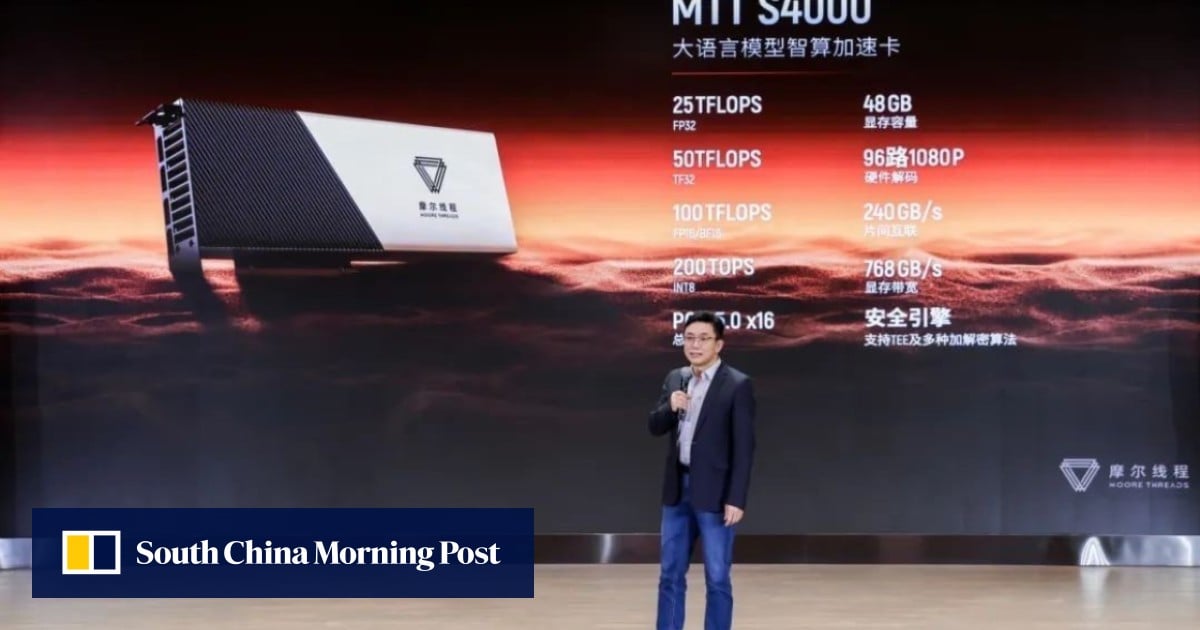
Moore’s shares began trading at 650 yuan on Monday, reflecting a remarkable 468 percent increase from their initial public offering (IPO) price of 114.28 yuan. This surge occurred amid a declining market, as China’s benchmark CSI300 Index slipped 0.1 percent. The rapid rise in Moore’s stock illustrates the nation’s ongoing commitment to technological self-sufficiency, emphasized in a critical five-year plan outlining economic and social development goals through 2030. This policy shift coincides with a heightened competitive landscape between China and the United States in technology sectors, ranging from AI large-language models to advanced chips and robotics.
Moore Threads, often dubbed “China’s Nvidia,” raised 8 billion yuan (approximately US$1.13 billion) in its IPO, marking it as the second-largest on the mainland this year, only surpassed by Huadian New Energy Group’s US$2.7 billion offering in July. The proceeds from this IPO are earmarked for financing the company’s next-generation projects in AI and graphics chips, in addition to bolstering working capital.
The swift approval of Moore’s IPO by the China Securities Regulatory Commission exemplifies the government’s support for domestic technology firms. The company received the green light in October, a mere four months after its application—a stark contrast to the average processing time of approximately 470 days faced by last year’s applicants on the Shanghai Stock Exchange Science and Technology Innovation Board (STAR Market).
Moore’s rapid ascent has attracted significant backers, including Liang Wenfeng, founder of the language model firm DeepSeek and the quantitative hedge fund HighFlyer, who invested 7 million yuan prior to the IPO. This backing reflects a broader trend of increasing investment in Chinese tech firms, particularly those focused on developing advanced AI and computing technologies.
As the market continues to evolve, the implications of Moore’s successful IPO may resonate beyond just financial metrics. The growth of companies like Moore Threads signals a robust response to international pressures, particularly from the US, where technology exports to China have been curtailed in recent years. The importance of self-sufficiency in technology has never been more pronounced as China seeks to mitigate vulnerabilities in its supply chains and enhance its global standing in tech innovation.
The competition between the US and China in technological advancement suggests an intensifying race, particularly in sectors deemed critical for future economic growth. Moore’s strong market performance may serve as a catalyst for additional investments in domestic tech initiatives, as both private and institutional investors look to capitalize on the growing demand for innovative solutions. As the landscape of AI and computing continues to evolve, the potential for Chinese firms to become leaders in these domains could reshape global technology dynamics.
See also Accenture Invests in Wevo to Enhance AI-Driven Customer Research Capabilities
 AMD Set to Surpass Palantir by 2026 as Market Valuation Dynamics Shift
 AI and Cash Revolutionize European Banking: Insights from Diebold Nixdorf’s Helena Müller
 UnitedHealthcare Launches AI-Driven Advocate Assist to Enhance Patient Support and Care