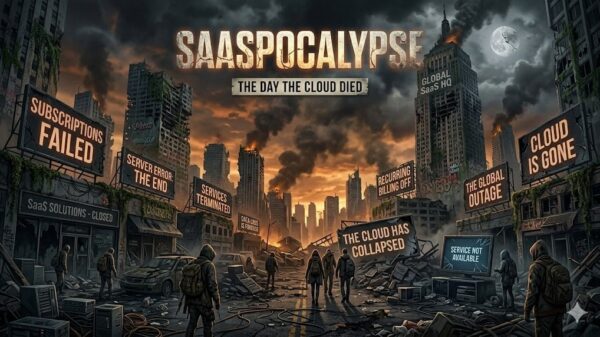












































Stocks of Software-as-a-Service (SaaS) companies have shown signs of recovery since their February lows, yet they remain under pressure. As of the latest trading close, prominent SaaS firms like Salesforce and ServiceNow are down over 25% since the start of the year, with Intuit, an accounting SaaS provider, experiencing a sharper decline of 31%. This downturn has been attributed to concerns surrounding a phenomenon dubbed the “SaaSpocalypse,” which posits that advances in agentic AI could render traditional SaaS platforms obsolete.
The sharp sell-off began in February 2026 following the launch of Anthropic‘s Claude Cowork, which raised fears that autonomous AI agents could take over complex professional tasks, threatening established SaaS models. This panic escalated when Anthropic disclosed a $30 billion funding round, pushing its valuation to $380 billion and showcasing a remarkable revenue growth from zero to $14 billion in annualized run rate over three years.
While the initial downturn was fueled by uncertainties, many SaaS firms have since released their financial results and are addressing market fears directly. This renewed transparency provides clarity, revealing that AI will not completely displace SaaS but rather reshape it.
Understanding Market Concerns
One of the primary concerns is that AI coding agents will simplify software creation, inundating the market with cheaper alternatives to existing SaaS platforms. However, as noted by Intuit CEO Sasan Goodarzi, barriers to SaaS adoption extend beyond mere technology. He differentiated between “context” and “core,” explaining that while external large language models (LLMs) like Claude and ChatGPT serve the long-tail of specific industry needs, the proprietary data and domain-specific AI models constitute a company’s core offering.
Intuit, for instance, is not positioning itself as a competitor to LLM providers but as a partner while retaining full control of its financial ecosystem. Similarly, Veeva Systems, which operates in life sciences, views LLM providers as infrastructure rather than competition, akin to the role of Amazon Web Services for earlier cloud software. Veeva’s AI agents are built using LLMs from Anthropic and Amazon Bedrock, but the value comes from the compliance-grade, domain-specific intelligence layered on top.
Furthermore, ServiceNow CEO Bill McDermott emphasized the distinction between the probabilistic nature of AI and the deterministic approach needed for enterprise workflow orchestration, asserting that AI does not replace this orchestration but relies on it. In fact, Anthropic has partnered with ServiceNow to help customers develop AI applications on its platform.
Another prevalent fear is that AI will reduce SaaS companies to mere databases, stripping away their value. Yet, Intuit’s recent results contradict this narrative, revealing that over three million customers have engaged with its AI agents, with repeat usage exceeding 85%. The company’s tax agent alone has generated over $1,000 in additional tax deductions per customer, demonstrating that AI enhances the platform’s value rather than diminishes it.
The integration of AI is driving demand for human assistance as well, with QuickBooks Live reporting a 50% increase in customer growth, indicating that AI is making platforms stickier and more valuable. Similarly, ServiceNow’s configuration management database, which provides a detailed blueprint of customer operations, highlights the necessity of foundational knowledge built over time, underscoring that AI agents cannot replace this intricate understanding of enterprise operations.
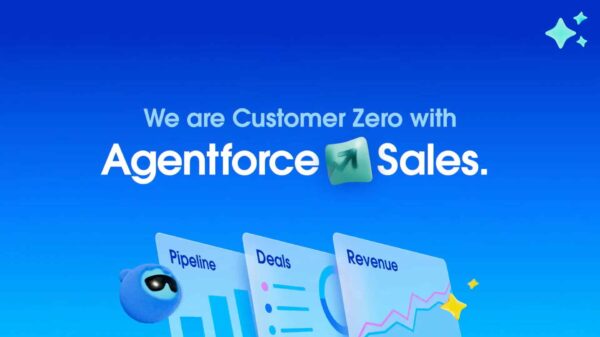
Concerns about ‘seat compression’—the idea that companies will require fewer human users and subsequently pay for fewer seats—also loom large. However, Salesforce’s latest results suggest a different trajectory. The company reported three monetization strategies thriving simultaneously: upgrading customers to premium AI-powered tiers, expanding seat counts, and selling consumption-based flex credits. Its AI product, Agentforce, has rapidly generated $800 million in annual recurring revenue within 15 months.
ServiceNow’s market potential remains vast, with an estimated 1.3 billion seats available and a year-on-year user growth of 25%. Intuit is also expanding its workforce, aiming to grow its direct sales team by 30%, indicating confidence in its customer base rather than a retreat in demand.
While the fears associated with the SaaSpocalypse are not entirely unfounded, they lack immediacy. AI will undoubtedly transform the software landscape, but many SaaS firms are positioned to adapt. The path forward requires these companies to return to their core values: aligning their revenue models with customer needs. Those that harness AI to address genuine customer pain points—such as uncovering tax deductions or streamlining IT workflows—are most likely to thrive in this evolving environment. The narrative of the SaaSpocalypse is far from over, but the ongoing changes may well unfold over years, not weeks.
The writer owns shares of Intuit, Salesforce, ServiceNow, and Veeva Systems. He is co-founder of The Smart Investor, a website aimed at helping individuals invest wisely through education and market insights.
See also Bank of America Warns of Wage Concerns Amid AI Spending Surge
 OpenAI Restructures Amid Record Losses, Eyes 2030 Vision
 Global Spending on AI Data Centers Surpasses Oil Investments in 2025
 Rigetti CEO Signals Caution with $11 Million Stock Sale Amid Quantum Surge
 Investors Must Adapt to New Multipolar World Dynamics