











































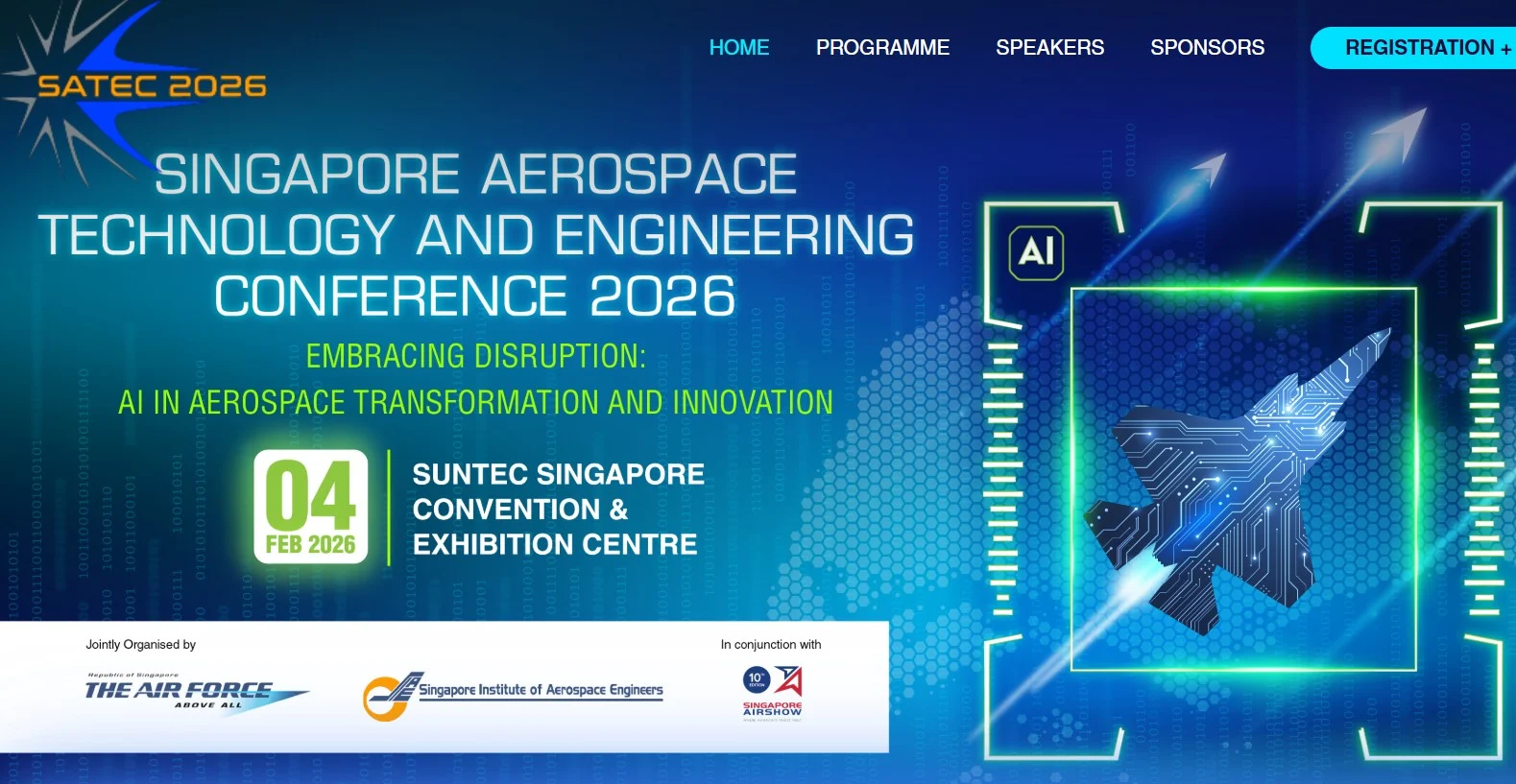
Artificial Intelligence’s potential to disrupt the aviation and aerospace sectors will take center stage at the upcoming Singapore Aerospace Technology and Engineering Conference (SATEC) on February 4, 2026. This twelfth edition of the biennial event will be held at the Suntec Convention Centre, coinciding with the Singapore Airshow.
SATEC is a collaborative effort organized by the Singapore Institute of Aerospace Engineers (SIAE) and the Republic of Singapore Air Force (RSAF), specifically its Air Engineering & Logistics Department (AELD). This year’s conference theme, “Embracing Disruption: AI in Aerospace Transformation and Innovation,” underscores the focus on integrating new technologies into the aviation landscape.
The conference will feature plenary sessions led by industry leaders and experts from global aerospace companies and government agencies, aiming to explore the development and implementation of advanced technologies in the sector. ME7 Gabriel Tham, head of the air engineering and logistics department at the RSAF, expressed optimism regarding the event’s potential impact. “We hope that SATEC 2026 serves as the catalyst that strengthens innovation and collaboration across defence and commercial sectors,” he stated.
Tham emphasized that the discussions and partnerships formed during the conference would accelerate collective progress in the aerospace industry amid the rising influence of AI. He extended his gratitude to sponsors, partners, and participants for their contributions to the event, expressing confidence that SATEC 2026 will provide an enriching experience that broadens perspectives, enhances networking opportunities, and fuels passion for aerospace innovation.
Adding to this sentiment, Kenneth Yeo, president of the SIAE, highlighted the importance of the conference in promoting aviation technology education and enhancing aerospace engineering capabilities. “We look forward to the invaluable papers that will emerge, therefore stimulating discussions that will pave the way for a more interconnected and progressive aerospace landscape,” he noted.
As AI continues to reshape various industries, its implications for aviation are particularly significant. From improving operational efficiencies to enhancing safety protocols and customer experiences, the integration of AI technologies presents both opportunities and challenges. This conference aims to address these topics, encouraging a dialogue that could shape the future of aerospace engineering.
The emphasis on collaboration between defence and commercial sectors reflects a growing recognition of the need for cross-industry partnerships in navigating the complexities brought about by technological advancements. SATEC 2026 is poised to serve as a platform for such conversations, fostering an environment where experts can share insights, challenges, and innovative solutions.
With the increasing pace of technological change, the aerospace industry faces the dual challenge of adapting to new tools while maintaining rigorous safety and regulatory standards. AI’s role in this landscape cannot be overstated, as it offers the potential to streamline processes and enhance decision-making capabilities across the board.
As the date approaches, anticipation builds for what insights and advancements will emerge from this gathering of aviation leaders. SATEC 2026 is expected to be a pivotal event in not just discussing, but actively shaping the future of aerospace engineering through innovation and collaboration.
See also xAI Secures $20 Billion in Funding Led by Nvidia and Qatar to Expand AI Capabilities
 Salesforce’s Agentforce Recalibration Increases Costs, Complicates CIO AI Strategies
 Kovrr Launches AI Governance Suite to Enhance Risk Management Across Enterprises
 Arm Launches New Physical AI Unit to Develop Robotics and Automotive Semiconductors
 Aditya Birla Ventures Invests $70M in Articul8, Valuing AI Startup at $500M