

















































The software sector is facing a tumultuous downturn as investors grapple with the implications of artificial intelligence (AI) on long-standing business models. Recent sell-offs in the software industry highlight growing concerns over the viability of subscription-based revenue structures amid a rapidly evolving technological landscape. This uncertainty comes as AI coding assistants and autonomous agents threaten to disrupt the traditional software-as-a-service (SaaS) paradigm that analysts once considered robust and enduring.
The root cause of this turmoil lies in the methodologies Wall Street employs to value software companies, particularly the use of discounted cash flow (DCF) models. These models estimate a company’s future cash flows and heavily rely on terminal value calculations, which can account for as much as 80% of a software stock’s current valuation. This terminal value is intended to represent the ongoing economic benefit of a business beyond a ten-year projection, which analysts typically base on assumptions of stable growth, predictable subscription renewals, and consistent profit margins.
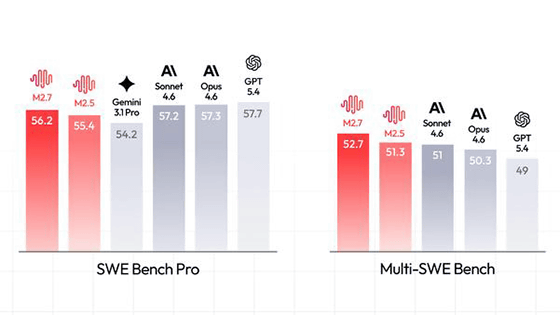
However, the advent of AI has cast doubt on these long-term assumptions. With platforms like OpenAI capable of generating functional code almost instantaneously, the traditional projections on which analysts base their models appear increasingly optimistic. If AI can automate tasks that once required specific software solutions, the question arises: What will be the demand for these products in the future?
The mechanics of DCF models further exacerbate the situation. Analysts usually project detailed cash flows for five to ten years before calculating a terminal value, applying a perpetual growth rate of 2-3% to align with general economic growth. But when AI dramatically alters the landscape—potentially leading to reduced demand for software—the calculations that underpin these projections can become painfully inaccurate, resulting in steep declines in stock prices.
Current market conditions reflect this volatility. Many software stocks have seen significant price drops as investors reassess their outlooks on these companies, leading to heightened sensitivity around earnings reports. As the landscape continues to shift with advancements in AI, the assumptions that once seemed secure are now being scrutinized in ways they haven’t been for years.
This evolving narrative has raised alarms among investors and analysts, who are now forced to grapple with what could be a fundamental shift in the software industry. The reliance on terminal value, a concept that has long been a cornerstone in financial modeling, is now under threat as AI technologies evolve at an unprecedented pace. This has created a feedback loop of uncertainty; as doubts grow about long-term sustainability, stock valuations drop, triggering further panic in an already jittery market.
The implications are far-reaching. For investors, the challenge will be to navigate this uncharted territory as traditional models become less reliable. Analysts who once confidently projected high gross margins and strong renewal rates must now contend with a future where the very products they value could become obsolete. In this climate, companies that adapt quickly to leverage AI technologies may emerge stronger, whereas those that cling to outdated business models may find themselves left behind.
Looking ahead, the software industry stands at a crossroads. The integration of AI is not merely a trend; it represents a fundamental shift in how software solutions are developed, marketed, and consumed. Companies that can pivot and innovate in response to this change may thrive, while those that cannot may face a precarious future. As the dust settles on this seismic shift, one thing is clear: the way software companies are valued will likely never be the same.
See also Salesforce Posts $10.7B Revenue, Benioff Dismisses SaaSpocalypse Fears with AI Agents
 Citrini Research Warns of 10.2% Unemployment in Hypothetical AI-Driven Future
 Enterprise AI Adoption Rises, Yet Only 15% Deliver Measurable ROI, Study Finds
 Deeptech Funding in India Soars 37% to $2.3B, Driven by AI Innovations in 2025