












































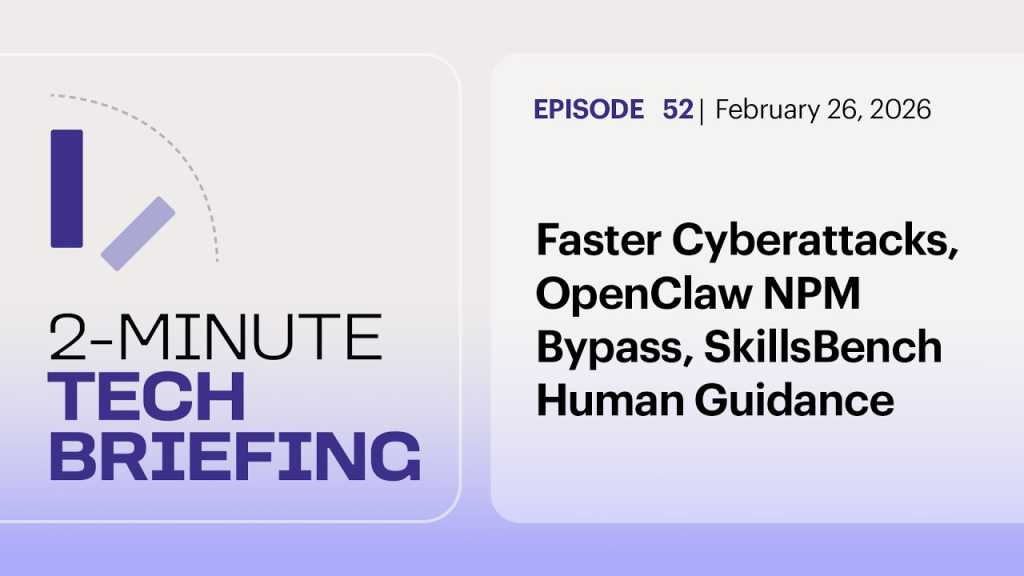
Cyber attacks are intensifying, with new research indicating that artificial intelligence (AI) is significantly shortening the time it takes for breaches to have an impact. According to the recent Palo Alto Network’s 2026 Global Incident Response Report, attackers are moving from initial access to data exfiltration in a mere 72 minutes, a dramatic decrease from nearly five hours in 2024. This alarming trend underscores the increasing sophistication of cyber threats in an era where AI plays a pivotal role.
The report highlights that many breaches are still traceable to fundamental vulnerabilities, such as weak authentication, inadequate real-time visibility, and poor configuration practices. Adding to the complexity, a recent security bypass has led to users unknowingly installing a malicious AI agent known as OpenClaw. This vulnerability originated from a compromised token published on the NPM registry, which pushed out an update for a widely used command line interface that contained a malicious post-install script.
Security platform Socket reported that this malicious script remained active for eight hours on the registry, granting OpenClaw broad system access and allowing it to integrate with popular messaging platforms such as WhatsApp, Telegram, Slack, Discord, iMessage, and Teams. The incident highlights the ongoing challenges organizations face in securing their systems against rapidly evolving threats.
Amid these rising security concerns, research has emerged indicating that AI agents typically perform better when given step-by-step instructions from humans. In a study introducing a new benchmark called Skills Bench, researchers found that agents equipped with curated skills achieved an average score that was 16.2 percentage points higher than those lacking such skills. This suggests that while AI technologies are advancing, they still require human intervention for optimal performance.
Skills Bench evaluates the capabilities of agentic AI across 84 tasks spanning 11 domains, including healthcare, manufacturing, cybersecurity, and software engineering. The findings indicate that despite the rapid advancements in AI, human oversight remains crucial in guiding these systems to achieve their potential.
As organizations continue to adapt to the evolving landscape of technology and cybersecurity threats, the need for robust defense strategies becomes increasingly critical. The integration of AI in both offensive and defensive capacities presents a double-edged sword; while it can enhance security measures, it also creates opportunities for malicious actors to exploit vulnerabilities more quickly.
Looking ahead, businesses must prioritize not only technological upgrades but also comprehensive training for employees on recognizing and mitigating cyber threats. The balance between leveraging AI for efficiency and ensuring adequate security measures will be a defining challenge in the coming years. For continued updates on enterprise tech news, sources such as Computer World, CIO, NetworkWorld, and CSO Online remain valuable resources for professionals seeking to stay informed.
See also Chinese Threat Actors Use Anthropic’s Claude for First Large-Scale AI Cyberattack
 PNNL and Anthropic Unveil ALOHA Tool to Replicate Cyber Attacks in Hours, Cutting Costs Significantly
 Varist Launches Hybrid Detection Engine, Scanning 500 Files per Second for AI Malware Protection
 Techie Reveals AI Tool Blockage at Major MNC Due to Data Security Regulations
 Pentagon Partners with Tech Giants to Develop AI for Cyberattacks on China’s Infrastructure