






















































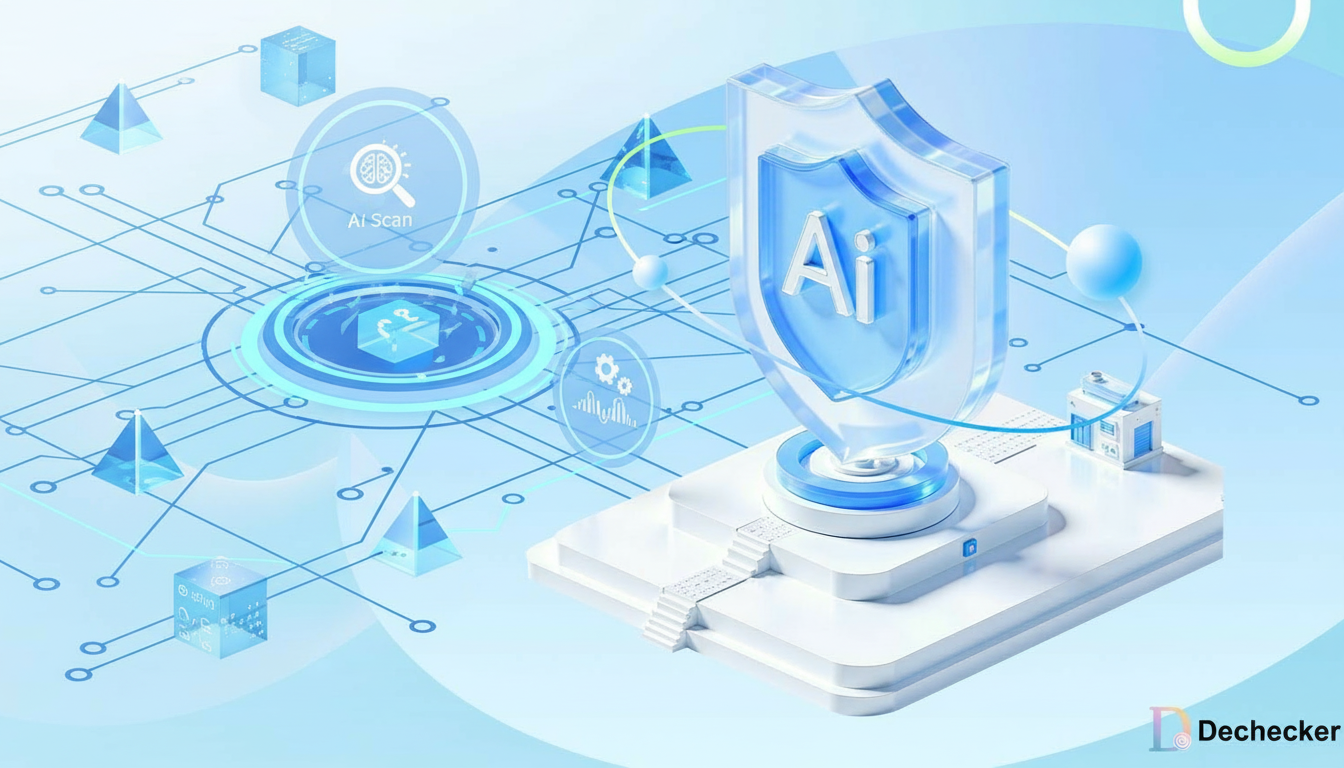
As the cybersecurity landscape evolves, the importance of effective network security strategies has never been more critical. Companies are increasingly targeted by sophisticated attacks, including ransomware, phishing, and supply chain vulnerabilities. In response, organizations are turning to advanced technologies like Generative AI and machine learning for detecting anomalies, predicting vulnerabilities, and automating response strategies. However, the challenge remains in ensuring the accuracy of AI-generated threat analyses and reports, necessitating human oversight. To address this, Dechecker’s AI Checker is emerging as a crucial tool to ensure AI-assisted cybersecurity content remains clear, trustworthy, and actionable.
Traditionally, cybersecurity measures relied heavily on signature-based detection and established protocols. In contrast, modern AI systems can swiftly analyze network traffic, log files, and system behaviors, identifying unusual patterns indicative of potential breaches. These algorithms not only detect existing threats but also provide a forward-looking capability to anticipate future attacks, offering security teams a proactive edge. However, while AI’s ability to recognize patterns is impressive, the reports it generates can sometimes lack depth or nuance, appearing overly mechanical. The AI Checker aids analysts in refining these outputs, ensuring communication is both clear and contextually rich.
The application of AI in cybersecurity presents several benefits, including faster threat detection and reduced manual monitoring. Yet, the risks are equally significant. Over-reliance on AI-generated reports can create misunderstandings or false confidence in machine recommendations, underscoring the necessity of human insight. Tools like the AI Checker help bridge this gap by highlighting automated language, thus encouraging a more human-centered approach to cybersecurity reporting.
Cybersecurity findings can often be laden with complex technical jargon. Analysts are tasked with translating these results into actionable insights for various stakeholders, including executives and compliance officers. The AI Checker plays a vital role by pinpointing formulaic or AI-generated phrases, allowing teams to enhance clarity without sacrificing precision. Additionally, many insights in cybersecurity originate from diverse sources, such as system logs and threat intelligence feeds. By utilizing audio-to-text converters, teams can transcribe discussions and incident reviews quickly. The AI Checker then facilitates the refinement of transcripts, ensuring that critical details are not obscured by mechanical phrasing.
Collaboration among diverse cybersecurity professionals is essential for effective incident response. Coordinated efforts from threat analysts, network engineers, and compliance specialists require standardized reporting. The AI Checker provides a neutral perspective, harmonizing AI-generated content with human contributions, resulting in clearer and more consistent reports across teams.
Despite its advantages, AI in cybersecurity faces challenges, particularly regarding false positives. AI systems can mistakenly flag benign activities as suspicious, leading to alert fatigue and misallocation of resources. Implementing tools like the AI Checker enhances scrutiny, ensuring that AI outputs are precise and comprehensible. Moreover, the fast-paced evolution of cybersecurity threats necessitates that AI models are continuously updated with new data to remain effective. As threats evolve, detection tools must also adapt, capable of recognizing patterns in AI-generated texts to aid human review.
Ethical considerations are paramount, as accurate reporting in many industries is not just best practice but also a regulatory necessity. Misrepresentation or unclear AI-generated security analyses can have serious legal repercussions. The AI Checker bolsters ethical standards, ensuring compliance and transparency in reporting.
Clear and reliable reports empower security teams to make informed, timely decisions. The AI Checker highlights AI-produced text, enabling human experts to accurately assess threats and offer actionable advice. This synergy fosters a culture of continuous learning, particularly for junior analysts, who can identify areas where human insight enhances AI reasoning, thereby deepening understanding and skills.
As AI technology continues to reshape the cybersecurity industry, the balance between automation and human intervention remains crucial. Dechecker’s AI Checker ensures that AI-generated content is not only readable but also infused with essential human insights. Organizations employing multimodal data—such as logs and transcripts—can leverage detection tools effectively across various formats. This collaborative approach, combining AI support and thorough review, prepares teams to address cybersecurity threats with the right quality and transparency.
In conclusion, while Generative AI has brought unprecedented speed and predictive capability to the cybersecurity sector, careful examination of AI analyses is essential to avoid confusion and inaccuracies. Dechecker’s AI Checker provides a necessary layer of quality assurance, allowing cybersecurity teams to maintain the human touch needed for effective action. The integration of AI tools enhances decision-making processes and strategic planning, ensuring that while automation plays a significant role, human judgment remains a critical component of successful cybersecurity practices.
See also CrowdStrike Reveals AI Strategies to Combat Rising Cyberattacks in CBS News Interview
 Liberty Defense Joins NVIDIA Program to Enhance AI Threat Detection Capabilities
 AI-Driven Cyberattacks Employ Polymorphic Malware, Transforming Threat Dynamics
 Google AI Security Expert Reveals Top 4 Tips to Protect Your Data with Chatbots
 Edgebase Invests in Cybersecurity, Expands AI Solutions Amid Rising Threats in Nigeria