




































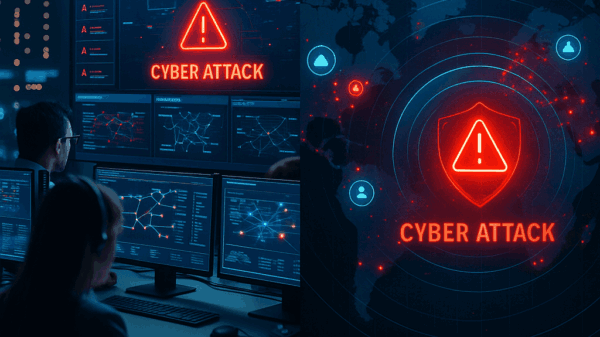















Iran’s Islamic Revolutionary Guard Corps (IRGC) has issued an unprecedented public threat against major American technology companies, specifically targeting Apple, Google, and Microsoft. The IRGC’s declaration, which names these companies as imminent targets for cyberattacks starting April 1, marks a significant departure from the nation’s usual covert operations in the cyber domain. This escalation signals a growing boldness in state-sponsored cyber warfare, putting billions of dollars in cloud infrastructure and enterprise services at immediate risk.
The public announcement has transformed what has traditionally been a quiet cyber conflict into a more overt confrontation. By openly identifying its targets, the IRGC is breaking with decades of clandestine cyber operations, signaling a shift in how nation-states may choose to signal their offensive capabilities. The timeline for the attacks, set for just hours away, has raised alarms among cybersecurity experts and corporate leaders alike.
The three companies named in the threat are pivotal players in the global tech landscape. Microsoft Azure underpins a vast array of corporate and governmental networks, while Google Cloud is integral to the AI infrastructure relied upon by many Fortune 500 companies. Apple devices are ubiquitous in enterprise mobility, making any successful cyber campaign against these firms potentially catastrophic for the digital economy.
Cybersecurity analysts are now faced with the challenge of deciphering the IRGC’s intentions. The uniqueness of this public threat raises questions regarding its operational credibility versus its role as a strategic message. Typically, nation-state actors operate in secrecy, rarely disclosing their targets in advance. “This breaks every rule of offensive cyber operations,” noted a former NSA analyst in private security discussions. The public nature of this threat could either indicate a psychological tactic designed to instill fear and uncertainty or reflect a newfound confidence in attack methodologies that deemphasize the element of surprise.
The timing of the IRGC’s declaration coincides with heightened geopolitical tensions, although the specific triggers for this announcement remain unclear. Iran has cultivated sophisticated cyber capabilities over the past decade, with past campaigns targeting critical infrastructure, financial systems, and governmental networks. However, those operations typically transpired behind the scenes, with attribution often delayed by forensic investigations that could take months or even years.
Industry stakeholders are now grappling with the implications of this public shift. The potential for a significant cyber attack could disrupt not only the targeted companies but also the wider market ecosystem that relies on their services. Analysts are closely monitoring the situation to determine if the IRGC’s threats translate into actionable plans or if they are simply a means of showcasing military capabilities on a global stage.
As the April 1 deadline approaches, companies and cybersecurity firms are ramping up their defenses, preparing for a potential onslaught from Iranian cyber operatives. The implications of a successful attack could extend beyond immediate financial losses, affecting consumer confidence and international relations in the tech sector. This unfolding scenario is a stark reminder of the vulnerabilities inherent in a digitally interconnected world, where the stakes are not just strategic but fundamentally economic.
In this emerging landscape of public cyber threats, the IRGC’s bold announcement may represent a new chapter in international cyber conflict. As nation-states increasingly leverage their technological prowess, the lines between warfare and economic competition continue to blur, prompting companies and governments to reevaluate their cybersecurity strategies. How tech giants respond to this threat will likely shape the future dynamics of global cyber warfare and international relations.
See also Anthropic’s Claims of AI-Driven Cyberattacks Raise Industry Skepticism
 Anthropic Reports AI-Driven Cyberattack Linked to Chinese Espionage
 Quantum Computing Threatens Current Cryptography, Experts Seek Solutions
 Anthropic’s Claude AI exploited in significant cyber-espionage operation
 AI Poisoning Attacks Surge 40%: Businesses Face Growing Cybersecurity Risks