






















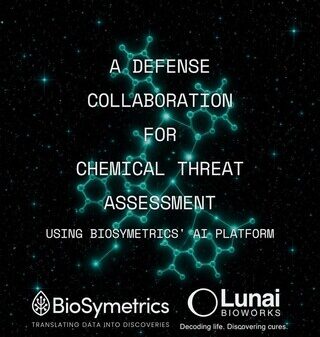











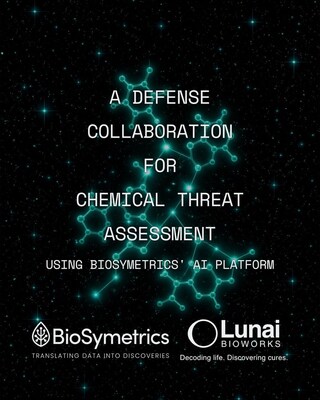
Lunai Bioworks, Inc. (NASDAQ: LNAI), a California-based company specializing in AI-driven drug discovery and biodefense, announced on April 7, 2026, a collaboration between its subsidiary, BioSymetrics, and a specialized biotechnology partner. This partnership aims to advance the development of an AI-enabled platform designed for the assessment of chemical threats. The initial phase of the collaboration has commenced, with discussions for further engagements already underway.
Under the terms of the agreement, BioSymetrics will leverage its proprietary phenotypic screening and artificial intelligence capabilities to enhance the identification and classification of neuroactive and neurotoxic compounds. This multi-year commercial engagement marks a significant step in expanding Lunai Bioworks’ footprint in defense and national security applications.
The collaboration involves an integrated approach that combines in vivo zebrafish-based phenotypic screening with AI-driven mechanism-of-action (MOA) predictions. This dual capability is expected to facilitate rapid hypothesis generation and validation for compounds of interest, effectively speeding up the detection and characterization of chemical threats. The screening systems in place are designed to evaluate hundreds to thousands of compounds weekly, enhancing both translational relevance and operational applicability.
The key components of the collaboration include the experimental screening of chemical compounds, particularly those targeting the central nervous system, computational modeling to predict mechanisms of action, and the integration of biological and computational datasets. This comprehensive approach is aimed at improving the identification of neuroactive and toxic substances while bolstering readiness within defense-oriented frameworks.
David Weinstein, Chief Executive Officer of Lunai Bioworks, emphasized the importance of this collaboration, stating, “This collaboration reflects Lunai Bioworks’ commitment to applying cutting-edge AI and phenotypic science to real-world challenges in global security.” He highlighted that BioSymetrics’ platform is ideally positioned to merge experimental biology with machine learning, thereby enabling quicker and more reliable insights into complex chemical threats.
This initiative also supports Lunai Bioworks’ broader strategy to enhance dual-use technologies that encompass both defense and pharmaceutical applications. The company aims to advance areas such as toxicity prediction, drug safety, and neurobiology, reinforcing its commitment to addressing critical challenges in public health and security.
As the demand for advanced technologies in biodefense continues to grow, Lunai Bioworks’ partnership exemplifies how AI can play a transformative role in chemical threat detection. By integrating innovative methodologies and advanced algorithms, the collaboration seeks to create a robust framework for identifying potential risks and enhancing operational preparedness.
With this collaboration, Lunai Bioworks is poised to make significant contributions to the field of biodefense, leveraging technology to protect national security interests while addressing pressing public health concerns. The company’s initiatives reflect a growing trend in the life sciences sector, where AI-driven solutions are increasingly being adopted for complex problem-solving in both defense and healthcare.
The partnership between Lunai Bioworks and BioSymetrics marks a critical development in the ongoing evolution of defense technologies, reinforcing the role of AI in enhancing national security capabilities. As the initial engagement progresses and additional partnerships materialize, the impact of this collaboration may extend beyond immediate applications, shaping the future landscape of chemical threat assessment and biodefense strategies.
See also Anthropic’s Claims of AI-Driven Cyberattacks Raise Industry Skepticism
 Anthropic Reports AI-Driven Cyberattack Linked to Chinese Espionage
 Quantum Computing Threatens Current Cryptography, Experts Seek Solutions
 Anthropic’s Claude AI exploited in significant cyber-espionage operation
 AI Poisoning Attacks Surge 40%: Businesses Face Growing Cybersecurity Risks