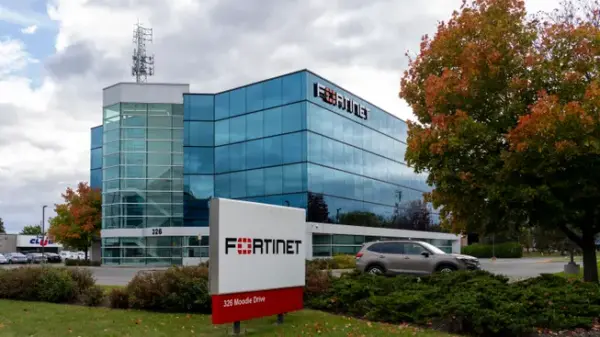



































AI is rapidly transforming the cybersecurity landscape in Singapore, with organizations struggling to keep pace with the increasing sophistication of cyber threats. A recent study by Fortinet and IDC revealed that over half of Singaporean organizations encountered AI-powered threats in the past year, with many reporting a doubling or tripling in frequency. Alarmingly, only 20% of these organizations feel confident in their ability to defend against such attacks, highlighting a critical imbalance between the speed of cyberattacks and the defensive capabilities available.
While discussions around AI often focus on theoretical future threats, the reality is that cybercriminals are already leveraging advanced AI technologies. Attackers are employing generative models to create highly convincing phishing emails, voice clones, and deepfake impersonations that can easily evade traditional security measures. Additionally, AI-driven reconnaissance tools can scan thousands of systems per second, identifying vulnerabilities faster than defenders can address them. This evolution in cybercrime has shifted from technical expertise to a business model that can be accessed by anyone with the right tools, significantly amplifying the scale and speed of attacks.
In Singapore, the implications of these developments are profound. Organizations must recognize that static defenses and signature-based systems are becoming obsolete in the face of threats that evolve in real time. The need for dynamic, adaptive security solutions has never been more urgent.
However, AI also offers powerful solutions to address these challenges. More than 80% of organizations in Singapore have started integrating AI into their security operations, mainly focusing on detection, predictive analytics, and automated responses. Fortinet reports that AI can significantly transform the entire security lifecycle, allowing for the correlation of billions of events across various platforms in mere seconds. With adaptive algorithms, subtle anomalies—such as unusual login times or atypical data transfer patterns—can be identified and acted upon immediately, enhancing overall security posture.
This automation becomes crucial as Singapore’s IT workforce remains relatively lean, with fewer than one cybersecurity specialist for every hundred employees. By employing AI to filter alerts and prioritize incidents, organizations can allocate their resources more effectively, allowing cybersecurity teams to concentrate on the most pressing threats.
Despite the advantages of AI, the human element remains vital in effectively deploying and managing these technologies. As cybersecurity tools become more advanced, so too must the skills of those who utilize them. Singapore is making significant investments in developing cyber talent and enhancing digital literacy. Initiatives from the Cyber Security Agency, along with public-private partnerships, are focusing on building expertise in AI-based threat analysis and zero-trust architectures.
Fortinet supports these efforts through its Network Security Expert (NSE) training program and collaborations with local educational institutions such as Nanyang Polytechnic and Temasek Polytechnic. These partnerships aim to cultivate local capabilities and expand the next generation of cybersecurity defenders. Equally important is the need to develop human judgment. While AI can automate the recognition of patterns, it is ultimately human oversight that determines which insights to act upon, how to interpret anomalies, and when to respond to threats.
The narrative surrounding AI in cybersecurity often oscillates between fear and hype. The reality is more nuanced; AI has not replaced human attackers or defenders but has accelerated the competition between them. For Singapore, the path forward is clear: to build resilient systems that harness AI responsibly, supported by skilled professionals who understand both the technology’s limitations and its potential. This approach requires a shift in focus from speculative scenarios of superhuman AI to addressing the immediate, real-world implications of AI in scaling phishing attacks, automating breaches, and enhancing deception.
By effectively combining the speed and capabilities of AI with human decision-making, Singapore can maintain its competitive edge against cyber adversaries and uphold the trust essential to its digital economy. The future of cybersecurity will not be secured by machines alone; it will be the result of skilled individuals who know how to leverage AI to their advantage.
See also Microsoft Launches AI Red Team in Israel to Address 80% Rise in Cyber Risks
 KeepZone AI Launches Integrated Homeland Security Solutions, Expands Global Market Reach
 Threat Actors Target Major LLMs in Extensive Reconnaissance Campaign, Exposing Security Risks
 Zscaler Appoints Dr. Swamy Kocherlakota to Boost Agentic AI Security Innovation
 Torq Secures $140M in Series D Funding to Expand AI-Powered Cybersecurity Platform