















































Officials from the Trump administration have announced a set of upcoming cybersecurity policy initiatives aimed at enhancing national security through a new national cyber strategy, updates to federal incident reporting protocols, and a framework for artificial intelligence security collaboration. These developments were reported on Wednesday by Federal News Network and are expected to significantly shape the U.S. approach to cybersecurity moving forward.
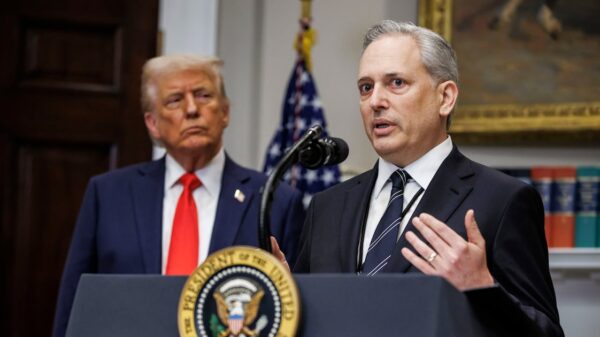
During the Information Technology Industry Council’s Intersect Summit on Tuesday, White House National Cyber Director Sean Cairncross detailed the forthcoming national cybersecurity strategy, which will be built around six key pillars. Cairncross emphasized the importance of these pillars, which include shaping adversary behavior, fostering a regulatory environment for industry collaboration, modernizing federal government cybersecurity, securing critical infrastructure, maintaining U.S. dominance in emerging technologies, and addressing the cyber skills and workforce gap.
The proposed changes to cyber incident reporting come through the Cyber Incident Reporting for Critical Infrastructure Act (CIRCIA). Nick Andersen, executive assistant director for cybersecurity at the Cybersecurity and Infrastructure Security Agency (CISA), stated that while CIRCIA mandates critical infrastructure entities to report cyber incidents within 72 hours, final regulations have yet to be implemented. Concerns have been raised by industry groups regarding the scope of the proposed rules, which were initially set for 2024 but have now been postponed until May 2026.
In addition to regulatory updates, the Department of Homeland Security (DHS) intends to establish an Artificial Intelligence Information Sharing and Analysis Center, or AI-ISAC. This center aims to coordinate threat intelligence related to AI across various critical infrastructure sectors. Complementing this effort, the Office of the National Cyber Director is working on an AI security policy framework designed to integrate security into AI systems while promoting innovation.
Another significant development is the planned establishment of a successor to the Critical Infrastructure Partnership Advisory Council (CIPAC), which DHS dissolved last year. The new entity, tentatively named the Alliance of National Councils for Homeland Operational Resilience, or ANCHOR, seeks to rectify gaps identified in the previous council’s structure and scope.
In related news, the Cybersecurity and Infrastructure Security Agency has introduced a directive mandating federal civilian executive branch agencies to enhance security controls for edge devices by removing unsupported hardware and software from their networks. This directive, known as Binding Operational Directive 26-02, underscores the ongoing commitment to bolster cybersecurity across government systems, particularly as new threats emerge.
Additionally, the Department of War has issued guidance aimed at identifying and mitigating threats posed by vendors supporting U.S. military operations. This new guidance standardizes procedures for vetting commercial suppliers, addressing risks associated with foreign adversaries, criminal networks, and extremist organizations that could exploit vendor relationships.
As these initiatives unfold, they represent a comprehensive approach to addressing some of the most pressing cybersecurity challenges facing the United States today. With the evolving threat landscape and the increasing reliance on technology, the administration’s focus on robust cybersecurity measures underscores the critical importance of safeguarding national infrastructure and protecting against adversarial actions.
See also AI Still Relies on Human Oversight for Multi-Stage Cyberattacks, Report Reveals
 88% of Organizations Hit by AI-Powered Cyber Attacks, Legacy Email Security Fails
 CISOs Shift 2026 Budgets: 78% Prioritize AI-Driven Security Solutions, Says Glilot Report
 IBM Wins Major SHIELD Contract, Expands AI Security Integrations in Defense Sector
 AI-Driven Cyber Attacks Surge 8% in 2025 as Ransomware Groups Target Critical Industries