































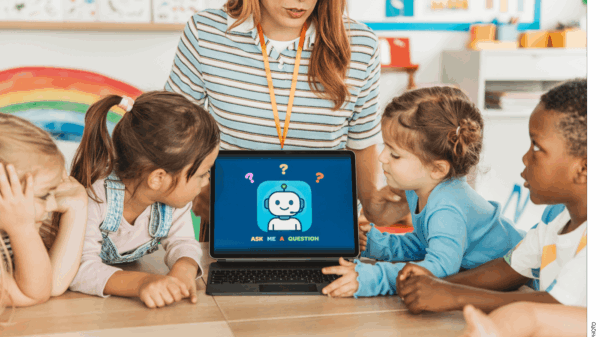
















The rapid expansion of AI-powered learning tools is fundamentally altering the landscape of education, yet a recent study raises concerns about their potential to exacerbate existing inequalities. Research published in Frontiers in Computer Science highlights how these technologies, often lauded for offering personalized instruction and data-driven insights, may instead reinforce educational divides, particularly for students from diverse linguistic and cultural backgrounds.
Entitled “AI and the Digital Divide in Education,” the study critically examines the assumption that merely increasing access to digital devices and connectivity can create equitable learning environments. While basic infrastructure remains a hurdle in many regions, the research indicates that access to AI tools alone does not guarantee equal educational outcomes. Instead, disparities related to skills, language proficiency, and institutional support continue to hinder effective engagement with AI-enabled education.
AI-driven systems frequently cater to dominant languages and cultural norms, limiting their effectiveness for learners who do not fit these molds. Natural language processing tools and adaptive learning platforms often struggle with students whose language or expression deviates from the datasets on which they were trained. This can lead to misinterpretations, inappropriate content recommendations, and a general lack of engagement, particularly evident among multilingual or non-Western learners.
Researchers identify a second-level digital divide emerging from disparities in digital literacy. Students with prior exposure to digital technologies and supportive learning environments are more likely to benefit from AI personalization. Conversely, those lacking digital skills or consistent institutional backing may find it challenging to navigate these systems, further widening achievement gaps. This disparity can transform educational experiences into a self-reinforcing cycle of inequality.
The study also reveals a third-level digital divide, where AI systems may actively amplify advantages for already privileged students. For instance, adaptive learning platforms can tailor content and pacing for high-performing learners, while those who struggle might receive inadequate support. These feedback loops can entrench performance gaps, embedding inequality within the educational process itself. The findings emphasize that such outcomes are not incidental but arise from the design, deployment, and governance of AI systems.
Bias and cultural misalignment in AI education tools pose significant challenges. The study highlights how training data reflecting historical inequalities or limited representation of marginalized groups can lead to lasting consequences. Misclassifications can underestimate the abilities of students from diverse backgrounds, resulting in lower assessment scores or misleading feedback. Such errors risk distorting teachers’ perceptions and influencing institutional policies, even when human oversight is ostensibly retained.
Moreover, AI tools often embed cultural assumptions about learning styles and objectives that do not resonate universally. This cultural misalignment can diminish the effectiveness of these systems when deployed in diverse educational settings. The authors argue that this undermines claims of AI’s inherent capacity for promoting personalized and inclusive learning.
Teacher capacity and institutional readiness are crucial factors in navigating these complexities. Educators play a pivotal role in interpreting AI-generated insights and supporting students in utilizing technology effectively. However, inadequate training and unclear governance frameworks can limit teachers’ critical engagement with AI systems. In some instances, educators may rely on algorithmic recommendations without fully grasping their limitations, which could lead to uncritical adoption and perpetuation of biases.
Governance frameworks for AI in education are also lacking, as many systems operate without clear guidelines on ethical use, data governance, and accountability. The authors stress that addressing algorithmic bias necessitates not just technical solutions but also inclusive design processes and sustained capacity-building within institutions.
Looking Ahead
As AI continues to gain traction in educational settings, its impact will hinge on thoughtful design and integration. The study emphasizes that without deliberate corrective measures, the current trajectory risks entrenching existing inequalities. Key recommendations include developing multilingual and culturally responsive AI systems and ensuring diverse learner populations are represented in training data and design processes.
Additionally, greater transparency in AI systems is essential, enabling educators, students, and policymakers to understand how decisions are made and to challenge them when necessary. Capacity-building initiatives for teachers and administrators are critical, providing them with the tools to assess AI outputs critically and engage with technology meaningfully. The authors call for governance frameworks addressing AI’s social and ethical implications, noting that while some regions are moving toward such policies, implementation remains uneven, particularly in lower-income contexts where regulatory capacity is limited.
Ultimately, AI in education is a global equity issue that transcends simple access to technology. The study concludes that the digital divide reflects broader socio-economic, cultural, and institutional inequalities. As AI systems are integrated into educational landscapes, their potential for either mitigating or magnifying disparities will largely depend on governance choices made today.
See also Contract Cheating Declines 43% as AI Misuse Among Students Surges 219% in 2024
 AI Drives Innovative Learning Space Design: Insights from Education Leaders
 MBZUAI Launches The Academy to Bridge AI Research and Real-World Impact
 Norway Launches National AI Championship with NOK 1M Prize Pool Starting March 19
 AI in Education Faces Privacy and Bias Challenges Amid Rapid Adoption of Learning Tools