

































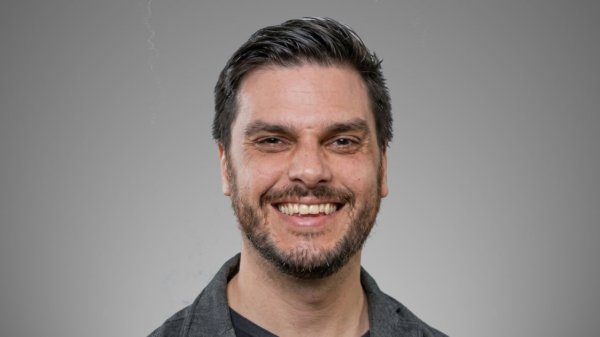
















A former senior leader at Google has expressed significant concerns regarding the future of higher education, particularly for long academic programs in fields such as law and medicine. Jad Tarifi, who played a pivotal role in establishing Google’s first generative AI team, cautioned that the rapid advancement of artificial intelligence may render traditional degree pathways less secure and relevant.
In comments reported by Business Insider, Tarifi highlighted the alarming pace at which AI is evolving, suggesting that many conventional educational programs are struggling to keep pace. He noted that young individuals may find themselves investing years in preparing for careers that could be dramatically different or diminished by the time they complete their studies.
Tarifi, who obtained his PhD in artificial intelligence in 2012, underscored that lengthy degree programs, particularly in medicine and law, are particularly vulnerable. These fields often require nearly a decade of education and training before graduates fully enter the workforce. By that time, he warned, advancements in AI technology may have taken over many tasks traditionally performed by professionals in these sectors.
He further pointed out that advanced research fields, such as the application of AI in robotics, are progressing at such a rapid rate that current PhD students may find themselves entering a labor market where key challenges have already been resolved. “The risk,” Tarifi emphasized, “is not education itself, but the time lag between learning and real-world application.”
Critical of the way medical education is structured, Tarifi argued that much of it still relies heavily on memorization. As AI systems become increasingly proficient at analyzing vast amounts of medical data and assisting in diagnoses, he cautioned that new doctors might graduate with outdated knowledge. This could be particularly detrimental as AI tools enhance clinical decision-making capabilities.
Law education faces similar challenges. AI is already being utilized to perform tasks such as contract review, case law search, and legal document drafting—activities that were once fundamental to entry-level legal jobs. While Tarifi did not predict the eradication of lawyers or doctors, he did warn that the conventional routes to these professions may not deliver the same return on time and financial investment.
Looking forward, Tarifi posited that future success may hinge more on skills that AI cannot easily replicate. He urged younger generations to focus on developing emotional intelligence, decision-making abilities, creativity, and strong interpersonal skills. The capacity to form deep connections, collaborate across disciplines, and understand human needs may become more valuable than holding prestigious academic qualifications.
He also suggested that universities might face significant challenges if they fail to adapt quickly, advocating for educational models that evolve alongside technological advancements rather than lag behind them. This perspective aligns with a growing concern in Silicon Valley regarding the ability of academic institutions to keep pace with the rapid changes ushered in by AI technologies.
In recent years, the job market has started to reflect these shifts, with some companies placing less emphasis on formal degrees and more on practical skills and experience. However, critics of this trend argue that AI currently lacks the judgment, ethics, and accountability that are central to fields like medicine and law, suggesting that while educational reform may be necessary, it should not equate to the outright dismissal of traditional education.
Tarifi’s message underscores the importance of critical thinking regarding the value of education in an AI-driven world. He emphasized that students must carefully evaluate factors such as time, cost, and adaptability when considering their educational paths. As AI technologies continue to evolve, the challenge for young people will be to select career trajectories that promote continuous learning rather than relying solely on a single qualification to sustain them throughout their professional lives.
His insights contribute to an ongoing dialogue about the need for educational systems to adapt proactively in order to prepare future generations for a job market that is poised for transformation.
See also K-12 Schools Face AI Policy Vacuum Amid Rapid Generative AI Adoption and Ethical Concerns
 California Universities See 6% Drop in CS Enrollment Amid AI Program Surge
 Computer Science Enrollment Drops 6% as Students Flock to AI Programs Amidst Job Market Shift
 German Researchers Unveil Privacy-Preserving AI to Detect Mind Wandering in Online Classrooms
 Alan Turing Institute Reveals UK’s AI Governance Profile Amid Global Regulatory Shifts