



















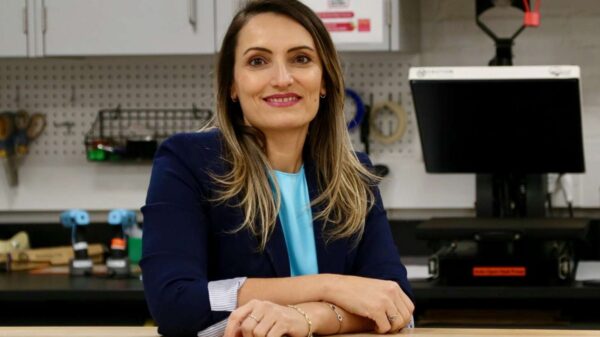










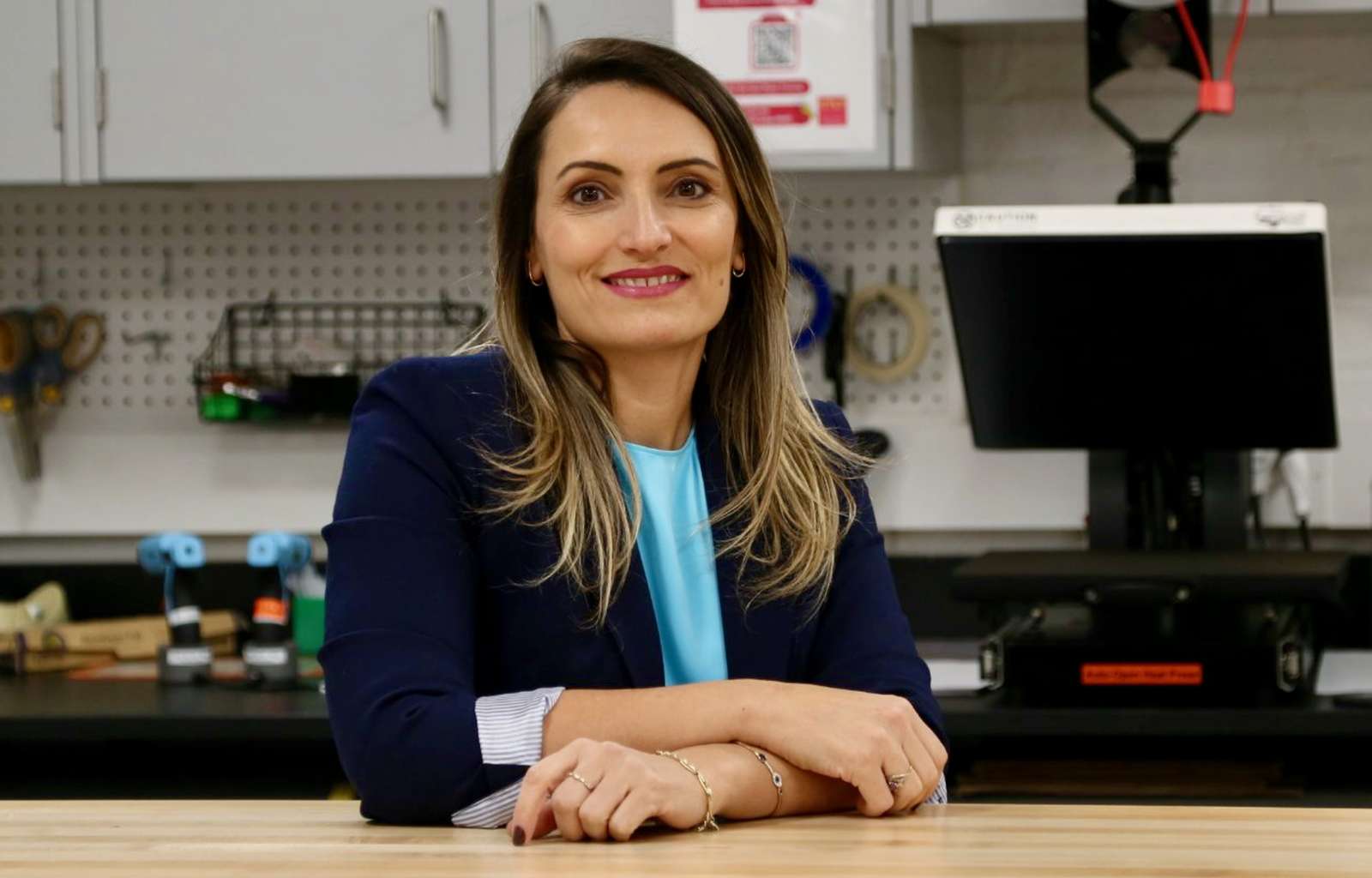
AMES, Iowa – As artificial intelligence (AI) tools rapidly evolve, educators are finding themselves in a unique position: navigating these technologies alongside their students. To address this pressing issue, Iowa State University researcher Evrim Baran and her team have developed a new micro-credential course aimed at helping K-12 educators enhance their AI literacy using practical classroom examples.
The discourse surrounding generative AI in educational settings has often been dominated by concerns over cheating and the ethical implications of its use. However, Baran, a professor of educational technology and human-computer interaction, emphasizes a more profound question: “What does it mean to teach kids in a world where AI is rapidly evolving?”
According to Baran, many K-12 teachers express a desire for guidance that extends beyond basic tutorials on AI tools. They are seeking to cultivate critical judgment skills that will enable them to prepare their students for a future increasingly integrated with AI technologies. “Teachers want to engage with their students about AI systems that they’re still learning about themselves,” she noted.
In response to these needs, the Critical AI in Education Pathways micro-credential course has been introduced as a fully online, self-paced program. Designed to be accessible, the course is “beginner-friendly,” allowing educators without a technical background to participate. Baran, who serves as the project director of the initiative, highlighted the course’s objective of supporting all K-12 educators in building critical AI literacy.
The curriculum comprises five modules that delve into various aspects of AI, including foundational principles, ethical considerations in education, pedagogical integration, implementation strategies, and human-centered AI practices. Educators can expect to invest approximately 20 to 25 hours to complete the course. Upon successful completion, participants may request a renewal credit certificate from Iowa State’s School of Education, which counts toward the licensure renewal requirements for Iowa teachers.
Recent findings from the Pew Research Center reveal that over 50% of U.S. teens have utilized chatbots such as ChatGPT and Microsoft Copilot for assistance with schoolwork, with 1 in 10 teens relying on such technologies for the majority of their academic tasks. These statistics underscore the urgency for educators to improve their own AI literacy in addition to that of their students.
Baran’s team developed the course by collecting real classroom examples from K-12 teachers, allowing for scenario-based challenges and guided reflection throughout the modules. “Critical AI literacy education for teachers must be grounded in real-life examples,” she said, emphasizing the need for practical engagement in a world where AI is becoming a ubiquitous part of students’ lives.
The initiative has already caught the attention of school districts like the Winterset Community School District in Iowa, which serves approximately 1,550 students. Assistant Principal Chad Sussex, who leads an AI task force within the district, reached out to Iowa State after learning about a similar initiative in Philadelphia. “It has been a privilege to work with such an innovative school district around AI,” said Baran, who has collaborated closely with Winterset educators to gather insights and observe AI’s responsible use in classrooms.
As AI continues to permeate educational settings, both Baran and Sussex stress the importance of fostering a critical approach to AI among students. Baran noted concerns among K-12 educators regarding the accuracy of information provided by AI, potential biases, and the risk of cognitive offloading, where students may become overly reliant on technology for problem-solving.
To address these challenges, the course emphasizes the significance of engaging students in activities that promote critical thinking skills related to AI, rather than allowing technology to supplant essential reasoning abilities. The partnership between Iowa State University and Winterset is seen as a beneficial exchange of knowledge and experience, with opportunities for educators to learn from one another.
The Critical AI in Education Pathways micro-credential course is now available for enrollment through the Iowa State University Extension and Outreach store, allowing educators to enhance their understanding of AI and its implications for teaching. For more information, visit Iowa State University’s website.
See also Andrew Ng Advocates for Coding Skills Amid AI Evolution in Tech
 AI’s Growing Influence in Higher Education: Balancing Innovation and Critical Thinking
 AI in English Language Education: 6 Principles for Ethical Use and Human-Centered Solutions
 Ghana’s Ministry of Education Launches AI Curriculum, Training 68,000 Teachers by 2025
 57% of Special Educators Use AI for IEPs, Raising Legal and Ethical Concerns