
































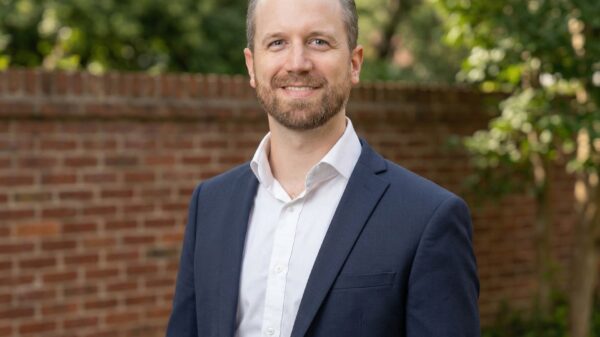




















La Trobe University has made a significant move in the Australian higher education sector by appointing its first Pro Vice-Chancellor for Artificial Intelligence, Phil Laufenberg, a role intended to spearhead the institution’s transition towards becoming an AI-first university. This appointment underscores La Trobe’s commitment to embedding artificial intelligence responsibly across various domains, including learning, research, and professional services. The decision marks a shift from experimentation to a full-scale implementation of AI initiatives within the university.
Professor Theo Farrell, Vice-Chancellor of La Trobe, described this appointment as a pivotal moment in the university’s evolution. “Our Responsible AI Adoption Strategy has always been grounded in our people,” he stated. “We are transforming into an AI-first university so we can ensure our graduates are ready for employment in a world that is being reshaped by AI.” Over the past two years, La Trobe has focused on upskilling its staff, developing a community of practice around AI, and piloting high-impact projects.
Professor Farrell emphasized that La Trobe is now entering a new phase of institution-wide deployment, aiming for every student and staff member to have access to advanced AI tools by 2027. He added that these tools will be innovatively and ethically integrated to transform education, research, student support, and service delivery.
Phil Laufenberg expressed his enthusiasm for joining the university at this critical juncture. “La Trobe has set one of the most ambitious and values-led AI agendas in Australian higher education,” he said. Laufenberg looks forward to collaborating with senior executives, academics, and professional teams to embed AI in ways that enhance learning, research, and operational efficiency, while ensuring trust and integrity within the institution.
In his role, Laufenberg will provide comprehensive leadership and coordination for La Trobe’s AI strategy, reporting directly to the Vice-Chancellor. His responsibilities will include aligning AI initiatives across different academic and professional divisions while maintaining academic autonomy and governance standards.
Laufenberg brings over a decade of experience from his previous position as Head of AI at Macquarie University, where he led a comprehensive AI transformation initiative. His efforts included establishing university-wide AI governance frameworks and deploying award-winning AI solutions that benefited thousands of students and faculty. His work has received national recognition for enhancing the educational experience.
As Pro Vice-Chancellor (AI), Laufenberg will focus on advancing La Trobe’s Responsible AI Adoption Strategy, scaling effective solutions, and embedding AI into core operations. He will collaborate closely with senior leaders to achieve breakthroughs in learning and teaching, as well as enhance research competitiveness and operational transformation. Moreover, he will strengthen the university’s foundational data, platform, and security measures.
This appointment builds on the recent announcement of several major AI initiatives at La Trobe, including a strategic partnership with Microsoft and CyberCX aimed at upskilling the workforce in AI, and the deployment of an NVIDIA DGX H200 supercomputer, the first of its kind at an Australian university, to revolutionize medical and biotechnology research. La Trobe has also launched a landmark collaboration with OpenAI to ensure equitable access to AI tools and to embed AI across its curriculum and research efforts.
Laufenberg is set to commence his new role on April 6, and his leadership is expected to play a critical role in realizing La Trobe’s ambitious vision for AI in education.
See also Andrew Ng Advocates for Coding Skills Amid AI Evolution in Tech
 AI’s Growing Influence in Higher Education: Balancing Innovation and Critical Thinking
 AI in English Language Education: 6 Principles for Ethical Use and Human-Centered Solutions
 Ghana’s Ministry of Education Launches AI Curriculum, Training 68,000 Teachers by 2025
 57% of Special Educators Use AI for IEPs, Raising Legal and Ethical Concerns